

A resource for those seeking information on organizing and transforming spaces.

Interview - Fairfield Auction
Often our clients have items they want to sell but don't know where to start. We spoke with Jack DeStories of Fairfield Auction to help us answer the question, trash or treasure.

Often our clients have items they want to sell but don't know where to start. We spoke with Jack DeStories of Fairfield Auction to help us answer the question, trash or treasure?
I'm sure everyone thinks their stuff is worth something? How do you decide what is valuable? I've been appraising antiques and fine art for 30 years so at this point 95% of what we see we can immediately recall the current price trends for that object. The other 5% can require some research. We have access to vast databases of auction results and, if needed, specialists who can assist us.
How should someone proceed if they have an item they want you to sell, how does the process work? We have an open appraisal day every Tuesday in the gallery from 10am to 1pm. It's similar to what you see on The Antiques Roadshow, people bring in up to five items and we offer an evaluation. People can also bring images if the items are too large to physically bring in. Otherwise, the process usually starts with an emailed image and description- or sampling of images for estates or collections. If there is a substantial amount of material or if an item can't be fully evaluated from images we may schedule an on-site visit. We always create a written evaluation for estates and large collections that the client can review and take their time with before deciding what, or if, they want to consign.
What do you tell people about the likelihood their piece will sell? Everything is given an auction estimate which is a range within which we expect the item to sell. Almost everything will open at 50% of the low estimate. Overall I would say about 2/3 of the items sell within estimate, the other 1/3 is equally likely to sell above or below that estimate. Our historical sales rate is quite high, about 95%.
How should someone deal with furniture, do you pick it up from them? We can often offer free trucking, but it is usually limited to large estates or high value items. Often we can help coordinate a reasonably priced trucker for pick-ups or deliveries (of purchases).
What are some of the most interesting pieces you have seen at your auction house? We've handled many interesting estates and items. The most expensive item was a Tlingit warrior helmet dating to the 18th century that sold for over two million dollars. Our upcoming auction in September 2017 includes a luncheon menu from the Titanic- only a handful survived- all presumably carried off the ship in lifeboats- and are quite valuable. We are expecting this one to bring $40,000 to $60,000. Our client discovered it among her late mother's possessions - having never seen or heard of it before!


Guest Post - Disorganized and Debt
You're disorganized and in debt. That puts you in good company
You're disorganized and in debt. That puts you in good company.

You just tossed that Final Notice letter on the table where it landed with its fellow notices, late payment charges, and unpaid bills. You sidestep the overturned chair in the kitchen and make your way to the couch where you slide a pile of laundry aside to make room to sit down. You’re in a mountain of clutter and debt. What happened to you?
The answer is nothing. At least, not to you specifically. Believe it or not, the same thing that brought you here affects thousands and thousands of others.
Every day we’re bombarded with suggestive and sub-suggestive marketing, playing on every emotion with only one goal in mind - to separate you from your money. Seriously, Perrier is using sex to sell seltzer. Big data is unearthing ways to increase customer responsiveness, to price products more optimally, and even to up consumer loyalty. The point is, we live in an environment where coming home with something new, however niche, is looked upon as “helping the economy” or shrugged off with a blasé “YOLO.” It’s part of the territory now.
To wit, American children make up 3.1% of the world’s population under 18 and yet account for an astonishing 40% of global toy ownership. Indeed, why go to the grocery store when you can go to Costco and get so much more, even if it means purchasing a freezer chest just to store it all? You can buy the freezer on Amazon, and with only a few more clicks you can pick up more items that only increase in absurdity: dedicated quesadilla makers, pens just for her, and banana slicers.
The rampant consumerism is taking a toll, and it’s doing so in ways that no pre-1990s American would ever conceive possible. James Wallman, author of Stuffocation, puts it bluntly: clutter kills. Wallman’s book discusses a study that found that women who are asked about the uncontrollable clutter in their homes begin to exhibit the same levels of the stress hormone cortisol as those who have experienced post traumatic stress disorder. That’s a sobering discovery. Basically, it’s quantification of just how damaging to our very being it is to over accumulate stuff to the point of saturation. If you’ve gotten there, you have increased risk of everything from fatigue, to depression, to death. No amount of sexual innuendo is worth taking that on.
If you’re freaking out at this point, pause and take a breath. There are two things to consider here. First, one more click on Amazon won’t be the difference between a clutter-free life and a breakdown. Second, there’s a difference between you wanting something, and your brain revving its instant-gratification engine. That second one is a powerful piece of knowledge to have. It means that given time and dedication, you’ll be able to rewire your brain to look for gratification elsewhere.
Psychology Today discusses the Four Steps program to literally change your brain.
Relabel: Be aware of your mindset when the urge to buy hits. Label the experience with whatever word you want: impulse, craving, desire, need. Whatever you use, what it is not is you consciously saying to yourself that it’s time to purchase something you objectively need. In other words, identify if you are actually looking for something necessary, or just something to buy and then explicitly recognize each.
Reframe: Understand that the need is coming from your brain, not something you’re consciously doing. Here you can change your own perception of the importance of the urge.
Refocus: Refocusing mean redirecting your attention to something more constructive. Take a walk, work on something important, or call a friend. This will distract you until the urge passes.
Revalue: If the temptation continues, simply acknowledge it and move on. While your brain can whine about something it wants, you are ultimately in control and you are the one who decides whether or not to act. The urge has far less power to act than you do.
Ben Oatis is a freelance writer based in Connecticut with over 10 years of experience as a technical writer for global tech companies. In addition to writing about technology, he also covers politics, lifestyle, and health and nutrition. He can be reached at boatiswrites@gmail.com.

Interview - Plustek
Many of our clients ask us what to do with photos, slides and other potential items from the archives. We turned to an expert and spoke with Mark from manufacturer Plustek.
Many of our clients ask us what to do with photos, slides and other potential items from the archives. We turned to an expert and spoke with Mark from manufacturer Plustek.
A lot of people have thousands of photos at home, do you have a recommendation besides a flatbed scanner?

The Plustek ePhoto is the ideal solution for scanning photos. It only takes about 2.5 seconds to scan a typical 4x6 print and the scanning process is very straight forward and easy to understand. You simply place the photo in the ePhoto and it is automatically scanned. To give you an example, I recently scanned about 1000 photos and it took me about 45 minutes.
For people who have negatives or slides do you have advice for the non-professional?
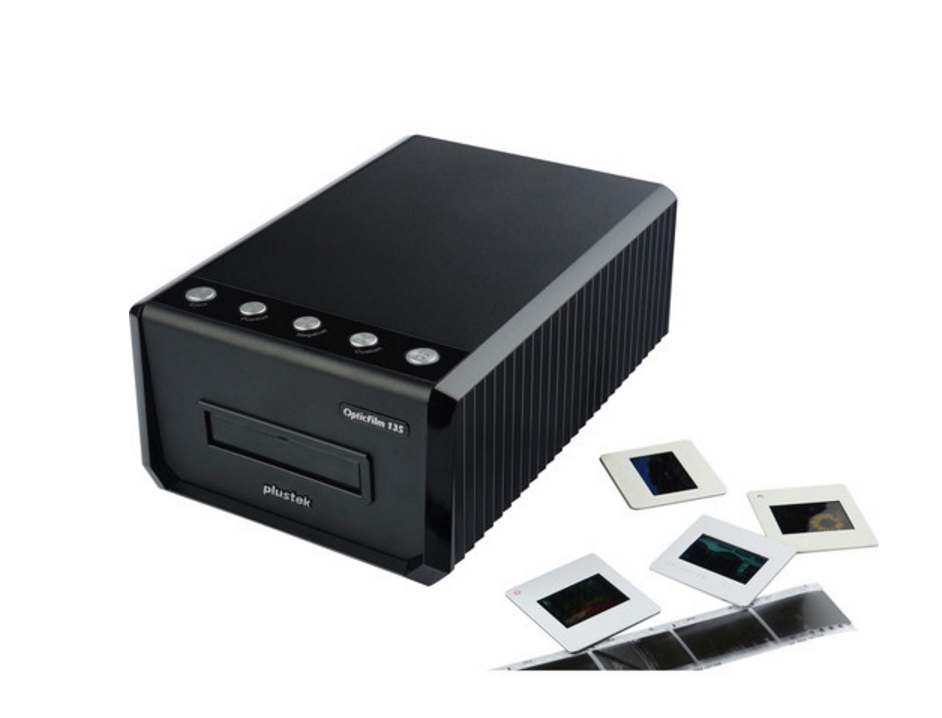
Our OpticFilm 135 is frequently used by people that own or have inherited a large slide collection. The scanner features a motorized transport that lets you scan 4 slides at a time in about 40 seconds. The software that comes with the scanner is designed around ease of use. You load the slides, press the scan button on the scanner and the images are transferred to the software where you can do some basic editing.
What are your suggestions for family members who, either by choice or by fact that they are the only one who will do it, are the family archivist or genealogist?
The family genealogist is typically presented with many different types of items that need to be scanned. These can range from historical documents, letters, photos, photo books, and memorabilia. We find that genealogists will use the type of scanner that matches the task. For example, if you are scanning priceless historical documents that you do not want to be damaged, a scanner like or OpticPro A320 or OpticSlim 1180 is used. If they are scanning books, then either our OpticBook A300 or OpticBook 4800 is used. Some even use our portable MobileOffice S410 if they need to scan documents away from their home or office.
Office paper can be a big challenge do you have any solutions?
Scanning paper is half of the challenge, the other half is managing that paper. Our eScan A150 is a standalone scanner that you can use without a PC. You connect it to your home network via Wi-Fi or Ethernet cable and then you can scan directly to a PC or Mac in your house or anyone of the following cloud services: Evernote, Office 365, Google Drive, Box.Net, Dropbox or SharePoint. The benefit of scanning directly to something like Evernote is that it’s easy to use you can have a complete document management system for a very low cost. You just load your documents in the scanner, and tap the Evernote button and all your scans are safely stored in the cloud.
The eScan A150 is a commercial quality scanner at a price affordable to both home owners and businesses. It’s used in many business applications including: healthcare, legal, retail stores, financial, in addition to home offices.
What if I don't have any technical know how, should I be scared?
While we offer many solutions for business and professionals, we also offer solutions like the ones mentioned above that are designed for ease of use. But even more importantly, we are here to help. If you have a question about your scanning workflow or scanning software, want to know about best practices or you have a problem, you can contact our technical support team by phone or email at no cost.

Interview - Hoardable Hotsauce
As organizers we are always steering our clients towards experiences and consumables as gifts instead of stuff. We spoke with the folks at Connecticut's own Hoardable Hotsauce for obvious reasons.
As organizers we are always steering our clients towards experiences and consumables as gifts instead of stuff. We spoke with the folks at Connecticut's own Hoardable Hotsauce for obvious reasons.
As Professional Organizers we are very interested in the name. What is the origin?
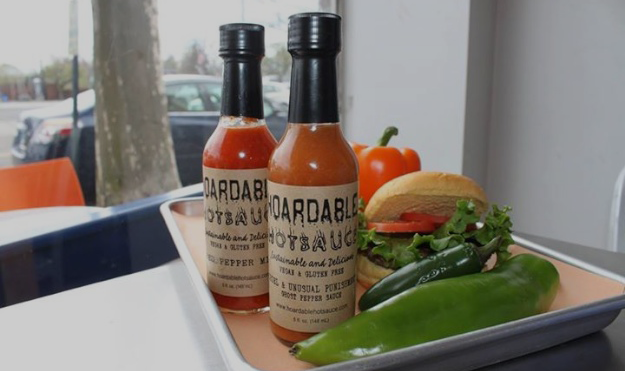
Well the truth is we wish there was a great story behind the name but all we have is as its told, while tasting the test batches at their origin someone said “this stuff is so good you can hoard it” when another replied “well I agree, it sure is hoardable” and just like that, Hoardable Hot Sauce got its name.
Are your sauces made in Connecticut and what is the relationship with the source of the ingredients?
We are fully made in Connecticut. We purchase all of our produce from local organic farms. We personally cut and mix the produce along with our co packers who cook and bottle our product all at their FDA facility, which is also located in Ct.
The must ask questions for hot sauce, which one is the hottest and just how hot is it?
Our hottest sauce is named “Cruel & Unusual Punishment” While the name deems it the hottest of our three sauces it is not a heat level that one might think. We use a Bhut Jolokia Ghost pepper that rates 1.2 million heat units on the Scoville scale; however we cut the heat with other ingredients to ensure we do not over power our fans. It is important to us that we are not the gimmicky hot sauce that you use once and it then sits in your cupboard because it’s too hot to use. Our flavor is what is most important and we want you to taste the food that you are eating while enjoying the heat as an added kick. Use a lot of it, come back for more!
For people unaccustomed to hot sauce what is the best way to ease into the heat?

For the beginner we always recommend our Red Pepper Mix. This is our Mild sauce which we refer to as a liquid salsa, or our utility sauce. It is made with sweet red Bell Peppers, red Jalapeños, Garlic, Onions, Carrots, Sea Salt and Vinegar. It does not bring much heat but is full of flavor. It compliments anything from Chicken to Pizza and even goes great on Eggs.
Any interesting or fun adventures with the sauces since they hit the market
Since we have hit the market it has been a great ride. We have had a lot of fun learning, growing, and brining this product to market in such a diverse arena. We recently partnered with a subscription service “Fuego Box” which is headquartered in California. We were asked to have our “Cruel & Unusual Punishment” sauce featured in their box of the month club. Not only was it flattering to be chosen by their team but we were never ready for the “YouTube” fan base that they had reviewing the sauces. The video reviews while positive certainly brought certain levity when they were pleasantly surprised by the heat of the Bhut Jolokia Ghost pepper.

