

A resource for those seeking information on organizing and transforming spaces.
The Most Valuable Home Improvements for Increasing Resale Value
Not every dollar you put into your home comes back when you sell it. Understanding which improvements actually move the needle on resale value is where smart homeownership starts.
We partnered with a construction company for this post. The opinions in the post are honest. All reviews and opinions expressed in this post are based on our personal views. We are excited because we know you will love it.
Not every dollar you put into your home comes back when you sell it. Understanding which improvements actually move the needle on resale value is where smart homeownership starts.
What's Actually Controlling Your Home's Resale Value
A lot of things affect how much a buyer will pay for your home. Location matters. Market timing matters. But the condition and features of the property itself? That's the one variable you actually control.
Some improvements are purely emotional. They make you love your home more, but buyers won't pay extra for them. Others directly translate to higher offers, faster sales, and more competitive positioning in your market.
The improvements that consistently deliver the best return are the ones that address what buyers notice first, what inspectors flag most often, and what lenders require before they'll approve a mortgage.
That last category matters more than most homeowners realize. If your home has deferred maintenance that causes a deal to fall apart during inspection, no amount of cosmetic upgrades will save it.
Why Not All Renovations Are Created Equal
This is something I walk through with almost every homeowner who's preparing to sell. The instinct is to renovate the things you've always wanted to fix: the master bath, the finished basement, the dream kitchen. And sometimes those are exactly the right calls. But sometimes they're not.
A full kitchen remodel in a $250,000 neighborhood does not produce the same return as a full kitchen remodel in a $700,000 neighborhood. The surrounding market sets a ceiling on what buyers will pay, and you can't renovate your way past it.
The renovations that consistently produce strong returns share a few traits: they appeal to the broadest pool of buyers, they address functional needs rather than personal taste, and they're priced appropriately relative to the home's overall value.
The longer your home sits on the market because buyers keep passing, the more you lose. Carrying costs add up, negotiating leverage shrinks, and the final sale price often suffers. Improvements that help you sell faster are just as valuable as improvements that help you sell for more.
What Buyers Notice Before They Ever Walk Through the Door
The first impression your home makes happens from the street. Curb appeal isn't a cliché. It's a real factor in whether buyers even schedule a showing, and it colors everything they think about the home before they step inside.
The good news is that curb appeal improvements are often among the least expensive with the highest return.
Fresh exterior paint or siding repair consistently ranks as one of the top ROI projects. A home that looks tired from the outside creates doubt before the buyer has seen a single room.
Landscaping and lawn condition matter more than most sellers expect. You don't need elaborate plantings. You need clean edges, healthy grass, trimmed shrubs, and a front entrance that feels welcoming rather than neglected.
The front door is worth paying attention to. Replacing or repainting a front door, adding new hardware, and updating exterior lighting are low-cost, high-visibility improvements that signal the home has been cared for.
These aren't glamorous projects. But they are the ones that get buyers in the door, which is the prerequisite for everything else.
The Renovations That Reliably Return the Most Value
Kitchen Updates
The kitchen remains the room buyers care most about. But the word "update" is doing a lot of work here. A full gut renovation rarely pays for itself. A targeted refresh often does.
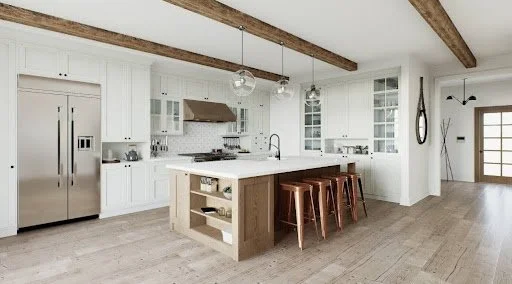
Replacing outdated cabinet hardware, installing new countertops, updating lighting fixtures, and adding a modern backsplash can transform the feel of a kitchen for a fraction of the cost of a full remodel. If the cabinets are structurally sound, painting or refacing them rather than replacing them is often the smarter financial move.
Stainless appliances and stone or quartz countertops have become baseline expectations in many markets. If yours are lagging well behind, it's worth addressing.
Bathroom Improvements
Updated bathrooms rank alongside kitchens in buyer priorities. Again, the goal isn't a luxury spa renovation. It's removing the things that make buyers wince.
Dated tile, old fixtures, poor lighting, and visible mildew or water damage are the red flags to address. A bathroom that looks clean, bright, and functional will outperform a technically superior bathroom that shows signs of neglect.
If you have only one bathroom, adding a second, even a modest half bath, can meaningfully expand your buyer pool and command a higher sale price.
Flooring
Few things date a home faster than worn carpet or scratched hardwood. In most markets, hardwood floors (or quality engineered hardwood) are a strong selling feature, particularly on the main level of the home. Carpet in bedrooms is generally acceptable; carpet in living areas and kitchens is not.
Replacing flooring before listing is one of those improvements that rarely hurts and frequently helps. It's also one buyers can see and feel immediately. There's no uncertainty about condition the way there might be with a roof or HVAC.
Mechanical Systems: HVAC, Roof, and Windows
Here's the category that catches sellers off guard. Buyers, along with their inspectors and lenders, pay close attention to the age and condition of the major mechanical systems. A home with a 25-year-old roof, an aging HVAC system, and drafty windows is a harder sell, even if the kitchen was just renovated.
You don't necessarily need to replace everything. But you do need to know the condition of these systems, disclose appropriately, and price or credit accordingly. Replacing a failing HVAC system before listing can prevent a deal from collapsing. A new roof is one of the highest-return projects in terms of preventing buyer objections, even if it doesn't always add dollar-for-dollar value on paper.
Finished Basement or Additional Living Space
In markets where square footage is at a premium, a finished basement or converted bonus room can add meaningful value. The key is ensuring the space is properly permitted, insulated, and finished to a standard that feels livable and not like an afterthought.
Unfinished basements that are clean, dry, and well-maintained are far better than unfinished basements that look like they've been ignored for twenty years. Even without a full finish, addressing moisture, improving lighting, and cleaning up the space sends a message to buyers.
The Mistake That Costs Sellers the Most
The most expensive renovation decision is usually the one made too late or based on personal preference rather than market data.
Sellers who renovate their taste into a home, adding bold wallpaper, very specific tile choices, or room layouts that don't match how most buyers live, can actually make the home harder to sell. Neutralizing a highly personalized space is often more work for buyers than starting with a blank slate.
The second most common mistake is skipping the low-cost, high-visibility improvements in favor of expensive projects that most buyers won't even notice. Fresh paint in a neutral, consistent color is one of the highest-return investments a seller can make. It costs relatively little, it photographs well, and it removes one of the most common reasons buyers pass on a showing.
If you're not sure where to focus, here's a useful exercise: walk through your home as if you're seeing it for the first time. Better yet, ask a friend or real estate agent you trust to do the same and tell you honestly what they notice.
What to Check Before You List
If you're within twelve months of selling, there are a few fundamentals worth reviewing before you decide on any major improvement projects.
Start with a pre-listing inspection. Knowing what a buyer's inspector is going to find puts you in a position to address it on your timeline and your terms, rather than scrambling during the negotiation period or watching a deal fall apart.
Check the condition of your roof and HVAC. These are the items most likely to trigger repair requests or price reductions. If they're near the end of their useful life, factor that into your planning.
Look at comparable sales in your neighborhood. What are homes selling for? What features do the highest-selling homes have? This tells you where the ceiling is and helps you prioritize the improvements most likely to get you to the top of that range.
When Should You Hire a Professional?
Some improvements are genuinely DIY-friendly. Paint, landscaping, hardware replacement, and light fixture updates are within reach for most homeowners and can be done without professional help.
Others are not. Electrical, plumbing, roofing, and structural work should be permitted and professionally executed by a local contractor such as Payne Family Construction. Unpermitted work can come back to haunt a sale. Buyers and their lenders will want documentation, and work done without permits can complicate or derail a closing.
For large projects, get multiple quotes. For projects that affect the home's systems or structure, prioritize quality over cost. The goal isn't to spend as little as possible on the renovation. It's to maximize what comes back at closing.
The best home improvements aren't always the most dramatic ones. They're the ones that meet buyers where they are, remove obstacles to a purchase decision, and position your home competitively in your market.

Organize to Maximize: Boost Your Home’s Value
When a home looks too clean, it feels like nobody lives there. This standard of cleanliness is unrealistic. Yet, when it’s time to sell, that’s exactly what buyers fall for. The illusion of order helps tick all the boxes. Now, the key to perfect organisation is about finding a way to make rooms look bigger, calmer, and more expensive than they really are. The secret is not owning less, but showing less, and if you don’t know how to do it, here are some ways to get started.
When a home looks too clean, it feels like nobody lives there. This standard of cleanliness is unrealistic. Yet, when it’s time to sell, that’s exactly what buyers fall for. The illusion of order helps tick all the boxes. Now, the key to perfect organisation is about finding a way to make rooms look bigger, calmer, and more expensive than they really are. The secret is not owning less, but showing less, and if you don’t know how to do it, here are some ways to get started.
The First Impression
The first ten seconds matter a lot because they can tell potential buyers a lot about your Aussie home. First, you have to make the entryway visually appealing. You should vacuum everything and make sure there are no signs of mud or dust layers on the flooring.
You should also mop the floor with warm water and eucalyptus oil instead of harsh cleaning chemicals. Eucalyptus makes the air smell clean. And keep one neutral scent that lingers. You don’t want the buyers to smell stale air. Opening the windows and sweeping the floors before potential buyers arrive would be a smart move.
The Storage Secret No One Talks About
Attics, sheds, and garages are goldmines. If you have either one of them, you’re lucky because these are the secret chapters of a home’s story. Most owners throw things in there thinking buyers won’t care, but when people look for family homes for sale in Mildura, or any other booming regional spot, they absolutely do.
Transparent bins are a good idea because they reveal contents without opening anything. And if you can create walking space between stored items, it changes everything. Suddenly, it’s not storage, it’s potential. People like to think that the rest of the house reflects this neatness, so they’re immediately more invested.
Kitchen Glow and Flow
A greasy kitchen is an immediate no. It tells buyers that you didn’t take good care of this part of the house, and it also kills the illusion of a perfect home.
So, scrub the stovetop with a paste of baking soda and warm water. But here’s the trick: wipe it off with a microfibre cloth soaked in vinegar and a drop of peppermint oil. The mint cuts through any residual cooking smell. And check your grout. White grout sells. Grey grout does not.
Remember that every detail matters, so rearrange the dishes and the mug collection. Even the fridge handle matters. You should wipe it with disinfectant and olive oil because it makes plastic look brand new and metallic ones catch the light just right.
Bathroom Is The Silent Judge
Bathrooms sell houses, but only if they look immaculate. And only if they smell like nothing. Limescale around taps is a value killer, so when you organize your home, make sure to put this on a to-do list. Soak a paper towel in vinegar, wrap it around the tap base, and leave it for ten minutes. The fizzing you’ll hear is your equity coming back to life.
Bathroom furniture plays a huge role here. Arranging for more storage space is not only a smart move, but a visual one, too. When everything has a place, the bathroom looks more intentional and somehow larger.
Windows, Light, and Illusion

Any real estate agent will tell you that people buy light more than they buy rooms. That’s why windows need to vanish. They need to be so clean that they look almost non-existent. Clean them with one part vinegar to one part water, wipe in vertical strokes inside, horizontal outside.
Don’t forget to wipe window sills, especially if you own some plants. Dust and soil marks just look unprofessional. And wash your curtains properly. Musty curtains dull the entire room, like fog. If you want to cheat brightness, use mirrors directly opposite windows. But clean those too because fingerprints kill the illusion.
Conclusion
A valuable home is the one that feels clean down to the air. Truth be told, buyers don’t always consciously know why they like a house; they just feel it’s fresh. That’s the scent of properly dried towels, clean door handles, and invisible fingerprints. Cleaning for value is important. So, if your house smells faintly of lemon oil and is calm, don’t be surprised when people start picturing themselves there. That’s not luck. That’s the power of proper polishing.