A resource for those seeking information on organizing and transforming spaces.
Water heater repair Marietta: how homeowners can avoid costly emergency breakdowns
Water heater repair in Marietta is something most homeowners don’t think about until the day the hot water suddenly disappears.
We partnered with a home improvement company for this post. The opinions in the post are honest. All reviews and opinions expressed in this post are based on our personal views. We are excited because we know you will love it.
Water heater repair in Marietta is something most homeowners don’t think about until the day the hot water suddenly disappears.
I learned this the hard way one winter morning when the shower turned ice cold halfway through.
That moment quickly shifts your mindset from routine comfort to urgent problem-solving.
Understanding how these systems fail and what warning signs to watch can save you from stress, expense, and disruption.
Most breakdowns don’t happen overnight.
They build up quietly through small issues that go unnoticed.
Why water heaters fail when you least expect it
Water heaters work under constant pressure, heat, and mineral exposure.
Over time, sediment settles at the bottom of the tank and hardens.
This buildup forces the system to work harder and reduces efficiency.
In many Marietta homes, hard water accelerates this process.
I once visited a friend whose unit was making popping sounds for weeks.
He ignored it until the tank overheated and shut down completely.
That sound was trapped steam under sediment layers.
Ignoring small noises often leads to larger system failures, which is why timelywater heater repair Marietta is essential to prevent bigger issues.
Early warning signs homeowners should never ignore
Inconsistent water temperature
Fluctuating hot water is often the first sign that something is wrong.
You may notice it turns warm, then suddenly cold, then hot again.
This usually points to thermostat issues or sediment interference.
Catching this early can prevent full system failure.
Strange noises coming from the tank
Popping, rumbling, or banging sounds indicate internal buildup.
These noises mean the heater is struggling to maintain performance.
I’ve heard tanks that sounded like popcorn machines before they failed.
That’s never a good sign.
Rusty or discolored water
Brown or metallic water suggests corrosion inside the tank.
This can lead to leaks or contamination.
Once corrosion spreads, replacement may be the only option.
Water is pooling around the base
Leaks often start small and grow quickly.
A slight puddle can turn into major water damage if ignored.
Always investigate even minor moisture around the unit.
Simple maintenance habits that prevent major repairs
Flush the tank regularly
Flushing removes sediment buildup and improves efficiency.
Most professionals recommend doing this once or twice a year.
It’s a simple process that extends the lifespan of your system.
Check the anode rod
The anode rod protects the tank from rust.
Over time, it deteriorates and needs replacement.
Ignoring it allows corrosion to attack the tank directly.
Inspect pressure relief valves
These valves prevent dangerous pressure buildup.
If they fail, the system becomes unsafe.
Testing them periodically ensures proper function.
Real-life experience: how a small fix saved a major expense
A neighbor in Marietta noticed his water wasn’t getting as hot as usual.
He assumed it was just a seasonal temperature change.
After a quick inspection, a technician found heavy sediment buildup.
A simple flush and minor part replacement solved the issue.
If he had waited, the heating element would have burned out.
That repair would have cost significantly more.
Preventive action always costs less than emergency service.
When to call a professional instead of DIY
Not every issue should be handled alone.
Gas heaters, electrical components, and pressure systems require expertise.
Trying to fix complex issues without proper knowledge can make things worse.
I once attempted a DIY repair and ended up damaging the thermostat wiring.
That mistake doubled the repair cost.
Knowing your limits is part of smart homeownership.
Energy efficiency and cost savings go hand in hand
A well-maintained water heater uses less energy.
Sediment buildup forces the system to work harder and consume more power.
This increases utility bills over time.
Efficient systems heat water faster and maintain consistent temperature.
Regular servicing keeps operating costs low and performance high.
Tank vs tankless systems: what homeowners should know
Traditional tank systems
Tank heaters store hot water and are common in many homes.
They are reliable but require regular maintenance.
Sediment buildup is their biggest challenge.
Tankless systems
Tankless units heat water on demand.
They are energy-efficient and space-saving.
However, they still require descaling and maintenance.
Ignoring maintenance leads to reduced performance even in tankless models.
Seasonal tips for Marietta homeowners
Cold weather puts extra strain on water heaters.
Incoming water temperatures drop, forcing the system to work harder.
Insulating pipes and the tank can improve efficiency.
During summer, mineral buildup tends to accelerate due to higher usage.
Adjusting maintenance schedules based on seasons helps prevent breakdowns.
How proactive care protects your home investment
Your water heater is one of the most used appliances in your home.
Neglecting it risks not just inconvenience but also property damage.
Leaks can damage floors, walls, and nearby structures.
Routine inspections reduce these risks significantly.
I’ve seen cases where a neglected tank caused thousands in water damage.
That situation could have been avoided with basic maintenance.
Final thoughts on avoiding emergency breakdowns
Water heater repair Marietta situations often start with small, avoidable issues.
Paying attention to early warning signs makes all the difference.
Regular maintenance, timely repairs, and professional inspections keep systems running smoothly.
A little effort today prevents major disruptions tomorrow.
Hot water should be something you rely on, not worry about.

Understanding The Life Cycle Of Water Heaters: What To Expect And When To Replace
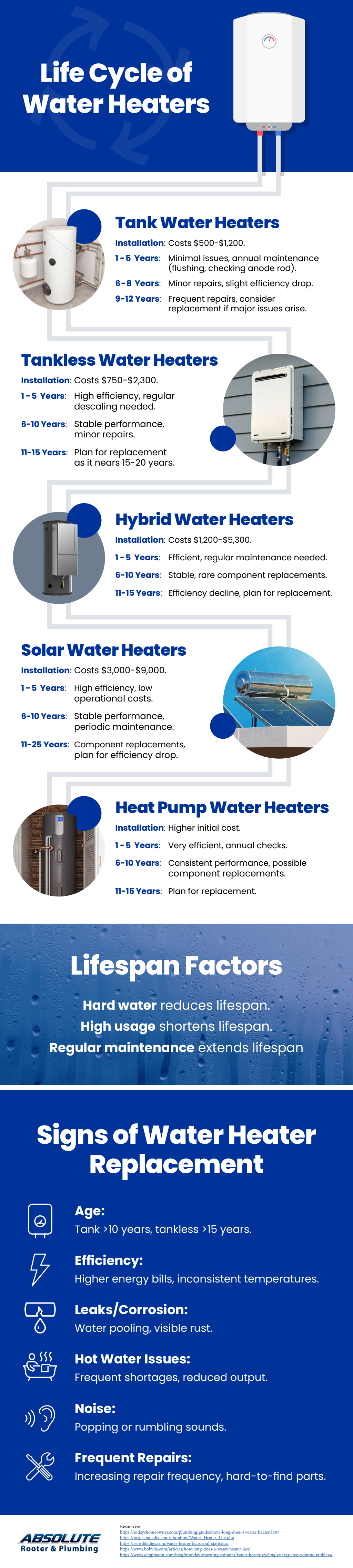
Water heaters are essential home appliances, providing hot water for everything from showers to dishwashing. Like most home systems, they have a predictable life cycle, and knowing when to replace or maintain them can save on energy costs and prevent unexpected breakdowns.
Water heaters are essential home appliances, providing hot water for everything from showers to dishwashing. Like most home systems, they have a predictable life cycle, and knowing when to replace or maintain them can save on energy costs and prevent unexpected breakdowns.
Average Lifespan of Water Heaters
The typical water heater lasts between 8 and 12 years, although various factors can influence this range. Tankless water heaters, for example, tend to last longer—around 20 years—since they heat water on demand rather than storing it. Traditional tank-style water heaters experience wear over time, as minerals and sediment in water can accumulate, impacting efficiency.
Signs of Wear and When to Consider Replacement
As water heaters age, they often show warning signs. Reduced hot water availability, fluctuating temperatures, or rust-colored water could indicate that the tank is deteriorating. Another sign is unusual noises, such as banging or popping sounds, which may point to sediment buildup at the bottom of the tank. These issues often signal that it’s time for maintenance or, in some cases, a full replacement.
Regular inspections by a professional offering plumbing services can help identify early signs of trouble and recommend whether maintenance or replacement is the best option. Routine flushing of the tank to remove sediment can also extend the life of your water heater.
Choosing the Right Replacement
When the time comes to replace your water heater, consider factors like energy efficiency, household water needs, and cost. Tankless models are a good option for energy-conscious homeowners, while traditional tanks remain a reliable and budget-friendly choice for many families. Newer models often come with advanced insulation and heating technology, making them more efficient than older models and potentially lowering utility bills.
Understanding the life cycle of your water heater and knowing when to replace it are key to maintaining a steady supply of hot water and avoiding unexpected repairs. With the help of professional plumbing services, you can keep your system running smoothly and ensure that your home stays comfortable and efficient year-round.