

A resource for those seeking information on organizing and transforming spaces.

7 Hacks to Become a Successful Interior Decorator
Do you have that flair for designing and decorating the furniture?
Do you keep on suggesting to people how they should decorate their house's interior whenever you visit them?
If yes, then the career of being an interior decorator is the best choice for you.
We partnered with a design company for this post. The opinions in the post are honest. All reviews and opinions expressed in this post are based on our personal views. We are excited because we know you will love it.
Introduction
Do you have that flair for designing and decorating the furniture?
Do you keep on suggesting to people how they should decorate their house's interior whenever you visit them?
If yes, then the career of being an interior decorator is the best choice for you.
But is it only the interest that matters or you need some additional skills?
Indeed, to excel in this field, you have to customize the designs sometimes according to your unique plans or according to the customer's needs. You can’t use those old designs you learned during your college days or even those that you read a year back in a magazine! Requirements change with time, and so do the expectations of the customers.
For starting your career in this field, taking up freelance interior designing gigs can also be beneficial for you. This article will discuss seven hacks that can help you to stand apart from other interior decorators in the market.
1. Get An Education.
You might be very good at designing and can think out of the box ideas, but people generally look for professionals with a degree in interior designing in their hands. Also, there is no harm in getting a formal degree in this field as it will eventually increase your job prospects.
You can mention it in your portfolio and internships/training. It will add more value to it. Additionally, you can discuss your designs with your professors and friends. There are chances that you might open a start-up business or become a freelancer.
To pursue this career, there are some license exams that are compulsory to pass like NCIDQ (National Council For Interior Design Qualification) or CCIDC (The California Council For Interior Design Certification), etc. Thus, getting a certificate should be the first and foremost step in becoming a successful interior decorator.
2. Build A Portfolio.
Experience matters the most. You can’t expect big firms to hire you directly; for that, you must do some projects. The best way to begin is to start with some free projects or work for NGOs (Non-Governmental Organisation) at a very less price.
Capture those moments and designs and post them on your social media pages. On professional platforms like LinkedIn, ask people for internships and projects. Market your work through social media. This will help you land at your dream company.
3. Start Your Own Business.
After you have spent a lot of time working with big firms and gained experience, it can be the right decision to open your interior designing company. Make a unique business plan that will solve all the bottleneck issues you have observed in this industry over the past few years.
Try to address every issue, for eg., providing services online, social media marketing, making an app and website, hiring the best decorators for your projects, etc.
4. Start Virtual Decorating.

You can ask your customers to click pictures of the parts, which they want to be decorated, and send them to you. Without stepping outside, you can send them designs and charge a fee for it. Using various software, you can do this task and earn a good number of bucks.
5. Keep Your Knowledge Up To Date.
Get a copy of every magazine, read all the trending blogs and articles on interior designing to keep yourself updated. Keep on searching the web for new ideas and tips to scale your skills and business. Networking will also help you. Start meeting experienced people and participate in discussion forums.
6. Network Is Net Worth.
The more you know people, the more your reach will expand, and the more you will become popular. If you have a business, then the same network will help you get customers. Business cards, a website, a blog, an app, and social media will help you grow your network.
7. Design According To The Location.
Implement the designs which suit a particular location, climate, and local taste. Giving a pinch of modern trends to the old antique looks can work for those people who don’t want to lose their old memories.
Conclusion
Interior designing and decorating require patience. If new ideas don’t strike your mind, keep calm, and discuss with your seniors or friends for suggestions. Be empathetic and think about how a room makes you feel.
Inspiration and enthusiasm are the two doses that you have to take every day before starting your work. Never get demotivated even if your designs get rejected multiple times. This career is about trying new things with various combinations.
Don’t overspend on any room to match your needs. Concentrate on getting new projects and gaining experience. Advertise your work as much as possible. Contact more and more people through podcasts, blogs, and live video sessions. If there is any workshop being conducted, do attend that. With all the above hacks, you can surely become a successful interior decorator.
7 Ways to Make a Small Bathroom Feel Bigger
Small bathrooms can be a pain point in any home. And if the bathroom is shared between siblings or guests, it can become a tight spot when everyone is getting ready, causing frustration. While it’s easy to blame it on the small bathroom, it can also be created by the cosmetic clutter scattered across the vanity, the mismatched materials and colors or a darkly lit ar

Small bathrooms can be a pain point in any home. And if the bathroom is shared between siblings or guests, it can become a tight spot when everyone is getting ready, causing frustration. While it’s easy to blame it on the small bathroom, it can also be created by the cosmetic clutter scattered across the vanity, the mismatched materials and colors or a darkly lit area.
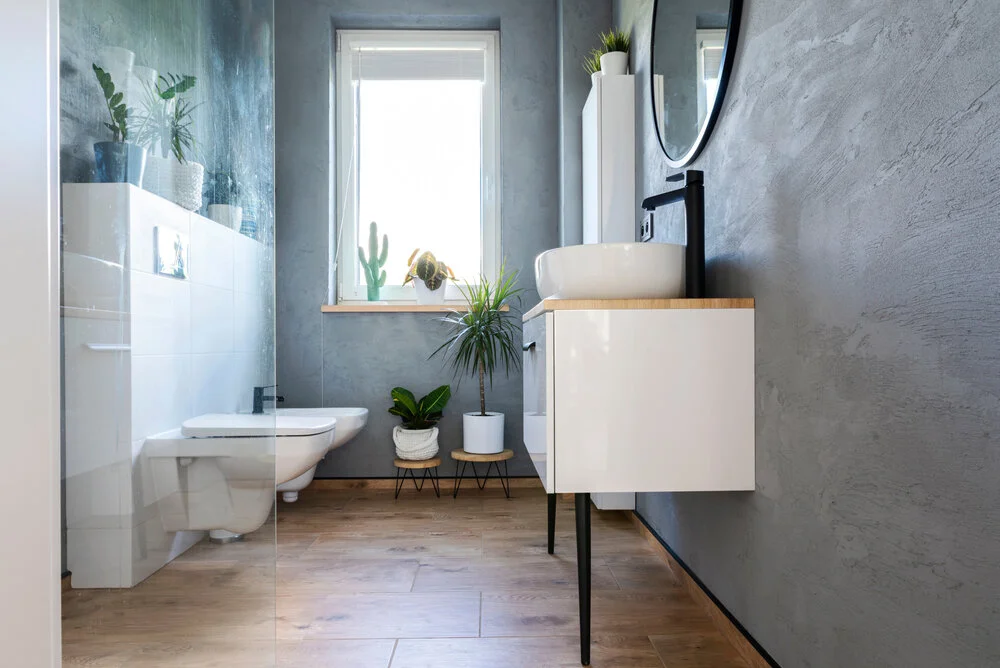
Basically, you want to give a small bathroom room to breathe and make it feel less cramped. Many tricks of the trade are simply an illusion to make a room feel bigger than it truly is. Ready for a complete bathroom restoration? Here are seven ways to make a small bathroom feel bigger without sacrificing amenities and comfort.
1. Mount a Large Vanity Mirror
Mirrors offer an optical illusion and trick our eyes to believe there’s more space. Plus, they actually reflect more light into the room, which is even more beneficial if it’s natural sunlight. If your vanity has a smaller mirror mounted above, replace it with something more substantial. Seek out a large mirror the same length as your vanity and approximately three feet high. Consider a frameless mirror as well.
When looking for the perfect bathroom mirror, make sure it has sufficient hardware to support itself. You could also seek out a standing floor mirror, flip it horizontally and attach hardware. More importantly, any mirror you mount in a moisture-prone space should have a tarnish-resistant coating.
2. Welcome Natural Lighting
Ample lighting is a must-have in any bathroom space–and for small spaces, this goes double. But you can’t beat natural lighting, especially since this is where you apply makeup and ready yourself for the day. Remove any dirt and grime from existing bathroom windows, even those hard-to-reach skylights. Get rid of curtains and sheers, replacing them with more translucent rolling shades or frosted privacy screens.
3. Install a New Bathroom Vanity Cabinet
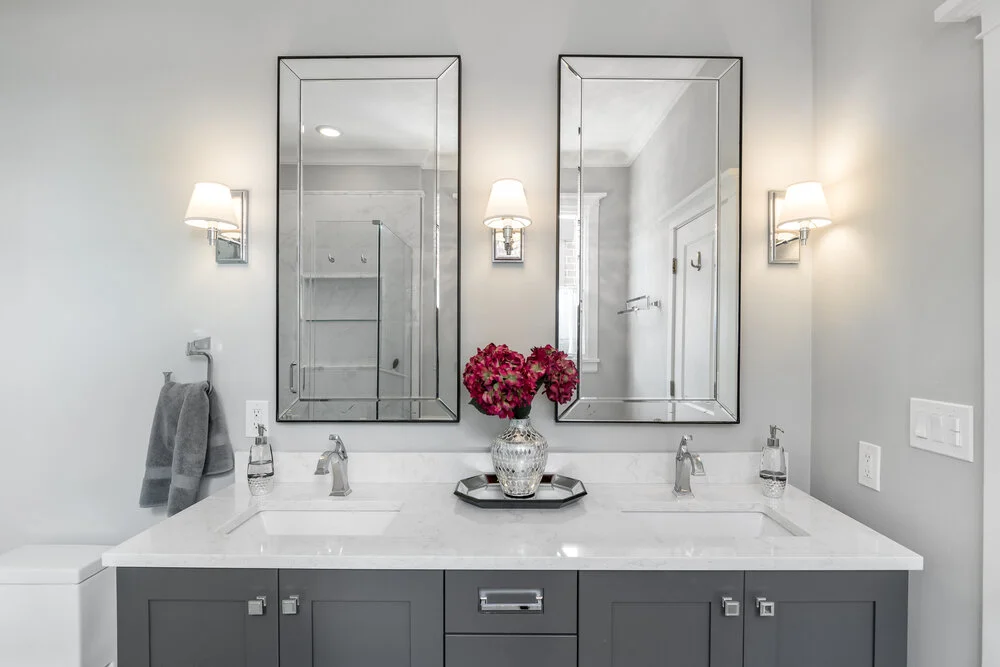
For a bathroom with limited storage space, vanities should not be overlooked. If you have a vanity with an open base, replace it with something that can provide a more hidden storage solution. Create a few cabinets and drawers to hold toiletries, cleaning supplies or extra towels and linens. With a small bathroom, you have to make the most of every square inch.
However, on the flip side, if you have an extra small bathroom like a powder room intended for guests, consider a pedestal sink. Pedestal sinks can open up a small floor plan and make the room feel bigger.
4. For Decorations, Less Is More
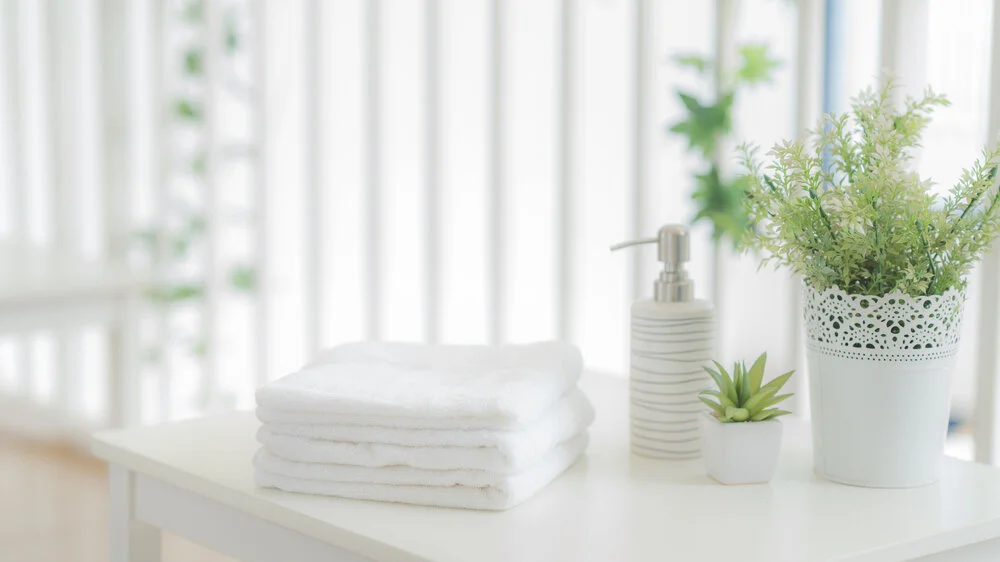
While it’s tempting to try and add character to a small bathroom, it can quickly turn into clutter. Instead, remember that less is more. Cut back on the decorations and artwork, aiming for a minimal look with just a few functional items. Roll out a cozy bath rug and hang some framed art to make it more inviting, but avoid adding multiple trays filled with cosmetics and nail polish. For these items, store them in a decorative closed storage container. When adding decor, greenery can add a nice spa-like touch, too.
5. Keep a Light Color Palette, Free of Lines
For small bathrooms, stick to a light, neutral and muted color palette that blends the space together, erasing lines that tend to divide the space visually.
For example, many bathrooms are designed with wainscoting or tiles, reaching halfway up the wall. When design sensibilities would tell you to accent this area in a different color, you actually want to avoid this with small bathrooms. Instead, try to keep the bathroom color palette one consistent hue. Ideally, wall tiling should extend all the way to the ceiling.
Another way you can open up a small bathroom is to swap out wide baseboards with narrow ones and remove crown moldings altogether to add some height to the bathroom.
6. Install Frameless Glass Shower Doors
Since the shower stall is one of the largest components of a bathroom, make sure it doesn’t block off and obscure half the space. If you have a standing shower or bath/shower combination, give it a major update with a frameless glass shower door. When you add this layer of transparency, you can make a small bathroom feel bigger and deeper.
Even a bath/shower combo with a curtain can make a space feel cramped. But with tempered glass doors–even if they’re frosted for privacy–you can open up a space and even allow for natural sunlight to flood in. Since you are opening this otherwise private space, give that an update as well with a beautiful new tile surround. If possible, eliminate the need for storage racks by creating built-ins shelves within the surround.
Overall, tempered glass can open up many different areas. Use tempered glass shelves to stack towels or even create a partition between the toilet and vanity space. There are many uses!
7. Use Similar Materials and Finishes
An eclectic mix of materials is wonderful for a boho-inspired living room. But when it comes to small bathroom spaces, keep finishes consistent. Otherwise, you will create a bathroom that feels cramped, busy and fussy. Instead, aim for no more than two to three materials and finishes.
Carry the flooring material–whether it resembles wood, stone or tile–upward on the walls and along the vanity backsplash or shower surround. Also, when it comes to the floors, choose a large tile size or flooring in a light color. Closely match the vanity countertop with the shower/tub surround. If your vanity faucet set, shower head, towel rods and cabinet pulls are all mismatched finishes, replace them with a more cohesive one. Remove natural wood wainscoting or paint it over in the same color as the walls.
Guest Post - How to Optimize Negative Wall Space
What do FedEx and the Broadway musical Frozen have in common? Sounds like the lead-in to a joke doesn’t it? No punchlines here, though. The answer is simply, “negative space.” Negative space is the area surrounding an object, an area that creates focus for the object it surrounds and that can have interesting impacts itself.

What do FedEx and the Broadway musical Frozen have in common? Sounds like the lead-in to a joke doesn’t it? No punchlines here, though. The answer is simply, “negative space.” Negative space is the area surrounding an object, an area that creates focus for the object it surrounds and that can have interesting impacts itself.
If you look at the FedEx logo, you’ll find that the negative space between the “e” and the “x” forms an arrow, a simple but brilliant design that has won numerous awards and consistently places it on lists of the best logos ever created. Now take a look at the broadway poster for Frozen, created by advertising agency Serino Coyne and UK artist Olly Moss. The positive image created by a snowflake uses negative space to create images of the characters.
Negative space then is a powerful design consideration, and not something to fear should you find yourself facing that empty wall or corner. Negative space relaxes our eyes as we track a room and helps bring objects into stark focus. Using it properly is thus a brilliant way to emphasize some singular showpiece. It can also, as the two above examples suggest, create interesting effects in combination with the objects you choose to place in your empty areas.
Using Your Empty Spaces
A Little Bit of Nothing: Don’t feel that you have to fill your negative spaces. At least not in the traditional sense. Interesting architecture can be accented by leaving the space unfilled but with a little help. A staircase, for example, with a nook underneath can be accented by lights to define the lines of the stairs. An empty wall can become a conversational piece of art with carefully considered placement of wallpaper to shape the space. Even the use of bold color in a negative space can create contrast that livens the emptiness and brings life to the objects around it.
Asymmetry the Symmetry: In an article on symmetry, physicist Alan Lightman said, “Symmetry represents order, and we crave order in this strange universe we find ourselves in... [It] helps us make sense of the world around us.” But because our eyes seek symmetry, creating asymmetry with design elements in a negative space can have a strong impact on the viewer. Try bisecting a space and placing art on one side while creating a minimalist setting on the other using an object such as a small lamp that emphasizes the asymmetry but doesn’t distract from the work.
Wall Hangings: The two main approaches to filling negative space on a wall are to use one large piece, such as a painting or tapestry, or to create a gallery of smaller pieces. The latter approach is perfect for considering the negative space between pieces as a means of creating interesting design patterns. Designers recommend some thread of unity between pieces when using the gallery approach. Unity can be created by using themes or by incorporating a specific unifying color.
Shelves: Adding shelving to negative space can be a great way of creating visual interest. Don’t feel locked in by traditional flat shelving. Unique more dimensional shelving offers depth to a negative space and can create interesting texture, depending on the material and colors of the shelving. Placement of the shelves is another way to create powerful visual patterns and to play with either symmetry or asymmetry.
Mirrors: Adding a mirror to a negative space, or even multiple small mirrors, draws light to the objects placed in a room and makes spaces feel larger. This can be an ideal use for that small room you’re not sure what to do with. A well-placed mirror also acts as a central focal point and can draw the eyes away from architectural elements you find displeasing.
Non-Wall Spaces: Every negative space is not a wall, and sometimes we need ways to fill an awkward corner or space where traditional furnishings don’t seem to fit. One surefire way to deal with emptiness is to incorporate a little greenery (and what could be more feng shui). This, by the way, can also be incorporated on wall space as part of a shelving pattern. Lamps are another method for filling void space and for providing brightness to an area. Combined with a few complementary pieces, such as a basket of pillows or a unique and vintage find, lamps not only provide warmth but make a space feel cozy.
Finally, you can take the opportunity for a negative space to provide you a little extra comfort. Small niches can be an ideal area to build a dry bar for nights of entertainment. Or, if a space is right, you can try hanging a hammock for some relaxed reading or a little snooze.
Don’t be afraid of negative space. Choose a design approach and gather your materials. Stand back from the space as far as you can to get a sense of how it draws focus and what might work best there. Then lay out your materials before you place them so that you can visualize what the finished space will look like. Find the arrangement that brings you a sense of harmony and that accents your favorite pieces.
Ivan Young is a writer for Bauhaus2YourHouse, a leading retailer of designer, modern classic and contemporary furniture.

Simple Ways To Enhance Your Living Room
The living room is one of the most used rooms in the house, so why would you want it to look outdated? Check out these simple ways to enhance your living room.
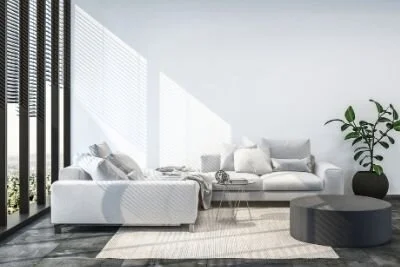
With the exception of the dinner table and bedroom, a home’s living room is typically where people spend the majority of their time at home. If you ever have guests over, you likely congregate in the living room. If you’re watching the big game, it probably happens in the living room as well. All that said, does your living room scream inviting? Is it a place you’d want to relax in? If the answer to either of those questions is no, we have some simple ways to enhance your living room; learn what they are in the guide below.
Give the Walls a Fresh Coat of Paint
Fresh paint is probably the easiest way to bring any room back to life. There are two routes you could go when it comes to paint. You could either repaint the color you already had which might be counterintuitive if your original color is outdated. The other option is painting the walls a modern neutral color. Pro tip: when in doubt, go for a light gray.
Get Unique Light Fixtures
Most homes have underwhelming light fixtures in their living room or no fixtures at all—you should change that and get something unique. Now, you need to be careful when choosing unique light fixtures because you want a focal point in your living room, but the light fixtures shouldn’t be it. Look for light fixtures that will fit the room and décor naturally but something that’s different than what you’d normally pick.
Upgrade the Furniture
Everybody expects to walk into a living room and see basic furniture, so why not change that expectation? Updating your furniture to something more modern or unique can take your living room to another level. If modern styles aren’t your thing, go for something reclaimed or vintage—it’s sustainable and unique.
Upgrade Your Entertainment Center
No living room is complete with the television, you may have the TV mounted on the wall to increase your experience, but you can do more than just add a TV. Enhance your living room with essential entertainment center items like video game consoles, 4K television, and streaming devices. If you’re a big movie buff, you could make your entertainment center more theater-like with a sound system and projector.
If you’re only going to focus on enhancing one room in your home, the living room is probably the best option for most people. By applying our simple ways to enhance your living room, your friends and family will be amazed when they come to visit. You might even surprise yourself.

