

A resource for those seeking information on organizing and transforming spaces.

Dream Home Ideas Worth Remodeling Over
Transforming a home into a dream home is a voyage of creativity and precision. The essence of remodeling lies in enhancing both the aesthetic appeal and functionality, ensuring every change contributes to the abode's value and occupants' quality of life. This listicle unfolds a series of remodeling ideas that promise not only to elevate the living experience but also to significantly enhance the property's worth.
We partnered with a home improvement company for this post. The opinions in the post are honest. All reviews and opinions expressed in this post are based on our personal views. We are excited because we know you will love it.
Transforming a home into a dream home is a voyage of creativity and precision. The essence of remodeling lies in enhancing both the aesthetic appeal and functionality, ensuring every change contributes to the abode's value and occupants' quality of life. This listicle unfolds a series of remodeling ideas that promise not only to elevate the living experience but also to significantly enhance the property's worth.
Remodeling a Basement
The basement, often overlooked, holds immense potential for adding invaluable living space. Transforming this underutilized area can serve various functions – from a cozy family room, an efficient home office, to an entertaining home theater. The key lies in identifying the need and tailoring the space to fulfill it, thereby increasing both the home's utility and appeal. You can do this a number of ways, either by doing it yourself or hiring remodeling or construction companies, for example, Mac's Construction, to help you.
Adding Natural Light
Adding natural light to a home is a way to create a warm and inviting atmosphere while also benefiting overall health and well-being. Opening up a room to natural light can be achieved through various ways, such as installing skylights or enlarging windows. Paint color choices can also play a role in reflecting light throughout the space. These modifications not only brighten the area, but they can also create the illusion of more space, making the home seem larger and more open. By bringing the outside in, natural light creates a comfortable and welcoming environment for both guests and homeowners.
Eco-Friendly Upgrades
As the world becomes increasingly aware of the impact humans have on the environment, sustainable living has become a top priority. Eco-friendly upgrades, which include the use of energy-efficient appliances, solar panels, and sustainable materials, are becoming increasingly popular among homeowners. Not only do these upgrades benefit the environment, but they can also reduce utility expenses, which can lead to substantial savings in the long run. In addition, incorporating green choices into a home's design can appeal to the rising eco-conscious market, potentially increasing the home's attractiveness and value. Making conscious efforts to improve the sustainability of a home not only benefits the environment but also contributes to a more sustainable and prosperous future.
A noteworthy eco-friendly enhancement is the integration of residential solar energy systems. By harnessing the sun's power, these systems can significantly lower electricity costs and reduce reliance on fossil fuels. Homeowners are increasingly turning to home solar installations to achieve greater energy independence and long-term financial savings, all while supporting environmental conservation efforts.
Repairing or Replacing a Roof
Homeowners know that their roof is an essential component of their residence, offering necessary protection against harsh weather conditions. As such, it is imperative to take action to prevent small problems from developing into significant challenges. Regular maintenance and prompt repairs can save homeowners significant costs in the long run. Better yet, replacing the roof with high-quality and long-lasting materials can add to the home's curb appeal while offering peace of mind. Whether repairing or replacing the roof, homeowners must be vigilant in their pursuit of ensuring top-notch safety and value for their homes.
Remodeling a home to create a dream living space involves careful consideration of both functionality and aesthetics. With the right ideas and execution, homeowners can elevate their living experience while significantly increasing their property's value. From transforming underutilized spaces to incorporating eco-friendly upgrades, there are endless possibilities for creating a dream home worth remodeling. By implementing these ideas, homeowners can turn their current residence into a dream haven and enjoy the benefits for years to come. Remember, the journey of remodeling is a continuous one, always evolving to meet changing needs and desires. So don't be afraid to dream big and continue finding new ways to transform your home into the perfect space for you and your family.
Cozy Corners: Unique Furniture for Small Spaces
A small home does not need to be a boring home. With the right furniture and design choices, small spaces can transform into cozy and inviting retreats, maximizing both style and functionality. Whether living in a studio apartment, a tiny house, or a compact urban loft, there are plenty of innovative furniture options available to help maximize space. In this article, we'll explore some unique furniture ideas tailored specifically for small spaces, allowing you to create cozy corners that reflect your personality and lifestyle.
We partnered with a furniture company. for this post. The opinions in the post are honest. All reviews and opinions expressed in this post are based on our personal views. We are excited because we know you will love it.
A small home does not need to be a boring home. With the right furniture and design choices, small spaces can transform into cozy and inviting retreats, maximizing both style and functionality. Whether living in a studio apartment, a tiny house, or a compact urban loft, there are plenty of innovative furniture options available to help maximize space. In this article, we'll explore some unique furniture ideas tailored specifically for small spaces, allowing you to create cozy corners that reflect your personality and lifestyle.
Adding Personality with Statement Pieces
Just because your space is small doesn't mean it has to be devoid of personality. In fact, small spaces provide the perfect opportunity to showcase statement pieces that reflect your unique style and taste. Whether it's a bold accent chair in a vibrant hue, a striking piece of artwork that serves as a focal point, or a sculptural light fixture that adds drama and visual interest, incorporating statement pieces into your small space can help infuse personality and character into your decor. Explore furniture stores near clearwater fl for pieces that resonate with you and bring joy. Experiment with color, texture, and pattern fearlessly to create a truly unique space.
Maximizing Functionality with Multi-Functional Furniture
When space is limited, it's essential to prioritize functionality without sacrificing style. Multi-functional furniture pieces are the perfect solution for small spaces, offering versatility and practicality without compromising on design. Consider investing in a sofa bed that doubles as a guest bed for overnight visitors or a coffee table with built-in storage to keep clutter at bay. Wall-mounted desks, folding tables, and nesting chairs are also excellent space-saving options that can be easily tucked away when not in use, allowing you to maximize floor space and create a more open and airy environment.
Optimizing Vertical Space with Tall and Slim Furniture
In small spaces, every inch of vertical space counts. Tall and slim furniture pieces are ideal for optimizing vertical space while still providing ample storage and functionality. Look for bookcases, shelving units, and storage towers with narrow profiles that can maximize storage capacity without taking up valuable floor space by being placed against walls or in tight corners. Vertical storage solutions not only help keep belongings organized but also draw the eye upward, creating the illusion of height and a larger, more spacious room.
Creating Visual Interest with Modular Furniture Systems
Modular furniture systems offer endless possibilities for customization and flexibility, making them ideal for small spaces with unique layouts and dimensions. Whether you're looking to divide a room into separate zones or create custom storage solutions to fit your specific needs, modular furniture systems allow you to mix and match individual components to create a cohesive and personalized look. From modular sofas and sectional seating arrangements to modular storage units and shelving systems, these versatile furniture pieces can adapt to your evolving lifestyle and space requirements, ensuring that your small space remains both functional and stylish.
Furniture Shapes and Space Optimization
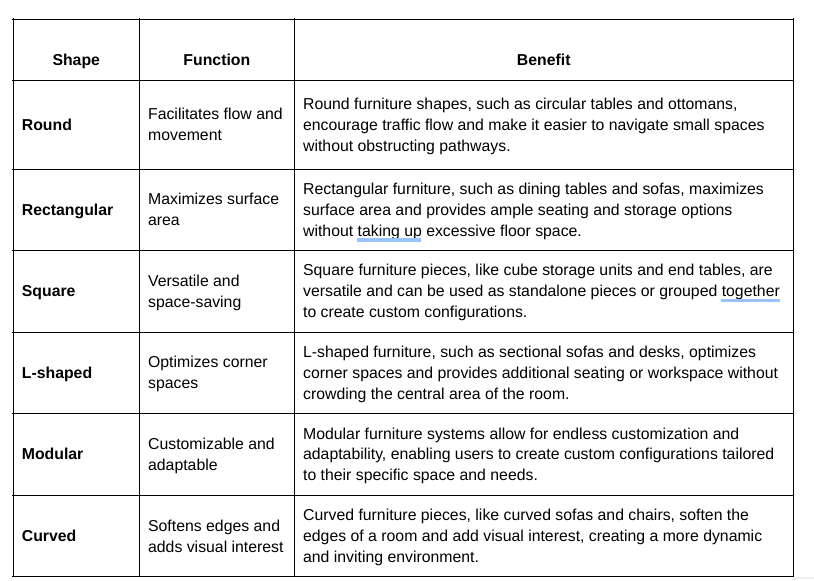
Various furniture shapes offer distinct functions and benefits for maximizing space in small living areas. From round tables facilitating flow to modular systems providing customization options, choosing the right furniture shapes can optimize space usage and enhance the overall functionality and aesthetics of your small space.
Embracing Minimalism with Space-Saving Solutions
In small spaces, less is often more. Embracing a minimalist aesthetic can create a sense of calm and tranquility while maximizing the visual impact of your furniture choices. Opt for sleek and streamlined designs with clean lines and minimal ornamentation to create a sense of openness and flow. Choose furniture pieces with hidden storage compartments, such as ottomans with lift-up lids or bed frames with built-in drawers, to keep clutter out of sight and maintain a clutter-free environment. By focusing on quality over quantity and prioritizing function and simplicity, you can create a cozy and inviting space that feels both modern and timeless.
The Impact of Furniture Colors on Space Perception
The colors of furniture play a significant role in shaping the perception of space in a small home. By carefully selecting furniture colors, you can enhance the feeling of openness and airiness or create a cozy and intimate atmosphere. Here's how various furniture colors can affect space perception:
1. Light Colors: Light-colored furniture, such as white, beige, or pastel tones, can help make a small space feel larger and more expansive. Light colors reflect natural light, making the room appear brighter and more open. Additionally, light-colored furniture creates a sense of visual continuity, making it easier for the eye to move around the room without interruption.
2. Dark Colors: While dark-colored furniture can add drama and sophistication to a small space, it can also make the room feel smaller and more enclosed if not used judiciously. Dark colors absorb light, creating a sense of coziness and intimacy. To prevent the room from feeling too cramped, use dark-colored furniture sparingly and balance it with lighter elements to create contrast and visual interest.
3. Neutral Tones: Neutral-toned furniture, such as gray, taupe, or charcoal, strikes a balance between light and dark colors, making it a versatile choice for small spaces. Neutral tones provide a sense of warmth and sophistication without overpowering the room. Additionally, neutral-colored furniture pairs well with various accent colors, enabling easy updates to the space's look and feel through accessories and decor.
4. Bold Accents: Incorporating pops of bold color through accent furniture pieces, such as an accent chair or a statement sofa, can add personality and visual interest to a small space. Bold colors draw the eye and create focal points, making the room feel dynamic and vibrant. However, it's essential to use bold colors strategically and in moderation to prevent them from overwhelming the space.
5. Monochromatic Schemes: Opting for a monochromatic color scheme, where furniture and decor are all within the same color family but vary in shade and tone, can create a sense of harmony and cohesion in a small space. Monochromatic schemes are visually calming and can create a more expansive feel by minimizing visual clutter and distractions.
Conclusion
In conclusion, furnishing a small space requires careful consideration and creativity to maximize both style and functionality. By embracing innovative furniture solutions tailored specifically for small spaces, such as multi-functional pieces, tall and slim furniture, modular systems, space-saving solutions, and statement pieces, you can create cozy corners that feel both inviting and stylish. Whether you're looking to optimize storage, create visual interest, or showcase your personality, there are plenty of unique furniture options available to help you make the most of your small space and turn it into a cozy retreat that you'll love coming home to.
FAQs
How can I make the most of a small living space with limited square footage?
To maximize space in a small living area, consider multi-functional furniture pieces, such as sofa beds or ottomans with storage, that serve dual purposes. Additionally, prioritize vertical storage solutions and choose furniture with a slim profile to optimize floor space.
What are some creative ways to incorporate personality into a small space without overwhelming it?
Statement pieces, such as bold accent chairs or eye-catching artwork, can infuse personality into a small space without overwhelming it. Choose pieces that reflect your unique style and taste, and use them strategically to create visual interest and focal points.
How can I create the illusion of more space in a small room?
To create the illusion of more space in a small room, use light colors on walls and furniture to reflect natural light and make the room feel brighter and airier. Additionally, strategically placing mirrors to reflect light and visually expand the space can help make it feel larger and more open.

Home Design Material Ideas
Crafting a home environment that accommodates both children and pets, while maintaining style and functionality, requires thoughtful consideration of design materials. Every aspect of home design, from flooring to furniture, walls to window treatments, plays a vital role in creating a safe and comfortable living space for the entire family.
Crafting a home environment that accommodates both children and pets, while maintaining style and functionality, requires thoughtful consideration of design materials. Every aspect of home design, from flooring to furniture, walls to window treatments, plays a vital role in creating a safe and comfortable living space for the entire family.
Flooring options tailored for households with children and pets include solution-dyed fiber carpeting, renowned for its exceptional stain resistance, making it an ideal choice for handling spills and accidents. Laminate flooring offers waterproof and durable properties, making it a practical solution for homes with active lifestyles, providing resilience against scratches and spills. Tile flooring replacement offers durability and waterproof features, making it perfect for areas prone to moisture and high foot traffic.
In terms of furniture and fabrics, performance fabrics are a popular choice for their scratch and stain resistance, ensuring longevity in the face of everyday wear and tear. Faux leather provides the luxurious look of real leather while offering easy maintenance and durability against spills. Upholstered designs not only add comfort to living spaces but also provide a protective barrier against sharp corners and edges for children.
Selecting the right wall materials and paint finishes is crucial for easy maintenance and durability. Satin or eggshell paint finishes are ideal for quickly wiping up messes, while pet-proof wallpaper options offer strong resistance to stains and are easy to clean. Medium density fiberboard (MDF) panels are designed to withstand moisture and scratches, making them a practical choice for walls in high-traffic areas.
Countertops and cabinets should be chosen for their durability and resistance to scratches and stains. Hard stone countertops like granite and quartzite provide both style and functionality, while laminate countertops offer a wide range of patterns and affordability. Specialty cabinetry for pets, such as feeder station cabinets, can be incorporated into the design to accommodate the needs of furry family members.
Window treatments like sheer shades allow natural light while protecting against UV rays, and cordless lift systems prevent cord-related injuries for both children and pets. Smart shades offer additional safety features and convenience with options like "pet mode" for added peace of mind.
Incorporating pet-friendly area rugs and mats made from synthetic fibers ensures easy maintenance and durability. Nylon rugs are colorfast and resistant to cleaning solutions, while flat weaves and low piles prevent pet nails from getting caught, making them safe choices for households with pets.
By selecting materials that prioritize durability, stain resistance, and easy maintenance, homeowners can create a stylish and functional living space that caters to the needs of both their family and their furry companions.

10 Must-Ask Questions When Viewing a Restored Home
When you're in the market for a restored home, there are crucial questions you should ask to ensure you're making an informed decision. By asking the right questions during your viewing, you can gain valuable insights into the property's history, condition, and potential issues. Here are ten must-ask questions that will help you navigate the process of buying a restored home confidently.

When you're in the market for a restored home, there are crucial questions you should ask to ensure you're making an informed decision. By asking the right questions during your viewing, you can gain valuable insights into the property's history, condition, and potential issues. Here are ten must-ask questions that will help you navigate the process of buying a restored home confidently.
What Restoration Work Has Been Done?
Gathering specifics on the restoration projects is crucial for understanding the home's current state and its historical integrity. Ask for a comprehensive list of all restoration work undertaken, including structural repairs, aesthetic updates, and system overhauls. Seek information on the types of materials used, particularly if they're period-appropriate or modern substitutes designed for longevity. It's also beneficial to know about the preservation of any unique architectural features, such as original hardwood floors, crown moldings, or fireplaces, and if there have been enhancements like energy-efficient windows installed in keeping with the home's character. This detailed insight will help you assess both the quality of the work done and the home’s authenticity.
Was the Restoration Performed by Professionals?
It's crucial to ascertain the level of professionalism and expertise that went into the home’s restoration. Inquire specifically about the credentials and experience of the home restoration contractors, architects, and any specialists, such as historical preservation experts, who contributed to the project. Understanding the qualifications and reputation of those involved will give you insight into the reliability and durability of the restoration work. Additionally, ask for any documentation or proof of the professionals’ qualifications and examples of previous projects they've completed. This information will help you evaluate the craftsmanship and attention to detail in the restoration, ensuring you're investing in a property that meets high standards of quality and care.
Is There Documentation for the Restoration Work?
It's beneficial to ask for a dossier that includes permits, detailed invoices, contracts, and any guarantees or warranties associated with restoration work done. This documentation not only confirms the legitimacy and scope of the restoration efforts but also provides valuable insights into the quality of materials and craftsmanship. It's a good idea to have these documents reviewed by reputable home inspection companies that can offer an expert perspective on the restoration's quality and potentially uncover issues not visible to the untrained eye. This thorough approach ensures that you're fully informed about the property's condition before making your investment.
Are There Any Outstanding Issues or Repairs?
Digging into the home's ongoing or anticipated maintenance needs is essential for a clear picture of what to expect post-purchase. Ask pointedly about any known issues, big or small, that have surfaced since the restoration. This includes hidden concerns such as moisture problems, termite damage, or the condition of the roof and foundation. It’s also wise to inquire about the age and state of major systems like heating, cooling, plumbing, and electrical. Understanding these elements in detail will not only give you a realistic view of your potential investment but also equip you with negotiating power. Additionally, seek advice on regular upkeep to preserve the home's character and value, especially if it involves specialized care for historic features. This comprehensive insight will be invaluable in evaluating both the immediate and long-term commitments you're making with the purchase.
Has the Home Been Inspected Recently?
An in-depth understanding of the home's current state is crucial, and a recent inspection report can offer this transparency. Ask for specifics about when the last inspection took place, who conducted it, and if you can review the report. This document can reveal critical insights into the structural integrity, electrical systems, plumbing, and more, potentially unearthing issues that aren't visible on the surface. If asked, realtors like Lesa Miller - Re/Max can highlight homes in their portfolio that have been inspected recently, ensuring you're considering properties vetted for quality and safety. This step not only informs you of any immediate concerns but also demonstrates the seller's commitment to maintaining the home's condition, providing an additional layer of security in your investment.
What Upgrades Have Been Made to Improve Energy Efficiency?
When it comes to integrating energy efficiency into a restored home, it’s essential to grasp the full scope of improvements that have been made. Ask about the specific energy-saving measures, including the installation of insulation in the walls, attic, and floors, as well as any advancements in the HVAC system to ensure it’s both modern and efficient. It's also important to inquire about the introduction of energy-efficient windows that not only complement the home's era but significantly reduce energy loss. Additionally, don’t overlook the roof—a key element in home energy efficiency. Engaging with reputable roofer companies like Billings Roofing & Solar Inc. to learn about the roofing materials used and any special coatings or designs can offer insights into how the roof contributes to minimizing heat gain, especially in warmer climates. These companies can often provide details on the longevity and energy-saving benefits of modern roofing solutions tailored to restored homes. Such meticulous attention to energy efficiency not only promises a reduction in future utility bills but also signifies a thoughtful preservation approach, balancing historical integrity with contemporary living standards.
Is There a Warranty for the Restoration Work?
Discovering whether a warranty or guarantee backs the restoration work is key to protecting your investment. Delve into the specifics—ask about the duration of the warranty, what it covers, and any significant exclusions to be aware of. It's prudent to understand if the warranty is transferrable to you as the new owner and whether it encompasses both materials and labor. Clarify the process for making a claim under the warranty, including any deadlines or documentation requirements. This level of detail will not only provide peace of mind but also reflect the restorers' confidence in their craftsmanship and the durability of their work, making it a crucial consideration for prospective buyers.
Have Any Hazardous Materials Been Removed During Restoration?
In older homes, the presence of hazardous materials like asbestos and lead-based paint is a significant concern. It's therefore vital to inquire in detail about the identification, removal, and disposal processes of such substances during the home's restoration. Specifically, ask if certified professionals in hazardous material removal were engaged and whether the process complied with local and federal environmental and safety regulations. Understanding the exact measures taken to mitigate these risks not only ensures the safety and health of your living environment but also provides insight into the thoroughness and responsibility of the restoration team. Request documentation of the removal process, including certifications, permits, and disposal receipts, to verify that everything was handled appropriately and legally. This level of detail is not only reassuring but also indicative of the quality and professionalism invested in the home's restoration, making it an essential discussion point for potential home buyers.
What Is The Home's Historical Significance?
Exploring the historical significance of a potential home can deepen your connection and appreciation for the property. When considering a home with a rich past, it's essential to ask about its origins, the roles it's played throughout history, and any notable figures who may have resided or been associated with the property. Delve into records or tales that highlight the home's significance in the local community or its contribution to historical events. Additionally, inquire about any restrictions or responsibilities you might inherit related to its preservation. This could include limitations on renovations or requirements to maintain certain architectural features. Understanding these elements will not only provide a glimpse into the past but also help you grasp the full breadth of stewarding a piece of history. This knowledge can make your ownership more meaningful, enhancing both the value and the joy of your home.
Can I Speak with Previous Owners or Residents?
Establishing communication with people who have previously lived in the home can be an invaluable resource for prospective buyers. Their unique experiences and stories offer a depth of knowledge about the property that is often unattainable through standard inspections or disclosures. When pursuing this avenue, consider asking about the home’s quirks, such as eccentric plumbing or the way natural light moves through the house across seasons. Inquire about their reasons for choosing this home initially and what improvements they found most beneficial during their stay. Also, discussions about the neighborhood's evolution, community dynamics, and local amenities they enjoyed can provide a more comprehensive understanding of what life might be like in your potential new home. Reaching out for these conversations not only enriches your perspective on the property's tangible and intangible attributes but also helps forge a connection to its history and the community you may soon join.
By asking these ten essential questions when viewing a restored home, you'll be equipped with valuable information to make an informed decision on your real estate investment. Remember to approach each viewing with curiosity and attention to detail to ensure a smooth and rewarding home-buying experience in your newly restored abode.

