

A resource for those seeking information on organizing and transforming spaces.

Guest Post - How to Unlock Your Child's Organizational Skills
Kids probably aren’t the first demographic you think of when you hear the words “neat” and “tidy” – but that still doesn’t mean that you and your kids must accept chaotic mess as a daily reality! The stress of living in a disorderly family home can have hugely detrimental effects on a child’s development, not to mention your sanity as a parent: and since it’s entirely possible to rear conscientious and tidy little people, why not start now?
Since it can be difficult to know which strategies to implement to best encourage your child to unlock their organizational skills, we’ve gathered the best tips on how to start for you below. Just keep reading!

Kids probably aren’t the first demographic you think of when you hear the words “neat” and “tidy” – but that still doesn’t mean that you and your kids must accept chaotic mess as a daily reality! The stress of living in a disorderly family home can have hugely detrimental effects on a child’s development, not to mention your sanity as a parent: and since it’s entirely possible to rear conscientious and tidy little people, why not start now?
Since it can be difficult to know which strategies to implement to best encourage your child to unlock their organizational skills, we’ve gathered the best tips on how to start for you below. Just keep reading!
Treat them like little adults
When it comes to learning new activities, kids love being spoken to like adults. Learning how to organize your own belongings and responsibilities is a critical part of growing up. Lead your kids through importance of organization – first by helping them plan, then assisting them, and finally – letting them organize their things by themselves. By helping your children become enthusiastic about these chores, you are setting them up for good habits in adulthood.
Try your best to explain to your kids the reasoning behind organizational activities like tidying up. For example, you might let them know that organized kids do better at school, and that tidying up immediately after mess is created saves significant time in the long-run.
Teach them the essentials of organization

For children, important things to organize include:
-Getting ready for school the night before, including packing lunch
-Making sure that each item (especially clothing) has a place in a drawer or container
-Keeping track of both what you do each day, and what other people need you to do
-Doing your homework at the same time every day
-Time management and prioritization (what's the most important thing on your list, and how much time must you reserve for it?)
Supply them with the right organizational resources
Kids like – and need – tangible reminders for organizational tasks, such as the spring-clean they're supposed to do next Wednesday or the room clean you expect of them daily). Help them eradicate any excuses by making use of checklists, diaries, calendars, and other fun stationery which will allow them to visualize what's left to do.
You might especially consider helping your kids create their own personalized routines for before and after school, which are usually the peak times where parents and children must both be organized. Work with your kids, checking off your list of family duties as well as their individual to-do lists.
Designate them their own “working” space

People with school-age kids will be familiar with the homework struggle. How can you teach your kids to fully focus on their work, rather than do it in front of the television?
One smart solution is to designate one room in the house as the kids’ study room. If you don’t currently have the space for this, consider an add-on or extension room. This kind of separation between the social, familial area of the house and the “focus” area can do wonders for your kids’ study habits into the future.
Lead by example
You may run a fine line when trying to get your kids keen on organization and cleaning. Children watch your reactions to chores – if you don’t look excited about de-cluttering and organizing your space, your child will very soon realize that, in fact, most people don’t enjoy cleaning up. However, if you keep your enthusiasm up, you still have the opportunity to frame organizational tasks and duties with positive associations - so pump up the music and make it a family tradition to dance through your nightly tidy-up!
Harper learned organizational skills from her parents at a very young age. Her hard work paid off – with her organizational skills coming in very handy in her professional life for scheduling, managing work, and meeting deadlines. And this all began with a pink paper planner her Mum handmade for her while she was in primary school. To know more about Harper and read more of her written works, visit Harper Reid.

Organizing Does Not Have To Be Expensive
So you want to organize your life. You see all the beautiful Instagram posts and magazine layouts of perfectly organized homes. Beautiful built-ins where kids backpacks are hung, baskets for mittens and shelves for shoes. You think to yourself how wonderful it would be to have such organization, if only you could afford to have someone come build a mudroom with cubbies and shelving. What to do? Not everyone can afford to live like the photos in House Beautiful, and sometimes the pictures are unrealistic to maintain. There are simple inexpensive tips that you can put to practice in your own home which can help with various “dumping areas.”
So you want to organize your life. You see all the beautiful Instagram posts and magazine layouts of perfectly organized homes. Beautiful built-ins where kids backpacks are hung, baskets for mittens and shelves for shoes. You think to yourself how wonderful it would be to have such organization, if only you could afford to have someone come build a mudroom with cubbies and shelving. What to do? Not everyone can afford to live like the photos in House Beautiful, and sometimes the pictures are unrealistic to maintain. There are simple inexpensive tips that you can put to practice in your own home which can help with various “dumping areas.” These areas are usually the places strewn with clutter. For example, backpacks dumped by the garage or front door, mail in a large pile in the kitchen, and laundry areas filled with clutter.
Home from School
For backpacks, try hanging hooks by the area where your children come into the house. Remember to use heavy duty hooks so that as they get older and the backpacks get heavier, they won’t fall off the wall. Baskets are inexpensive and can be bought in most stores. These inexpensive plastic wicker looking baskets can be found at Bed Bath and Beyond. These baskets come in three sizes. Maybe have one basket per child for them to put their hats, mittens and scarves. You may want to purchase different colors and assign each child to a color. Milk crates can be another inexpensive option for kids shoes.
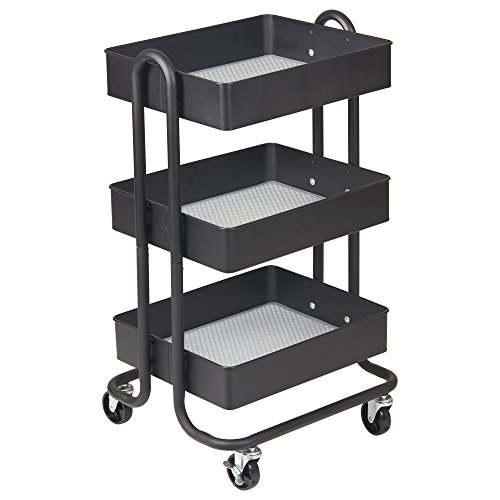
Children bring home a large amount of paper. If you don’t have lots of shelf space, you can find inexpensive rolling carts with tiers so you can have a tier per child to hold their papers. Here is an example:
Forever Stamps
Mail can pile up if not dealt with immediately. Try getting in the habit of recycling your junk mail daily. Assign an area of your kitchen, office or foyer where you would like mail to live. Purchase a small desktop mail holder to keep mail from laying in piles on your counter. If you get magazines or store catalogues, try to read them promptly and then recycle. We all fall into the trap of putting mail aside and saying to ourselves we will get to it later. Before you know it you have a pile of magazines which builds and builds and never is read.
Wash & Fold
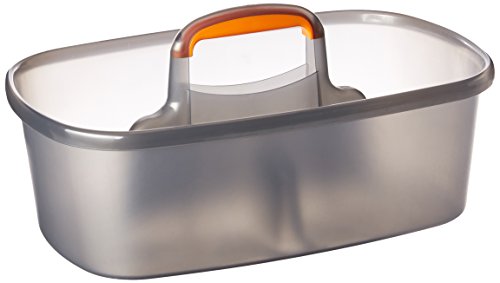
The laundry room ends up being a catchall for many things. Pet supplies, cleaning products, dirty laundry- you name it. Try putting your cleaning supplies in a container. Perhaps an inexpensive carry-all caddy or an open-top container. The carry-all is convenient as you can just grab it in one hand and rags in another. All of your supplies are at your finger-tips. For pet supplies, create a small pet zone. Food dishes, beds/crates, pegs to hang leashes/collars, and a shelf to put food. Be sure everything is not in the flow of traffic so people do not trip. By creating a pet area, you can see how much pet supplies you have and it will help you from over purchasing pet supplies at the store. Laundry can be a hassle. Everyone in the house is dumping their dirty laundry all over. If space allows, having 3 hampers makes sense. A dark color for darks, white for whites and a lighter color such as light grey for light clothing. As your children get older teach them to bring their dirty clothes to the laundry room and put in the correct hamper. This is a win-win for everyone. Your kids will not have dirty clothes strewn all over their rooms, it teaches them responsibility, and it will make your life easier when doing the wash.
Basic, Casual or Formal
One final note, kitchen tables and dining rooms tend to be dumping areas for everyone on the family. One way to avoid that, is to have it set with placemats, and a center piece such as candles all the time. Most people will not dump their stuff on a set table. Remember, organizing does not have to break the bank. As you can see there are inexpensive ways to organize to bring calm and less chaos into your family’s life. Have another inexpensive idea to help organize your house? Post on our Facebook page and let us know!

What Retirement Reveals
So you’re finally retired. Wonderful news! Now you can get to all those books you have been meaning to read, take a trip when and where you want, spend more time with friends, children and grandchildren, and volunteer at your favorite charity. Being retired gives you the freedom to make your own schedule, and also means you will be home a lot more than you were in the past.
However, spending more hours at home means having the time to actually look at your home.

So you’re finally retired. Wonderful news! Now you can get to all those books you have been meaning to read, take a trip when and where you want, spend more time with friends, children and grandchildren, and volunteer at your favorite charity. Being retired gives you the freedom to make your own schedule, and also means you will be home a lot more than you were in the past.
However, spending more hours at home means having the time to actually look at your home. Often our retired clients will tell us that after a few months of being home they start noticing how much “stuff” accumulated over the years. Collections from no longer living relatives are in the attic, keepsakes from children are in the closets, a garage filled with old sporting equipment and a basement filled with boxes.

Retirees try to figure out how all these piles took over their space while they were at work. What to do? Where to even begin? Maybe it is time to call a professional organizer.
A professional organizer will come to your space and access the situation. You will get a clear understanding of the time and cost necessary to help you sort, review and organize the areas of your house which are cluttered and could benefit from finished organized systems. A professional can assist you in making hard decisions that can be challenging on your own, such as what to keep, where to donate and how to appraise items which may be of value. Many professional organizers will remove your smaller unwanted items at the end of the session, arrange for donation or junk pick up for larger items and set up a walk through with an auction house for possible sale items.

Organizers have knowledge of the best storage solution for your space. In addition to containers you may benefit from shelves and other storage solutions. At House to Home Organizing, one of our popular services is our concierge shopping service that makes your life that much easier. Shopping in a crowded store overflowing with options can be stressful. Let us bring the solutions to you.
Retirement can be great for relaxing, but sometimes it can be hard to restart physical activities. It is really important to note that Professional Organizers provide manual labor and momentum which is something everyone needs when reducing clutter. It can be easy to start a project but many people get distracted easily and never finish. Organizing requires serious decision making, focus and energy.
Every job is different as to where to start and the time needed to complete. Having a no charge consult at is a great way to understand the process and the time commitment. Spending more time at home should be a pleasure not a burden. So if you are looking to enjoy retirement, want to spend your time doing the things you love as opposed to de-cluttering, do yourself a favor and call a professional organizer. You will not be sorry!

Make it Go Away
When potential clients call, we ask them about their space challenges and one of the most common answers is the big three: attic, basement and garage. We call these areas “Make it go away” rooms. The habit goes past out of sight out of mind to reveal a deeper issue with clutter and how we deal with stuff. When we have homes for items organizational systems make sense, however, for many household items when the don’t have a home we put them in the attic, basement or garage. You ever notice people don’t use “put it” that much but rather “throw it” when talking about those make it go away items.

When potential clients contact us, we ask them about their space challenges and one of the most common answers is one or all of the big three: attic, basement and garage. We call these areas “Make it go away” spaces. The habit goes past out of sight out of mind to reveal a deeper issue with clutter and how we deal with stuff. When we have homes for items, organizational systems make sense; however, for many household items when they don’t have a home they end up in the attic, basement or garage. You ever notice people don’t use “put it” that much, but rather “throw it” when talking about those make it go away items.
The Items in Question

Stuff we hide in the attic usually falls into two camps, those items we don’t know what do with in the first place and those items that don’t have an easy category. Think about your holiday decorations. That category is pretty straight forward. Items that don’t have an easily defined category usually have to do with the word “could.” Saving items for what if scenarios can lead to a clutter attic or basement. These items tend to be bulky like canoe oars or skis. Another challenge can be the “I feel I need to keep it” section. This is where that chair from your great uncle’s house comes in.
Solutions
Why does it matter if the attic or basement are clear, anyway? We not only want to use that storage space to keep items we don’t use often like keepsakes and seasonal items but one way or another you will move eventually and those heavy clutter zones make a stressful time that much more stressful. When it comes to excessive clutter most people get stuck even knowing where to start. The attic and basement require time, physical labor and a plan. A professional organizer not only provides you with special motivated time, experience, and a systematic approach we also bring the manual labor. Focus on why you are keeping the item in the first place. If the item isn’t expensive or can easily be obtained again maybe it is time for it to move on. Consider splitting a dumpster with a neighbor for a day of bulk removal helping each other lug that rusty antique creepy baby carriage down from the attic. Kicking the can down the road adds up in your valuable space if you are stuck indoors due to weather why not use that time to actually “make it go away”

