

A resource for those seeking information on organizing and transforming spaces.

How to Organize Your Family's Electronics
Want to know how to organize your family's electronics? You have come to the right place. Keep on reading for some organizational tips and tricks.
Cords, cords, cords! Cords are everywhere. It doesn't matter whether you are a family of two or there are four or six of you - cords are probably giving you a headache. However, that is the price to pay for living in the age of technology and having a ton of electronics that make your life easier and more enjoyable. Things like phones, tablets, laptops, desktop computers, TVs, game consoles, chargers, and even things like toasters, blenders, microwaves, etc., are all great but can be a nightmare to keep organized. But, you already know that - that is why you are here reading this article, right? Right! Don't worry - we've got you. We prepared a list of some interesting organizational tips and tricks. And, yes, they all have something to do with electronics. Thus, without further ado, here's how to organize your family's electronics.
Start With Decluttering

First things first - if you want a clean and organized home, that is, if you don't want to look at cords everywhere or, even worse, if you don't want to trip over them all the time, you have to declutter. We know - doing that is much easier said than done. You probably don't want to get rid of that high-school phone because it brings back many memories. You don't want to get rid of that toaster you are not using because you hope you will get to it again one day. Or, you don't want to get rid of your children's first electrical toy because you think it will make them sad. Are we right?
However, there is no point in keeping the things you are not using. They clutter your much-needed space. Thus, follow the ultimate tip for decluttering - don't think much. Go around your home and gather all the old electronics. If they work, find them a new home - give them to a friend or a charity. And, if they are completely broken and useless, just let them hit the bin - by that, we mean to recycle.
Give Your Kitchen Some Love
To organize your family's electronics, you should start with the kitchen. Why? Because that is an area of your home where you have the most electronics. Hopefully, the big ones (stoves, ovens, fridges, etc.) are hidden behind the kitchen counters. So, they are not the problem. The problem appears with smaller devices - rice cookers, coffee makers, blenders, toasters, mixers, crook pots, deep fryers, etc. We named just a few of the small kitchen appliances you probably have in your home, but you know, and we know, that you have a lot more.
If you are not using them but don't want to donate them, our advice is to rent a storage unit nearby and keep them there. Don't worry about packing and relocating - experts from Professional Movers Ottawa suggest that hiring experts is the best way to go.
However, if you wish to keep them in your home, you must create another kitchen cabinet (or two). Then, grab the original boxes of your appliances or, if you threw them out, grab some boxes of similar size and put them in. This will enable you to stack everything neatly and provide more space.
And Then, Give Some Love to Your Living Room Too

Another area of your home that is probably cluttered with electronics is your living room. There, you don't have as many electronics as much as you have cables - cables for TV, antenna, internet, cable, etc. Or you may have things like cables for stereo, Xbox, or your DVD player. You have to be creative in decluttering this space in your home.
To organize your family's electronics in the living room, go to your local hardware store and buy cable covers. These come in many shapes and sizes. You will undoubtedly find ones that match the aesthetic of your home. Then, put the CDs and DVDs in disc holders. And, if you have a lot of remote controls, replace them with a universal one. Moreover, you can buy stands for certain electronics too - stands with hidden cables compartments.
Organize Your Family's Personal Electronics
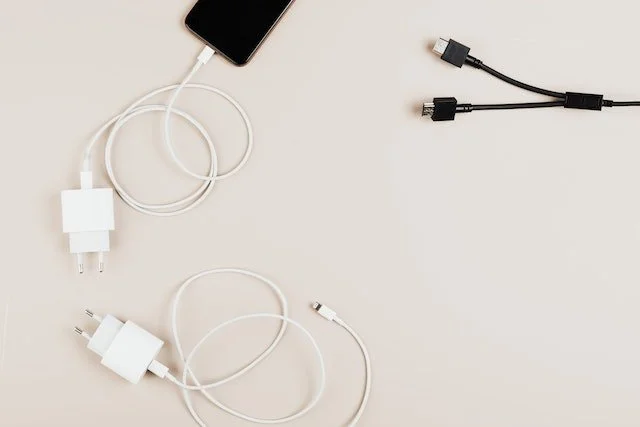
Imagine having to relocate all of your electronics somewhere cross-country. Of course, you can pack, move, and keep them in good shape with the help of professional movers. But that would imply pairing each electronic with the cables you have tangled up in your drawers or on nightstands. We know that you hate those places, and we know that you would rather throw everything out than have to deal with it.
However, what if we told you that there is an easier way to deal with your personal electronics (smartphones, smart watches, AirPods, tablets, laptops, clocks, etc.) and all the cables they come with? All you need is a smart charging station. You can put all your smart devices on it, and they will instantly start charging cable-free.
Don't Forget About Your Desk
If you are somebody who's currently working from home, you know how difficult it is to keep your desk clean and organized. Besides having tons of devices and their cables on your working desk, you probably also have papers, office supplies, coffee mugs, a bottle of water, skincare, and who-knows-what-else. Working like that may contribute to you losing control of your workload and even result in a lack of motivation. Trust us, the only way to prevent this, that is, the only way to stay in control, is by organizing!
Organize your work desk by clearing it out. Keep only the things you need for work and eliminate the rest. Use desk clips for cables and cords or invest in desks with USB charging stations. Or, go to your local dollar store and buy a cord cubby.
As you have seen, there are many ways for you to organize your family's electronics. We mentioned just a few of them, but keep in mind that the internet is full of other ideas too. So, do some exploring on your own and find a way to keep your electronics organized in the best possible way.

Ways To Declutter Before Moving House
Packing up an entire house full of belongings is no easy task. Fortunately, there are ways to help make the process more efficient and easier on everyone. Below are some strategies for decluttering ahead of your upcoming move!
Packing up an entire house full of belongings is no easy task. Fortunately, there are ways to help make the process more efficient and easier on everyone. Below are some strategies for decluttering ahead of your upcoming move!
Starting fresh in a new home is an exciting time full of opportunities. One such opportunity is to sort through the old, unwanted items in your home and declutter. Clutter happens naturally over time, but, if left unaddressed for too long, it can accumulate beyond expectation. In fact, 54% of Americans said they felt overwhelmed by the clutter filling up their homes.
When it comes to moving, decluttering can be beneficial. For starters, you’ll have fewer things to pack, transport and unpack at the new destination. It also means you won’t need as many boxes and packing supplies. All in all, decluttering can save effort, time and money during your move, especially if you choose to hire movers.
The process of decluttering doesn’t have to be complicated. Start by making time to sort through your belongings before the move. The more time you have, the better, as it allows you to put more thought into decluttering decisions. Next, create a plan on how to tackle the chore. Popular methods are to go room-by-room or by category.
For a room-based approach, try arranging separate boxes for items you want to keep, donate or toss, and begin in the bathroom or a coat closet. These locations can be easier to declutter, as they typically involve fewer emotional decisions. When you feel more comfortable and practiced, move on to complicated areas such as the kitchen, where there are typically many more items to go through.
If opting to go by category, gather similar items from across the house — such as books or knick-knacks — and make decisions based on the whole collection. One category that shouldn’t be left for last is sentimental items. Going through belongings such as these takes time and can slow down the process due to their emotional value.
Once you’ve successfully decluttered, it’s time to dispose of the unwanted objects. Donation is a worthy route, and more can be put to good use than you might think. For instance, tattered linens and towels can be donated to animal shelters or used as a green alternative to packing supplies. Other examples could be giving old DVDs and books to the local library or helping a family in need with toys and clothing that your kids have outgrown.
Clearing clutter in advance can make moving day much less of a hassle. However, if the idea of packing seems daunting or you’re feeling mover’s anxiety, let a moving team lend a helping hand. These professionals can simplify the process and dispose of redundant items all while ensuring your belongings arrive safe and sound at your new home.
For more tips on donating and decluttering during a move, please see the accompanying resource.

5 Steps To Prepare Your Home for Fall
As the months go by and you feel the summer heat dissipate, the kids return to school and the fall season is in full swing. While it is fun to watch the leaves change as you anticipate the holidays, this is also a time when you can make some changes around the house and prepare for the cooler months to come.
As the months go by and you feel the summer heat dissipate, the kids return to school and the fall season is in full swing. While it is fun to watch the leaves change as you anticipate the holidays, this is also a time when you can make some changes around the house and prepare for the cooler months to come.
From making sustainable repairs to reorganizing your closet, there is a lot you can do to get ready. Here are five great steps to consider for an autumn-ready home.
1. Be Proactive About Pests
The funny thing about rodents and insects is that they are more like us than we realize. Many of them get dehydrated and most don’t like to be cold, so they will try to find a way into your house to stay warm during the fall season. It is essential that you are proactive to avoid the threat of pests, especially rodents. In addition to being annoying, a rodent infestation can be harmful to your health.
If mice and rats are able to get into your cabinets and food supply, then they can leave droppings and saliva in their wake. If they do and you make contact, then you can potentially come down with Hantavirus Pulmonary Syndrome — a respiratory disease that has a mortality rate of 38%. Needless to say, you need to begin taking steps to prevent pests. Start by bringing in a pest control specialist to spray and tell you about any trouble areas. Then, make sure to seal all of your food in secure containers. Also, clean up any leaks in your plumbing as insects can congregate there for water.
2. Increase Efficiency Around the Home
When the cooler months come around, and you start turning on the heat so your family can stay warm and cozy, you will want to take the proper precautions to ensure that you are not wasting energy. To do so, consider implementing some budget-friendly, sustainable home upgrades and repairs.
For instance, it is a good idea to apply weatherstripping to the perimeter of your doors and windows because doing so will eliminate the possibility that your heat can seep out through those spaces. Also, switch out your incandescent lighting for LED bulbs that not only last longer but will also provide more vivid light during those autumn nights.
3. Install a Smart Thermostat
Another way to fight wasted energy is to install a smart thermostat. While it is important to be warm during evenings and weekends when everyone is in the house, you don’t need to keep the temperature at the same level when you’re not at home. During the colder months, the best temperature to set your thermostat is between 68 and 70 degrees Fahrenheit while you are at home. When you are away, you can lower it closer to 65 degrees so the heater doesn’t turn on as often to heat an empty house — and it’s not cold enough to freeze the pipes.
Since it can be difficult to remember to change the temperature every time you leave or come home, you can invest in a smart thermostat. You only need to program this device once, and then it will change the heat at those pre-set intervals so you can stay warm and also reduce your utility bills.
4. Check Out Your Roof and Gutters
Next, you should get out your ladder and take a trip up to protect the roof for the stormy season ahead. The fall and winter months can bring a higher chance of rain, snow, and storms, so it is a good idea to check out your roof and make sure that there are not any leaks or missing shingles that could lead to issues down the road. If you don’t know a lot about roof maintenance, then contact a professional.
This is also a good time to clean out your gutters. Since more leaves will be falling during autumn and many will be landing in your gutters, you will want to ensure that you don’t have a buildup of debris that will make your problem worse. If rainwater cannot travel freely through your gutters and downspouts then they could overflow, and the falling water could ruin your yard and the foundation of your home.
5. Get Organized
The fall season is also a great time to organize and clear the clutter from your home. You likely have a lot of stuff sitting around from your summer adventures, and it is time to put everything back in its place. In addition to being unsightly, a mess at home can also exacerbate depression symptoms and leave you feeling mentally drained because, subconsciously, we feel like we are losing control of our environment. Since you don’t want to feel that way as we head into the holiday season, find a place for everything and use a creative storage solution like an ottoman in the living room if necessary.
While you are getting organized and moving belongings, this is also a good time to rotate your warm and cold weather clothes. Put all of your summer wear away in storage or hang it up in your closet and bring out the pants, sweaters, and long-sleeved shirts. That way, you are ready when the cooler weather approaches.
As you can see, there are many steps that you can take today to prepare for the arrival of fall. Consider these tips, and you can take some stress off of your plate as the new season draws near.

Tips For Storing Bedding In Your Home
Bedding can be one of the most difficult things to store in your home, as it can take up so much space! However, we’re here with a few simple hacks to help you get your bedding more organised and easy to manage.
Bedding can be one of the most difficult things to store in your home, as it can take up so much space! However, we’re here with a few simple hacks to help you get your bedding more organised and easy to manage.
Use Vacuum Pack Bags
Our first tip for storing bedding in your home is to use vacuum pack bags! This is one of the best tips we can give you, as it is a super affordable way to make the most of the space you already have.
You can get vacuum pack bags from most home stores, and also online. All you need to do is unzip the bag, place all of your bedding inside (this works particularly well for things like duvets and pillows you don’t use all the time), then you attach your vacuum onto the opening on the side, suck all of the air out to really squish the bedding down, and then reseal it.
Your bedding will literally halve in size (if not more), so you will have so much more space in your cupboards. Plus, it’s much more manageable to find what you need and easily take it out of your storage. This is also great for out of season clothing that you don’t need in your wardrobe all year round.
Store Your Whole Set of Bedding In One Pillowcase
Another great tip to help you keep all of your matching bedding in one place is to put all of it in one pillowcase. Fold up your duvet cover, fitted bed sheets and all but one of your pillow cases, then place them neatly into the last pillow case.
When you next go to change your bed, there will be no digging through all of your bedding to find everything that matches, as you can simply pick it up and have everything in one place!
This also makes the actual storage look so much neater, as you can have everything piled up in one place rather than bits and pieces hanging out.
Get An Ottoman
Our last tip to help you keep everything in one place whilst also adding a unique design detail to your bedroom is to get an ottoman! This can sit at the bottom of your bed and all of your bedding can go into there, so it’s all easy to access and right by your bed for when you need to make it, or it will be easy to grab if you are having people round for a party. It is also a really neat storage solution.
You can get organisers for your ottoman as well, so you can separate it into sections so that everything is easy to access. There are endless amounts of ottomans out there to choose from so you can choose something that will perfectly fit your aesthetic.

