

A resource for those seeking information on organizing and transforming spaces.

Interview - Troxes
Over the years, there is not much we haven't seen in our client's homes. However, some items we see in ALL of their homes, especially when it comes to toys & games. While there is nothing wrong with Candyland at House to Home we encourage our client's to seek out quality items that might not be so disposable. We spoke with Jonathan Bobrow about Troxes to learn more about this interesting invention.
Over the years, there is not much we haven't seen in our client's homes. However, some items we see in ALL of their homes, especially when it comes to toys & games. While there is nothing wrong with Candyland at House to Home we encourage our client's to seek out quality items that might not be so disposable. We spoke with Jonathan Bobrow about Troxes to learn more about this interesting invention.

For the busy person, what are Troxes?
Troxes are like Origami meets Lego™. They are non-rectilinear (not square or cubic) paper building blocks. No scissors. No tape. No glue.
Note: Don’t be fooled by the paper aspect, they support over 500 times their weight and by thinking literally outside of the box, they mimic structures found in nature like the crystalline structure of diamonds and fold just like our proteins. They inspire new ways of thinking, counter to the status quo and opposed to the right angles we are all too familiar with.
What is your background, how did you create Troxes?

I grew up with an artist mother and an educator father. I have always been a passionate artist as well as math lover, leading me to study mathematics in college and later design and media arts. I applied these talents to art installations, websites, game design, product design, and interactive museum installations. Inspired by the creative humanitarian and technological efforts of Nicholas Negroponte, I decided I wanted to pursue my own interests with inventing curious devices for social change. I applied and was accepted to the MIT Media Lab. It was my first week in attendance, in a class called How To Make (Almost) Anything, taught by Neil Gershenfeld, and my assignment was to make a press-fit kit (something that would hold together without adhesives or screws) only out of cardboard. I thought it would be neat if my design not only press-fit together, but once it was done press fitting, it could press-fit once again in a modular way. I had seen something similar created by Jef Raskin in the 1970s that built from squares and I thought, what if it were based on triangles. The projects was just a first week assignment and Troxes were essentially invented at that point, however I enjoyed the process of making them so much, I decided to shrink down the design so I could make many more (like hundreds… or thousands) and continued to iterate the design on my nights and weekends. Some of the best traits of Troxes were happy accidents as well as carefully considered design.
What are some of the popular creations for Troxes?

The first creations that anyone makes with Troxes are typically the Platonic solids (Tetrahedron, Octahedron, Icosahedron). From there, people tend to invent their own shapes, as well as combine units together to build larger structures or figurative forms. We package a Trox Fox Kit and a Trox Penguin Kit, so those two are popular creations by design, but people always want to create their own forms. Most recently, a classroom working with Troxes was particularly determined to invent the Trox Turtle, a welcome new member of the Trox critter family and I have seen a unicorn appear on a number of occasions. Me personally, I dream of abstract and architectual designs with Troxes.
What is Move38?
Move38 is a design and game company based on my research at the MIT Media Lab. The name however, has a fun backstory, so I’m glad you asked. In 2016, one of the worlds best Go Players, Lee Sedol, faced off against a computer AI, AlphaGo, in a 5 game match of Go*. Due to its complexity and dependance on player creativity, it was once thought that a computer could never beat the best human Go players. There was only one moment in all 5 games that stirred conversation after the showdown. In the second game, AlphaGo, made a single move that no professional player predicted. It caught all of the commentators off guard, as they had never seen such a move. The move, as it turns out, was a very good one–it not only threw off Lee Sedol, but secured the win. This was the 37th move of that game and so Move38 represents the human response to playing with systems.
We believe the kinds of systems we create, participate in, and are composed of are more complex than ever before, and through new kinds of play, we can raise a generation of systems thinkers.
*Go for reference, is played on a 19 by 19 board, meaning after the first move, there are 361 possible starting positions, and when the player makes her second move there are over 46 million possible arrangements. Needless to say the complexity of the game grows factorially and there are sadly not enough atoms in the universe to represent all possible game outcomes.

Interview - Craft and Sprout
At House to Home Organizing some of our clients have expressed a desire to live a more minimal lifestyle. What could be more minimal than a tiny home? We spoke with Ken of Craft & Sprout to learn more about the tiny home philosophy.

At House to Home Organizing some of our clients have expressed a desire to live a more minimal lifestyle. What could be more minimal than a tiny home? We spoke with Ken Pond of Craft & Sprout to learn more about the tiny home philosophy.
For the busy person, what is the best way to describe Craft & Sprout?
Our company, Craft & Sprout, builds tiny houses on wheels. In our area, Fairfield County, they have been primarily used as accessory structures, pool house, in-law cottage, office, and man/woman cave. We also build them for people to live in full time.

What is the company's origin story?
Our tiny home company was born from my construction background, owning a remodeling company for 20 years in CT, and Tori’s design background, working with our clients in residential remodeling over the last 8 years. The “Craft” part is due to the fact that our houses are handcrafted, and the “Sprout” part is a nod to our four sons, aging 10, 7, 5 and 1.
Can you explain how the trailer works?
Our houses are built on custom made trailers specifically designed for Tiny homes. They never come off the wheels. This keeps us in the RV/Camper world and not in the world of building permits. Every township has different laws regarding what can be placed on the property. Since these are not a permanent structure they do not fall into any building code guidelines.
What are some things that people assume about tiny houses, but are wrong?
Regarding misconceptions of tiny houses, the actual size of the space is foremost. Until you come into a Tiny house and realize, hey I could do this, you just don’t know how they feel. Tiny houses are custom from the wheels up, which is one of the best reasons to build. The client is literally involved in every aspect of a build. Tiny homes are are built to travel well. Our model has over 6000 miles on it and by the end of the summer of 2018 will have another 4000.
Every house you build is different, can you discuss some of the more interesting designs you have done?

Our model has a Nantucket Beach House feel to it. We really enjoy the coastal vibe we put into this build, our model is also our pool house when it’s at home in Greenwich. We just delivered a 32’ goose-neck or "fifth wheel type" Tiny home to Burlington, VT that will be featured on HGTV this summer. That particular build had some really great amenities like a fold up desk that converts into a dining table, a dishwasher, washer/dryer combination unit and a lot of room. The cedar siding we used gave it a really classic Vermont fell as well. The ingenuity and creativity is what drivers us to keep pushing the limits for storage, minimalistic living and just plain old fun. For the most part everyone that comes into a tiny house smiles. What’s better than that.

Interview - Libby
Many of our clients love books. And when people love books they tend to have a lot them. We spoke with Adam at Libby about solutions to free up space in your home.

Many of our clients love books. And when people love books they tend to have a lot them. We spoke with Adam at Libby about solutions to free up space in your home.
For the busy person, what is Libby?
Libby is a reading app that provides access to thousands of eBooks and audio-books for free through your public library. It works with 95% of U.S. public libraries and enables you to borrow books from any library you have a card for right on your phone or device anytime, anywhere.
What types of media can I borrow?
eBooks, audio-books, and (coming at the end of June) magazines.
What devices are supported?
Any internet connected device works with Libby including apple and android products. Libby is also the only digital library lending app that is compatible with Kindle.
What do I need to use Libby?

Libby is the perfect app for anyone interested in finding ways to read more in their life. You can borrow audio-books to enjoy in traffic, while doing chores or walking the dog. You can enjoy an eBook on the train or while relaxing in bed. Libby connects you to countless books and stories even if you can’t get to the library and you never have to worry about late fees or losing the books. You’ll find everything from bestsellers and classics to nonfiction, children’s books, romance, self-improvement and so much more.
What are some of your favorite books?
I will read anything by Neil Gaiman and I also love modern fairy tales like Uprooted by Naomi Novik. The last collection of short stories by Denis Johnson, The Largesse of the Sea is a beautiful reflection on the different lives we all lead and I adore N.K. Jemisin’s Broken Earth Fantasy series.
You can learn more about Libby and download the app by visiting meet.libbyapp.com or by searching for it in your app store.

Time to De-clutter
Life is stressful. We are all constantly juggling many tasks. Children, aging parents, work, financial commitments, exercise and healthy eating, to name a few. Trying to manage it all effectively and keep your living spaces organized can be daunting.
Life is stressful. We are all constantly juggling many tasks. Children, aging parents, work, financial commitments, exercise and healthy eating, to name a few. Trying to manage it all effectively and keep your living spaces organized can be daunting. After a long busy day the last thing most people want to do is come home and clean and organize their home. Usually we want to put up our feet and just relax. However, letting things slide for a long time is not great. Clutter can pile up quickly. Once it gets out of control it takes longer to fix, and time is something none of us have to spare.
Here are some signs that you may need to start de-cluttering:

Anxiety
Coming home makes you anxious. When you enter your home you should feel calm and stress-free. If it feels more like a junk yard and less like a peaceful relaxing environment it is time to take charge.
Unpacking
You still have boxes from a previous move that have not been unpacked. You meant to unpack them 5 years ago but never had the time. Now you may be moving again and wish you could remember what was in them. Keepsakes? Photo’s? A box of half-full cereal or canned food? (gross).
Lost
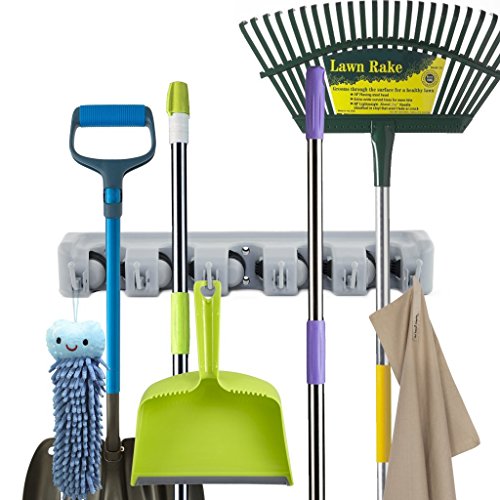
You can never find what you are looking for. Whether it be a battery, clean underwear, headphones or earbuds, chargers, car keys, you should be able to find things with ease. When one can’t find something they tend to buy it over and over again. At House to Home Organizing we go into living spaces which often have a multitude of items like batteries, tape, wrapping paper, and pens. Over buying is usually due to people not being able to find what they already own.
Socializing
Friends prefer you to come to their house or meet at a restaurant. Spaces that are filled with clutter are uncomfortable to relax in. You may have gotten used to the clutter, but other people are uncomfortable. Having a clean and organized living and entertaining area will help your friends and family relax and have fun.
Need help? Contact a professional organizer. Professional organizers are trained to help people de-clutter without stress. Organizing properly takes time. A professional organizer can help you organize quickly and efficiently, so you will have more time to spend with the people in your life that you love. Additionally, you will be able to find what you are looking for and relax with friends in your clutter free space.

