

A resource for those seeking information on organizing and transforming spaces.

Guest Post - 10 Best Plants for Backyard Privacy
Your backyard is a multipurpose part of your environment. It should be a place for fun, solitude, recreation, peace, and gathering with friends and family. Perhaps you eat meals in your backyard. Maybe you have a backyard pool. How you use your backyard will impact how much privacy you will need and what type of privacy.

Your backyard is a multipurpose part of your environment. It should be a place for fun, solitude, recreation, peace, and gathering with friends and family. Perhaps you eat meals in your backyard. Maybe you have a backyard pool. How you use your backyard will impact how much privacy you will need and what type of privacy.
Step 1: Survey your backyard.
First, take a look at your backyard. What surrounds it? Does your neighbor have a multilevel home with an unobstructed view into your entire yard from his upper floor? Does the deck you built for your above ground pool put you in clear sight of all your neighbors?
Then, take a look at your landscaping. Are there existing plantings, trees, or shrubs that can be incorporated into the new landscape or provide a starting point to build from? What hardscape exists in your yard? This includes any paved paths, patios, decks, a pool, a hot tub, retaining walls, and garden sheds.
Step 2: Make a plan.
The next step to improving your yard and providing privacy is to draw a plan of your current yard as close to scale as possible. Include a compass so you will know what areas are likely to be shady and where your yard is in full sun. Put everything on your drawing from the info you gathered. This map is for both long-term and short-term planning.
If the retaining wall is serving no purpose and you want it gone, still put it on your plan with a notation to remove. If the shed is great but not in the current location, put it on your plan in its current location with a notation to move it and where you want it to be in the future.
Next, make notations of what surrounds your yard. If you have a view of a mountain range or the lights of the city at night, and that is important to you, put it on your plan so you don’t forget and plant a tree in the middle of your view. This is also where you note the neighbor’s house that overlooks your backyard pool and patio.
Step 3: Prioritize your to-dos.
Now that you have a plan for your yard as it is, it’s time to make two lists. The first list the things you want to be changed right away. Maybe you just had an above ground pool installed, and you need to complete the installation with landscaping. Next, you want privacy from that nosy neighbor we’ve been talking about. Just picture your spouse and you lounging in the pool with your floating drink holders, relaxing the stress of the day away, and you see your neighbor peeking out of his upstairs window. Definitely not ideal.
Second, list your long-term goals. If you are a golfer, your dream backyard might include a practice green. Even if you can’t have it installed right now, the future location needs to be planned for. Maybe you want to have a small orchard with apple and pear trees. It might make more sense to plant the fruit trees to provide privacy. If you plan on a family in the future, how will that affect your plans for your yard? The more information you have to start with, the more likely you are of having your backyard turn into the private retreat you envision.
Step 4: Start transforming your backyard.
First, decide if you are going to hire a landscaper or if this going to be a DIY project. Many garden centers will discount or even eliminate the fee for the landscaper’s plan if you spend a certain amount on the plants at their garden center. Once you have met the amount, the plan is yours, and you can purchase the rest of your plant materials anywhere or take advantage of sales.

The advantage of hiring a professional is the knowledge they have of what grows successfully in your area, what the mature size of the tree or shrub will be, and what fits with your level of skill and desire. If you like a more formal look, and you are ready to prune your shrubs regularly throughout the year, the plant selection is likely different from the person who is willing to water occasionally, but that’s it. That person may be better off with a planting style which is more informal and natural.
If you’ve decided this will be a DIY project, check out your friends’ and neighbors’ yards. If a tree or shrub does well in their yard, it should do well in yours. If someone’s yard really appeals to you, try to achieve the same look in your yard.
In the north, your pool and patio are under two feet of snow during the winter, so a shrub that loses its leaves in the winter might be acceptable. In the south, the plants and trees you choose need to provide privacy all year round. Here are some suggestions for plants that will be attractive and provide privacy. Check with your local garden center to see if these plants will thrive in your climate and zone.
Euonymus. This shrub grows tall and full and can have green leaves or variegated. It can also be pruned if preferred.
Red Twig Dogwood. This shrub can be left natural or be pruned. This shrub is loved in the north, as it drops its leaves in the fall and shows off the bright red branches against the snow for winter interest.

Holly. This is a dense tall shrub that will provide privacy as well. Holly is evergreen, so it is a good choice if you need a year-round barrier. There are numerous varieties of holly, and some have a softer leaf than the traditional sharp tough leaf.
Arborvitae. Arborvitae is a columnar evergreen that makes a great choice for a year-round privacy hedge, This is an easy-care shrub that can grow in less than optimal soil, and it will remain cold tolerant. Different varieties are available which will determine the height of the plant and how closely together you should plant them to create a privacy screen.
Maple trees. This is a beautiful tree for the backyard. If you have a backyard pool, plant this tree well away, as it will drop its leaves in the fall. Maple trees also come in many varieties, and the leaves are thick on the trees. The added bonus of the maple is the fabulous fall color of the leaves before they drop.
Ornamental grasses. There are multiple varieties of ornamental grasses available to add a more unconventional bit of privacy to your pool. The added bonus is that they are not messy. The gentle drape of the leaves over the edge of the pavement also helps to soften the look of the pool deck.
Areca palms. These palms are great as hedges. They are easy to control, and they give your yard a more tropical look—perfect for backyards in the south.
Podocarpus. Also known as Japanese yew, this is a very low-maintenance shrub that grows all different sizes, including 50 feet tall, making a great privacy screen. Note: This shrub should only be used in dog- and cat- free homes, as it can be toxic to them if they like to chew on plants.
Royal Poinciana. This tree is also known as the flame tree because of the bright red flowers in May and June. Some consider this the most beautiful tree in the world, and it deserves a spot in the southern backyard.
Schefflera. Light and leafy, this is a fast-growing plant that makes a thick hedge. Best of all, it does well in shade or sun.
There are thousands of trees and shrubs to choose from. Check with your local garden center for advice on which plants do best in your area.
Author bio: Chris Hoffman is the founder of Backyard & Pool Superstore currently based outside of Dallas, TX. Backyard & Pool Superstore is an e-commerce leader in backyard, pool, spa, grill & patio products. Before starting Backyard & Pool Superstore, Chris has had 10 years of retail, construction, manufacturing and distribution experience in the swimming pool & spa industry. When Chris isn’t working, he moonlights as baseball coach, dance recital standing ovation specialist, husband, and German Shepherd enthusiast.

Guest Post - 12 Ways to Better Organize Your Garage and Workshop Storage Space
If your home has a garage, you know how easy it is for it to become the “everything room.” If there’s not a better place for something (or, let’s be real, if the right place is too far away), it often ends up in the garage. Many homeowners find it frustrating and stressful to see a mess every time they pull into or out of their garage, and it can be even worse if the area also doubles as a workshop.

If your home has a garage, you know how easy it is for it to become the “everything room.” If there’s not a better place for something (or, let’s be real, if the right place is too far away), it often ends up in the garage. Many homeowners find it frustrating and stressful to see a mess every time they pull into or out of their garage, and it can be even worse if the area also doubles as a workshop.
However, you’re not the first to have this problem. Many brilliant DIYers and home organizers have created their own solutions for getting your garage in shape, and there are many excellent products on the market now as well. Here are some of the simplest and most effective strategies and products you can use.
Zone it out.
A plan is the first step toward a well-organized garage. It’s a good idea to measure your garage, then sit down and create a diagram of where things could go. Plot out where you usually park and where you’re currently storing large equipment. Then, start figuring out how to consolidate and organize. However, don’t treat your original plan as something set in stone. It will most likely need to change and evolve as you go. Stay flexible and don’t worry if your first idea isn’t perfect.
Shelving is a basic need.
Just getting some basic metal shelving can be a huge upgrade for your garage or workshop. Four-pole steel shelving racks are inexpensive, widely available, and highly versatile. You can also utilize floor space even further by going with wall-mounted shelving. It’s a good idea, though, to implement shelving as one part of a larger plan. Shelving rarely solves a problem on its own, and it can become just as messy as the rest of your garage!
Use a pegboard or other hand tool storage solutions.
There’s a reason the pegboard is an iconic element of the garage or workshop area. It’s a great way to keep tools visible and easily accessible without sacrificing space. If you don’t have room for a pegboard, you can also consider using VELCRO® Brand Hook and Loop Fasteners on your smaller hand tools. A few quick applications of these sturdy fasteners can create an easy space to store and keep track of your screwdrivers, hammers, and other commonly-used tools.
Create a DIY mudroom to keep muddy shoes where they belong.
A mudroom is a great way to control mess in your home, particularly if you live in a climate with lots of precipitation (or have a very outdoorsy household.) You don’t even have to have an actual separate room for it. In many cases, just installing a basic coat rack and shoe rack by the entrance to your home is enough. For smaller households, you could just add a couple of 3M Command Hooks for coats and a small mat for shoes. As always, modify according to your needs!
Using something frequently? Put it on wheels.
This tip is particularly good for those who use their garage as a workshop. A rolling cart or toolbox is perfect for accessing all of your most frequently-needed items. Whether it’s a standard plastic cart or a professional-level rolling toolbox, the important thing is that it’s mobile!
Try a lattice rack for lumber and other long items.
Here’s an ingeniously simple DIY tip that can save you serious workshop space. It’s easy to turn a standard lattice into a wall-or-ceiling mounted rack that’s great for storing piping, lumber, or even fishing poles!
Get the little things organized.

As you probably know, drill bits, socket wrenches and other small and numerous items are highly prone to get lost. Invest in some good small-item organizers and label them well. Most are designed to be easy to stack and slot, so getting a small metal rack and going vertical is another great space saver here.
Labels, labels, labels.
Speaking of labels: Organization can only be so helpful when you don’t know where anything is! Invest in a label maker or even just use paper signs or writing on boxes. The important thing is to have a labelling system that’s easy to use and understand.
Make it critter-proof.
Much as we love our animal friends, there’s a time and place for them. For most people, the garage is not that place. It’s an easy afternoon’s work to inspect and replace your garage threshold to keep out stray animals.
Don’t forget the ceiling.
We’ve already discussed the power of vertical storage, but maybe you didn’t expect to go this vertical. If you’ve got some stuff you don’t use very often but need to keep around, ceiling racks are a surprisingly popular and efficient solution. Almost every home improvement store offers them, and they can fit a variety of standard-sized storage totes.
Tackle bulky items such as hoses and extension cords.
Bulky corded items such as hoses and extension cords can quickly turn into a tangled mess. What’s more, it’s easy to damage these items by not storing them correctly—they should be stored in a neat roll any time they’re not in use. Installing a few heavy-duty metal hooks on the walls is an easy way to get them into a manageable state, and cable straps and organizers will help keep the rolls together.
Utilize studs to build your own shelving.

Finally, make sure you’re using what your building gives you. If your garage is unfinished, you may have exposed studs. These actually present a great opportunity to build some high-utility shelving and save a lot of space. Take a look at one of the many guides to building between-the-studs shelving for ideas and inspiration!
Whether your garage looks like a war zone or just needs a little TLC to get its best look, it’s easier than you might think to get it under control. All of these projects involve commonly available materials, and only a few demand carpentry skills! Home organization and DIY are projects that anybody can tackle, and the garage is the perfect place to get started.
Author Bio: Halle Summers is a Marketing Coordinator for FASTENation Inc., a premier global manufacturer, technical converter, distributor, and designer of adhesive based fasteners and tapes. She has extensive knowledge of adhesives and fastener solutions, vendors, industry trends, and how they are used across various verticals. When she isn’t writing articles, she enjoys spending time in downtown Charleston, South Carolina and all the amazing food her hometown has to offer.
Guest Post - 5 Interior Decorating Trends for 2019
Discover the top home décor trends of 2019 with our infographic guide.
Discover the top home décor trends of 2019 with our infographic guide.

These days, trending looks in the interior decorating world come and go so quickly that it can be difficult to keep up. Fortunately, our friends over at EZ Living Interiors have put together a handy infographic guide which lays out the top five home décor trends you need to keep an eye out for in 2019.
Blush Pink
One of our favorite trends of 2019 is the emergence of blush pink as a playful alternative to traditional neutral shades. No longer confined to little girls’ bedrooms, the blush pink of 2019 is muted, edgy and minimalist. For a modern look, we recommend that you contrast soft blush tones with metallic home accessories in copper and brass.
Velvet Furniture
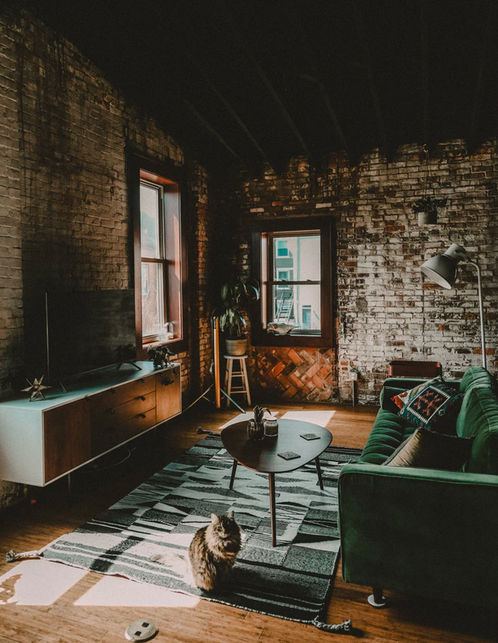
Another interior decorating trend that continues to dominate our Instagram and Pinterest feeds is velvet furniture. In fact, Google searches for velvet have skyrocketed over the past year and it is now the most searched for fabric online. We like deep jewel tones such as Emerald, Royal Blue, Violet and Burgundy. However, we are also increasingly seeing many pieces in lighter pastel shades such as pale grey, blush pink and mink.
Discover More Interior Decorating Trends
If you would like to learn more about the biggest interior decorating trends of 2019 in the infographic below. While trends can be a fantastic source of inspiration, at the end of the day the most important thing is that you are creating a space that reflects your unique tastes and personality. As Billy Baldwin (a.k.a. “The Dean of Interior Decorators”) once aptly put it: "Be faithful to your own taste, because nothing you really like is ever out of style."
Author Bio: Helen O’Keeffe works for EZ Living Interiors, a home furnishings retailer based in Ireland and the UK. She frequently writes informative content about interiors, trends and home living.
Guest Post - Timeless Style: Seven Ways to Add Modern Flare to Your Historic Home
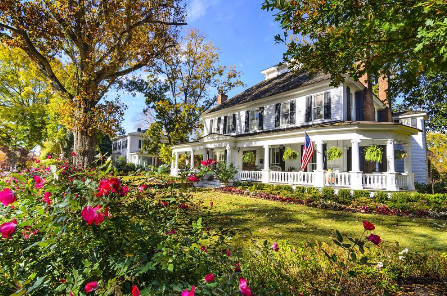
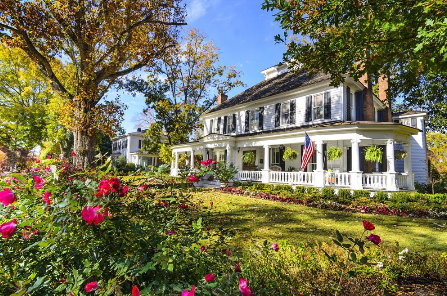
You’ve fallen in love with a historic home. It’s not difficult to see the appeal. Packed with charm and character, a historic home has an undeniable appeal that modern homes simply don’t possess.
You’ve fallen in love with a historic home. It’s not difficult to see the appeal. Packed with charm and character, a historic home has an undeniable appeal that modern homes simply don’t possess.
What you need to consider when purchasing a historic home is how you plan to bring it into the 21st century. This is a huge design challenge for many homeowners, and it requires careful thought and consideration. How do you balance modern flourishes without comprising the unique character of your home?
Whether you’re buying a historic home Charleston, S.C., or renovating your Georgetown loft in Washington D.C., here are a few tips for adding contemporary touches to an old home:
Give the Walls a Fresh Coat of Paint
One of the easiest and most affordable ways to modernize an older home is with a fresh coat of paint on the walls. Not only does this refresh your walls and instantly update them, it can also draw attention to the elaborate crown molding and trim so common in older homes.
To highlight these beautiful details, consider using a higher gloss finish such as satin or semi-gloss. This will give your walls some shine and attract the eye to the gorgeous details of your historic home.
Add a Pop of Color to the Exterior

If you’ve ever strolled past centuries-old homes in Europe, you might have noticed that many of them feature colorful doors in a high-gloss paint. This attractive look is also widely seen in the charming single houses in historic cities such as Charleston, S.C., and Savannah, G.A., both of which were strongly influenced by European aesthetics.
It doesn’t need to be a bright color to attract attention. In fact, shiny black doors are absolutely stunning against a white façade and can potentially fetch a higher price when it comes time to sell your home.
Black doors are trendy yet truly timeless. You can add more modern flare to your home by adding trendy brass décor, as well.
Spruce Up the Fireplace
A brick fireplace in an older home can be a total eyesore if you haven’t given it some TLC. To make it an attractive focal point for your home, lighten up dark red brick by doing a German smear.
Also known as a mortar wash, a German smear is a whitewashing technique that involves spreading wet mortar over bricks and removing some of the material before it dries. It mimics the look of centuries-old cottages in northern Germany, creating an old-world charm that is both modern and traditional.
If you’re obsessed with the TV show “Fixer Upper,” you might have seen Chip and Joanna Gaines use the German smear technique for Jeff and Sara Jones. Although this style was far outside of Joanna’s typical farmhouse style, she nailed the look by perfectly creating a traditional European look.
Mix Contemporary Furnishings with Antiques

No matter how much you try to preserve the original character of your home, chances are good that you have modern appliances and furnishings mixed into your design. Most of us prefer to have a TV and other 21st century technology.
To avoid making your home appear too modern, decorate with a mix of antiques and contemporary furnishings. Check out your local antiques store and scour it for fun statement pieces that will add interest to your home.
For example, you can balance the look of your flat-screen TV over the fireplace by decorating your mantel with an old sign encased in a modern frame, a charming figurine or antique books arranged artfully on the shelf. Mixing old and new is an artform, so don’t be afraid to play around with your décor until you get the balance just right.
Play up Contrast
Rather than hide the distinctive features of your historic home, why not play them up with contrast instead? For example, painting stair railings and doors black will make them pop against white walls and create a visually striking look.
If you’re really daring, you can paint an entire wall black as a strong contrast to your white fireplace. For those who prefer a bit more color, adding foliage or playing with different textures can achieve a similar effect.
For instance, pairing sleek furniture with textured antiqued lamps and a uniquely-patterned coffee table can create visual contrast that is slightly more toned down while still emphasizing your historic home. You can also showcase different textures in a modern bookcase to incorporate traditional elements into your historic home.
Preserve Some Time-Honored Character
Most people don’t purchase a historic home with the intent of changing everything that makes it unique. Rather than renovate each space entirely, consider the original purpose of the space.
This will require you to know the history of your home — a fun exercise in itself. If you have a room that was once used as a mini-ballroom, consider placing an old piano in the room to preserve its original function in a small way.
Use Distressed Pieces for a Well-Worn Look
Modern pieces that feature a distressed look will fit perfectly into your historic home without making it seem too contemporary. Your bedroom is an easy place to start.
Some well-worn items for your bedroom can include an antique chest at the foot of a modern bed, a distressed nightstand or a rustic clock. It doesn’t matter whether these items were made in 1920 or 2019. Their vintage look will fit right in with your historic home.
Bring Your Historic Home into the 21st Century
To modernize your historic home, you don’t need to replace or update everything that makes your house unique. You also don’t need to be feel obligated to live in the time period of when your home was first built.
Decorating a historic home involves finding the perfect balance between old and new, respecting the character of the home while incorporating modern flourishes for a 21st-century mode of living. Eventually, you’ll have a visually stunning home that strikes the right balance between old quirks and modern charm.
Author Bio: Traci Magnus is a realtor for Dunes Properties located in Charleston, SC. She was born and raised on the Charleston coast and attended the College of Charleston before obtaining her real estate license. When she’s not working, you can find her spending time with her husband Glen and son Max or wandering the historic streets downtown.

