

A resource for those seeking information on organizing and transforming spaces.

Guest Post - Five Tips to Avoid Costly Winter Blues
It always seems to come by in a flash, when the frigid effects of winter hit your house head-on. Whether it’s a blizzard that blankets your home in a foot of snow, or the shivering cold that freezes your house, an icy winter can be a nuisance that affects many homeowners with extra cost and stress.
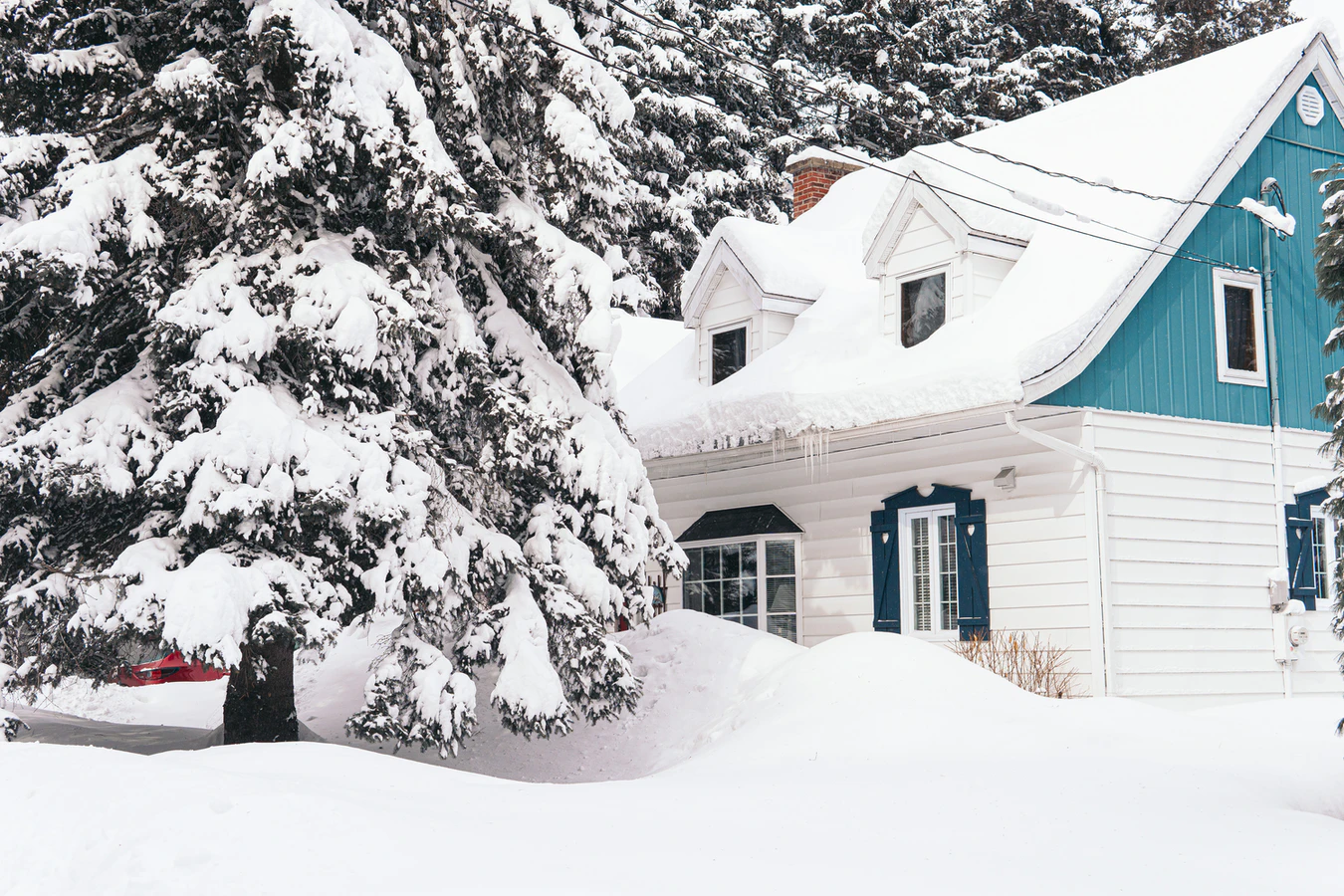
It always seems to come by in a flash, when the frigid effects of winter hit your house head-on. Whether it’s a blizzard that blankets your home in a foot of snow, or the shivering cold that freezes your house, an icy winter can be a nuisance that affects many homeowners with extra cost and stress.
Fortunately, there are some steps you can take before winter comes around that can help prevent some more of the more serious issues. In order to help you avoid these, here’s a checklist of five recommended home maintenance tips that everyone from a first-time homeowner to an experienced plumber in Voorhees, can use before winter to ensure they get through the season safely.
Can’t Beat the Heat
First and foremost, you’ll want to make sure that your livable space isn’t draining any heat. Make sure to check for air leaks around doors and windows. If you find any holes where the air is escaping, you can easily caulk and re-seal them.
In addition, you need to check to see if your heating system is working properly by making sure it’s been properly cleaned, and that its functions are still in top shape. Whether you have a gas, a furnace, or an HVAC system, make sure that it’s been cleaned at least once in the past year. Removing dirt, dust, and extra residue can save you on excess cost. You also don’t want your heat to shut down in the middle of a blizzard, do you?
Insulation is Everything
You may forget how important insulation is. It helps to keep homes more energy-efficient, aids with noise reduction and lowers the overbearing summer heat. But perhaps winter is where it’s most useful.
Insulation helps to fill in that extra space around pipes and wiring to keep your home extra warm against the frosty cold. Make sure that you double-check your attic and walls to see if you’re able to add extra insulation. Adding it on in those areas may be able to help you lower those heating costs as well.
Recheck Your Roof
In summer and (especially) fall months, your roof may have accumulated leaves and other fallen residues from the surrounding area. Make sure that you clean off your roofing and sweep out gutters. Doing this allows snow to melt properly and drain through once winter arrives.
If you don’t do so, snow and ice can create an excess weight that causes major damage to those areas. You’ll also want to take a careful look at your roof to see if there are any missing shingles or other areas where air might be leaking in.
Watch those Walkways
We’ve all been there before: we’re walking up to a friend or relative’s house, and then suddenly, we slip on a patch of ice and fall to the ground in milliseconds. Home walkways and driveways are some of the most important areas to focus on in winter, as having an icy entrance to your home can lead to serious injury.
Make sure you’ve stocked up on ice melt and rock salt so that you’re ready to de-ice these parts of your outdoor areas. Also, make sure that you have--or have bought--a reliable shovel for when the time comes to start that snow shoveling task.
Stock Up
You never know when that next blizzard will come around, make the roads unsafe for travel, or cause an injury. In order to ensure that you won’t be stuck in the cold without any food or necessary supplies, make sure you have an emergency kit. Remember to stock up on:
Bottled water
High-energy snacks (granola bars, dried fruit, canned nuts)
Gloves, hats, blankets, and socks
Flashlight with extra batteries
First-aid kit
Snowbrush and ice scraper
Jumper cables
Having these items on hand in case of emergency can save you time, energy, and even be a key difference-maker in a serious event. A homeowner should always have a kit on hand and buying these goods individually before the winter season is typically less expensive than buying an “emergency kit” that is designed in groups.
Winter is always a stressful time for home maintenance. However, with these tips, you can take smart precautions to ensure that your house is ready for heavy snow, slippery ice, and whatever else that cold may bring.
About the Author

Jennifer Bell is a freelance writer, blogger, dog-enthusiast, and avid beachgoer operating out of Southern New Jersey.
Future-Proofing You’re Solar Energy System for Long-Term Savings
The world is changing quickly, with new standards, technologies, and regulations emerging a day. Just believe all the obsolete phone chargers you've got within the drawer – or how often you put in new updates on your mobile device.

The world is changing quickly, with new standards, technologies, and regulations emerging a day. Just believe all the obsolete phone chargers you've got within the drawer – or how often you put in new updates on your mobile device.
Again, the planet is moving fast. And nowhere is this transformation more pronounced than within the energy industry. For instance, solar panels were a fringe technology just 10 or 15 years ago.
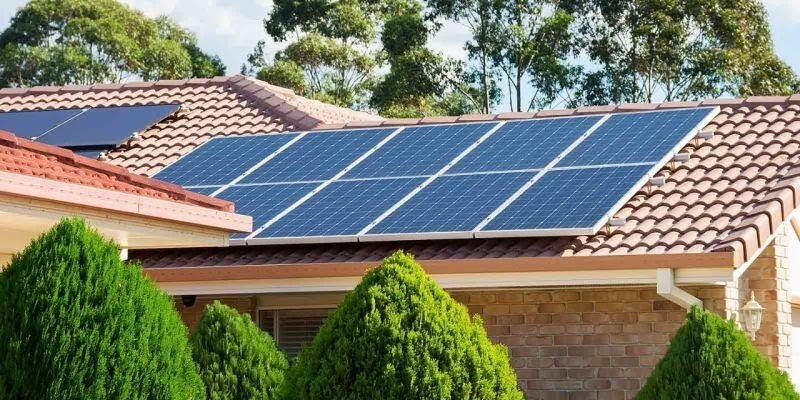
No one likes being locked into a choice – especially with numerous changes on the horizon. However, with solar and storage solutions, it’s possible to future-proof your residential solar energy system in order that it continues delivering reliable savings for many years to return. Below are just a few of the ways in which future-proofs your home energy solution – regardless of what the longer term holds.
Solar economics are eroding
Electric utilities everywhere the country are proposing changes to their utility rate designs and net metering frameworks. In Q3 2017 alone, 41 states took action on distributed energy solar policy and/or rate design, consistent with the foremost recent 50 States of Solar Report, published by the NC Clean Energy Technology Center. The kinds of changes being proposed and implemented are all different, counting on the state and utility territory. The one commonality they share is that the changes nearly always erode the worth of solar. Meaning that the “avoided cost” that solar is able to do, gets diminished due to the about-face.
A great example of this is often the new time-of-use rates that went into effect within the San Diego Gas & Electric (SDG&E) territory in December 2017. The new rates, which solar customers are now being defaulted onto, dramatically shift the summer season on-peak period (the highest-priced energy) from 11 a.m. to 6 p.m., all the answer until 4 p.m. to 9 p.m. within the evening. This radical shift erodes the worth of solar, as afternoon solar production now gets valued at a lower-priced mid-peak rate, rather than the premium on-peak rate.
Modelling how an ESS can future-proof solar savings
Determining what proportion a change to rate design or NEM reduces the avoided cost of a solar project is very specific to every customer—as is quantifying what proportion an energy storage system can save them. The solution to both questions depends on a variety of project-level specifics, like the load profile of the customer, their system size and production, their utility rate schedule and therefore the about-face to be implemented. Energy Tool base has published a replacement video tutorial that illustrates the way to find out and model this sort of study.
Turning a threat into a chance
Utilities everywhere the country are proposing and implementing new changes to their rate designs and NEM frameworks. These changes nearly always erode the worth proposition of solar. This is often the truth today, and this trend is predicted to continue. The great news is that this market threat to solar is a chance for energy storage. As storage are often adaptably re-programmed to assist limit the erosion of savings from future changes. Many solar and energy storage developers are leveraging energy storage’s ability to future-proof solar PV savings as a key point to shut deals.
Protection from rising electricity costs and time-of-use charges
In a recent interview, a home-owner told us, “I don’t know where utility rates are going to be within the future, but they certainly won't be lower.” This powerful storage solution, you'll store power on-site during cheaper hours to avoid buying grid electricity when it's costliest. Combined with residential solar energy system, you'll “lock-in” self-generated power to offset unknown future electricity costs from the grid.
Infinite expansion capabilities
It’s okay if you buy a solar plus storage system to satisfy your electricity needs today, albeit you think that they could increase within the future. Because of Enphase’s modular design, our AC-coupled systems remove the necessity to switch other components when adding more solar and energy storage capacity within the future. No problem. You’ll easily add additional AC modules and exchange storage units as required – with minimal modifications required.
Put your solar savings on autopilot
Most homeowners aren't tracking utility costs from day to day or maybe year to year. That’s why we make our all-in-one system as seamless as possible to get rid of the guesswork once you should consume solar energy, stored energy, or grid power.
Our Ensemble™ energy management technology intelligently manages the electricity supply throughout your home via a user profile that you simply manage within the mobile app. Once configured, your solar system will automatically switch to the energy source that's cheapest and most available.
Backup power during grid outages
Worried about blackouts and grid outages? You’re covered there, too. Our all-in-one solar plus storage solution allows your home to seamlessly switch between grid-connected and backup modes. Albeit the remainder of the neighborhood is without power, you'll still enjoy access to reliable electricity from Recharge.
Over-the-air software updates
Every component in your solar panel benefits from over-the-air firmware updates sent via Wi-Fi. This connectivity makes it possible to upgrade your profile in real-time - supported local weather, grid prices, and other variables.
These software updates assist you to extract the foremost power from your existing system while keeping it up so far today, tomorrow, and lots of years into the longer term. Better still, you'll manage and monitor all the above through Enlighten - our dedicated mobile app. albeit you're far away from home, you continue to have cloud-based access to your PV system.
Annealed vs. Tempered Glass: Which One Is Best For Your Home?
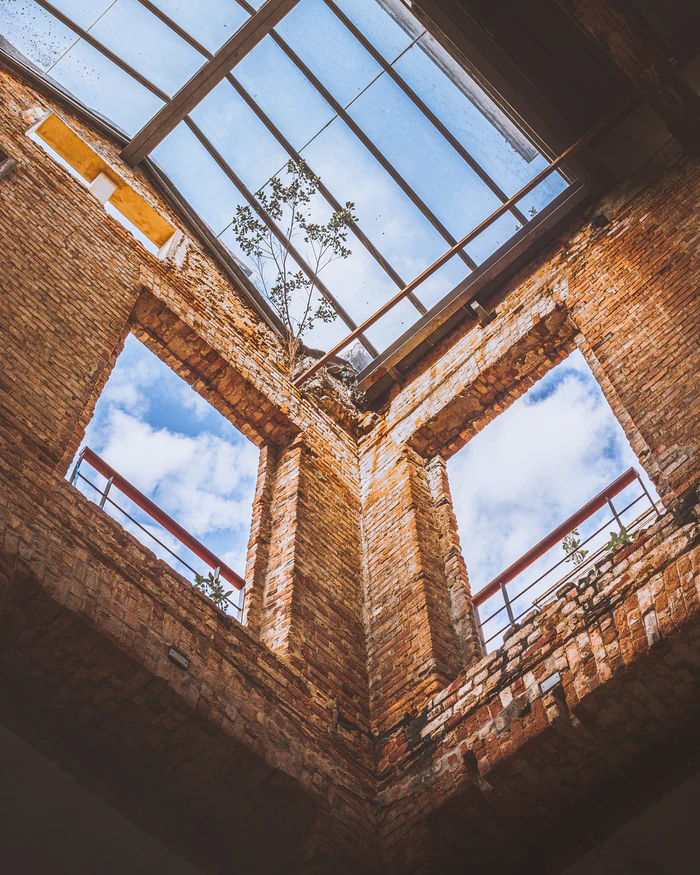
When it’s time to install new glass panes at home, homeowners often have to choose between annealed glass or tempered glass.
Without a doubt, both types of residential glass offer their own specific pros and cons.
Annealed glass, also known as standard or plate glass, is commonly used in many homes, mainly because of its affordability.
Lately, however, the popularity of tempered glass installations is rising, as it does offer a number of benefits in terms of safety and security.
When it’s time to install new glass panes at home, homeowners often have to choose between annealed glass or tempered glass.
Without a doubt, both types of residential glass offer their own specific pros and cons.

Annealed glass, also known as standard or plate glass, is commonly used in many homes, mainly because of its affordability.
Lately, however, the popularity of tempered glass installations is rising, as it does offer a number of benefits in terms of safety and security.
Let’s make a comparison between annealed vs. tempered glass for homes to help you decide which type to choose for your next residential glass installation.
Some Facts About Annealed Glass
Annealed glass gets its name from the thermal treating process that creates it.
Annealing involves heating glass at over 600 degrees Celsius and cooling it slowly afterward. The process aims to make the glass stronger, more durable, and not easy to break.
Annealing also makes the glass less likely to shatter when going through the internal stresses involved during its preparation for commercial availability. That means annealed glass can withstand all the cutting, drilling, and polishing it will be subjected to during fabrication without incurring damage.
What You Need To Know About Tempered Glass
Tempered glass is primarily known for its strength.
Like annealed glass, the creation of tempered glass involves heating glass to over 600 degrees Celsius. Its cooling process is different, though.
While annealed glass goes through a slow cooling process, tempered glass requires rapid cooling at high pressures. Called “quenching,” this high-pressure cooling procedure is responsible for the enhanced strength of tempered glass.
Annealed vs. Tempered Glass
Let’s compare annealed and tempered glass in terms of cost, durability, safety, and applications.
Cost
One of the biggest reasons why annealed glass is popular among homeowners is its more affordable price.
Annealed glass is a lot cheaper than tempered glass because, unlike the latter, it doesn’t take that long to fabricate the former.
For homeowners who want residential glass repair or replacement on a budget, annealed glass is their go-to option for residential glass.
Durability
While the heating process for both types of glass plays a crucial role in strengthening them, the quenching process for tempered glass makes it a lot tougher and durable than annealed glass.
According to Scientific American, annealed glass generally breaks at around 6,000 pounds per square inch (psi), while federal guidelines set the breaking point for tempered glass at 24,000 psi.
Tempered glass is also better at withstanding strong winds than annealed glass, making them perfect for homes and buildings located in windy areas.
Tempered glass also holds up well against extreme heat and cold, as well as everyday wear and tear.
Safety
No matter how strong any type of glass is, it will always break with the application of the right amount of force.
However, tempered glass is regarded as safer than annealed glass when it breaks.
When tempered glass breaks, it will shatter into hundreds of dull, pebble-like pieces that aren’t likely to cut skin. More importantly, those pieces interlock with other pieces upon breaking and stay together most of the time.
On the other hand, breaking annealed glass will produce shards that are sharp and jagged enough to cause injuries.
Applications
Considering the tendency of annealed glass to break into jagged and dangerous shards, it would be wiser to use tempered glass in high-traffic areas in your home, like the path from the kitchen to the living room, to reduce the likelihood of injuries when it breaks.
Annealed glass would be great for lighting fixtures, especially if you want diffused lighting at home. You can also use annealed glass for tabletops and cabinets.
For your bathroom and shower doors, tempered glass would be the better choice. Should you ever slip and fall in the bathroom and hit the tempered glass, your risk of sustaining cuts because of it is so much lower.
These are just the most distinct differences between annealed glass and tempered glass. When shopping for glass panes for use at home, always consider their respective characteristics, your home safety concerns, your budget, and the application you have in mind before making a decision.

How to Choose the Best Property When Buying
Purchasing your first home is surely a milestone to celebrate. However, it is also one of the biggest expenses you will ever have to deal with. Therefore, there is no room for mistake: choosing the perfect property for your needs and wants is the utmost priority. Here are a few tips on how to pick your property.

Purchasing your first home is surely a milestone to celebrate. However, it is also one of the biggest expenses you will ever have to deal with. Therefore, there is no room for mistake: choosing the perfect property for your needs and wants is the utmost priority. Here are a few tips on how to pick your property.
Consider your finances
As we said, purchasing a property is a major expense. So, above all, you need to set your finances straight, create a budget and determine what you can actually afford. Getting pre-approved for a loan is a crucial step as it will let you know how much exactly you can spend. If your credit score is not the best, it might be a good idea to improve it before seeking out a loan to get the best possible conditions.
The location is important
You might have already heard the phrase that in real estate, it’s all about the location. This principle applies in your case too. The safety of the neighborhood, the availability of amenities, the community attributes, the proximity of your workplace or your children’s schools are all things to factor in. If you have the capacities, going for a fixer-upper in a good neighborhood is a better option than settling for a subpar location.
The type of property
Obviously, you also need to consider what type of property would best fit your needs and lifestyle. When talking about home types, we can generally name 4 categories, each of which has its own advantages and disadvantages. However, what might be a disadvantage for one person could be an advantage for another. Therefore, consider your options carefully.
Pros and cons of houses
Single-family houses are a popular choice for those families who value privacy and autonomy when it comes to their property. These are some of the biggest advantages of single-family houses. These properties also have an outdoor space most of the time, which makes them ideal for families with children or pets.
However, what this also means is that single-family homes are the most time-consuming and expensive to maintain. Having autonomy over your property means you will have to pay for every single repair and renovation. In addition, you are not always entirely free in your choices when it comes to construction and modification; be sure to check whether the property you are looking at is under a Home Owners’ Association and what their rules are.
Pros and cons of apartments
At the other end of the spectrum, we have apartments that are usually rented out to tenants. This would mean that you don’t actually buy the property, nor do you have permission to modify it to your liking. Any changes you want to make must be discussed with your landlord, and they might also restrict certain activities within the property. The privacy level is also on the lower side, considering you’re sharing a building with others.
These are the drawbacks of renting an apartment, however, there are also upsides to this living arrangement. It’s the cheapest option in the short term, so if you are not entirely confident about making such a major investment as purchasing a property, this is the right choice for you. Another huge advantage of apartment living is that much of the time, the maintenance responsibilities fall on your landlord. You might also have access to shared amenities such as gyms or pools.
Pros and cons of condos
Condominiums are somewhat of a middle ground between the previous options. Buying a condo is a more affordable option than buying a house, but it still gives you higher autonomy than renting an apartment. When buying a condo, you automatically join the condo association. You gain ownership of the “inside walls,” but all of the maintenance of the shared spaces and the outside structure of the building is taken care of by the association. A similar concept in Australia is called the “strata scheme”. Crucial strata management tasks are often outsourced to companies, meaning you don’t have to worry about maintenance.
This is a big upside to condo living, which makes it ideal for people who are busy or travel a lot and don’t have time for the amount of maintenance a house requires. However, some of the downsides of condos are similar to those of apartments. You don’t get the same level of privacy as a house gives you and you have to share some spaces. The condo association might also limit what you can and cannot do to your property.
Pros and cons of townhouses
Finally, we must mention townhouses. They often provide some outdoor space, which makes them a great choice for people with pets. The maintenance required is not as overwhelming as with houses, given the smaller exterior, but you are still the one responsible for all the repairs, which can become a problem if the structure itself is older. Still, townhouses are a great in-between option.
What you need to keep in mind here, too, is that Home Owners’ Association rules may still apply; You might not be free to paint your exterior to whatever color you choose, for example. The privacy they provide is moderate since some of the walls are shared with neighbors.
Buying a property is a big deal. There is a lot of forethought that needs to go into this decision and you need to thoroughly inform yourself about all your options. Consider your lifestyle and how much time and money you can devote to maintenance, and the suitable option will be clear.

