

A resource for those seeking information on organizing and transforming spaces.

6 Steps to the Perfect Home Workspace Organization
For most people, the central place of their home is the living room. It is the place where all the family gathers after having spent all day apart. However, this isn’t the case with remote employees. For them, the hub of their home is their home office. In this room, specially designated for work purposes, they keep all their data, attend video conferences, and communicate with clients and the management. To stay on top of things at work, they have to work in an organized workspace. Otherwise, they might experience low efficiency. If you are looking for ways to organize your home workspace perfectly, here are some steps to follow.

For most people, the central place of their home is the living room. It is the place where all the family gathers after having spent all day apart. However, this isn’t the case with remote employees. For them, the hub of their home is their home office. In this room, specially designated for work purposes, they keep all their data, attend video conferences, and communicate with clients and the management. To stay on top of things at work, they have to work in an organized workspace. Otherwise, they might experience low efficiency. If you are looking for ways to organize your home workspace perfectly, here are some steps to follow.
Keep it clean and tidy
If you want to have an organized workspace, you should keep it clean and tidy. The best place to start with is your desk. Your work desk occupies the central place of your home office. Also, it is the place where you spend the largest part of your workday. If you can’t see your desk underneath all of the files and post-it notes, then you should definitely spend some time decluttering. While you are doing this, think about every item that was on your desk. How often do you need those office supplies and files? If you don’t need them every day, put them aside, let’s say, on a shelf or in the drawer. This way, your desk will be more organized and every item in the home office will have its place.
Move personal things
Although home offices are a part of your house or apartment, they should still be used only as a workspace. For that reason, as much as you are tempted, or think personal things might be motivating, you should keep them in some other room. Framed pictures of your family shouldn’t stand at your desk or on the shelves. If you want, you can hang that photo on the wall where it occupies less space. Stuff like magazines or souvenirs also doesn’t belong on your work desk. What you can keep are plants, but make sure to keep them on the windowsills, so you have more space for work-related items.
Invest in digital storage
Since the world has gone digital, you should make use of highly advanced tools to stay organized. Instead of printing out all of your files, you should store them in the cloud. This way you will get rid of unnecessary piles of paper while still keeping all of your files stored digitally. In case you are using some sort of an employee app for work, you can use it as a storage unit too. All the files you exchange with your coworkers are saved, so you can access them whenever you feel the need to. More importantly, make sure to back up all your files. This way, in case of a data breach or malicious software, all your files will be safe.
Throw away unnecessary items
At the end of the workday, what most of us only want to do is unplug and relax. That is why most remote workers forget to declutter and throw away unnecessary items. As a result, their workplace is unorganized. Old newspapers, broken office supplies, pens that have run out of ink take too much space in the home office and serve no purpose. That is why you should throw them away and replace them with new and functional ones. As far as official documents are concerned, you should keep them if you aren’t sure whether or not you might need them in the future. But if you do, then keep them filed neatly.
Keep a clear message board
Chances are your home office contains a message board or a bulletin. They are great for keeping employees up to date with events. However, more often than not, they are a complete disaster because no one takes the time to declutter them at the end of the day. Decluttering isn’t just about erasing messages on the board. It helps you organize your workspace and become more productive. That is why you should take a few minutes at the end of the workday and take off old messages and post-it notes, to make room for new ones. You will quickly realize how efficient you become with this simple trick.
Hang a wall calendar
For better performance at work, you have to manage your time and tasks well. One simple yet effective trick can help you control your time better and keep all objectives in sight. All you have to do is hang a calendar on your wall. Furthermore, you can customize it, so it serves as a decoration too. Having a calendar on your wall will remind you to complete due projects, don’t miss out on a meeting with a client, and don't forget your mom’s birthday or wedding anniversary.
On the whole, keeping your workspace organized and neat isn’t hard. It just takes some time and effort. With our tips, you will spend your days in an organized and tidy workspace.

Guest Post - Common Cleaning Hacks for Busy Homeowners
Keeping a house or a flat clean is often a chore no one likes doing. Of course, it’s good exercise, and it can help clear your mind if you are pondering a particularly bothersome issue - but even then, it’s just tiresome and strenuous, especially as you have to keep doing it over and over again.
We partnered with a cleaning company for this post. The opinions in the post are honest. All reviews and opinions expressed in this post are based on our personal views. We are excited because we know you will love it.
Keeping a house or a flat clean is often a chore no one likes doing. Of course, it’s good exercise, and it can help clear your mind if you are pondering a particularly bothersome issue - but even then, it’s just tiresome and strenuous, especially as you have to keep doing it over and over again.

Add to that the pace of modern life, and you’ll come to the conclusion I have - there is very little time in the day and the week in which we will be able to, and want to, clean our homes.
To help you overcome some of the most common cleaning issues in your own space, here are my simple hacks that will save you time, money, or effort. You can also learn more here.
Oven racks, dish racks, cutting boards, and the like
I often find that my oven rack and dish rack are the worst to clean, because they are so fiddly and require a lot of scrubbing. However, if you leave them to soak overnight, you can literally just wash them in the morning and they will be squeaky clean.
Place your oven rack in the tub and cover it in water. You can add a towel underneath it to prevent any damage to the tub, and you can add some dish soap to the water for added effect. Once it has been soaking for 8-10 hours, you’ll find most of the stuff that’s been stuck to it comes off with ease.
For cutting boards and especially dish racks, I like to use a similar method. I place them in the tub and coat them with a mixture of sodium citrate and dish soap. This dissolves all the gunk, and I can just use a toothbrush or a small brush in the morning for scrubbing.
Pans, pots and kettles
No matter how well we wash them, the bottoms of pots and pans tend to get that layer of limescale over time.
Instead of scrubbing like mad, try to use some bicarbonate of soda to clean the bottoms, which will require much less elbow grease.
You can also use white vinegar in a solution of water, and lemon juice works just as well.
If you want to descale a kettle, you can apply the same mixtures - but note that it will require a bit more time, as the kettle will likely be in much worse shape, given the fact that it’s often used for boiling just water, and that we never really tend to clean it properly.
Glass stove tops
Your glass stove top can also be cleaned with the use of white vinegar and baking soda, as these two ingredients form the basis of most natural household cleaners.
The trick here will be not to scrub too hard, and to find a brush that will not damage the glass.
I’d also recommend doing this little hack at least once a week, or even more often. You’ll notice that your kitchen is much cleaner if you keep just the stove top clean, as the marks and rings from cooking tend to show up after just one meal, and they are usually what makes the kitchen look messy.
Sofas, blankets and pillows
If you find your sofa or chairs have a lingering smell that is less than pleasant, instead of masking with some sort of deodorizing product, try to get rid of it altogether.
Just brush the area down first, getting rid of any dust, and then sprinkle it with baking soda. You can leave it on there for as little as 20 minutes, but if you want it to work harder, you can extend that period. After that, just vacuum all of it up.
You can do the same for pillows and blankets you don’t have the time to wash and dry. Just make sure you get all of the baking soda out and that you vacuum thoroughly.
Computer screens, remote controls, phones
Computer screens, TV screens, but especially keyboards tend to get a bit sticky and dirty from prolonged use.
The easiest way to clean them is with vinegar (again). Make sure you use a very soft microfibre cloth for wiping. Don’t use any kind of paper product (like tissues), as it will leave more stains, and you’ll only end up with more of a mess.
Wipe down with a clean and dry cloth after you’ve worked with the vinegar. For tougher spots, you can use a cotton swab soaked in vinegar, and then wipe dry.
To sum it up
Vinegar and baking soda will be your best assets when it comes to easy and natural cleaning in the home. Find a ratio that works for different areas, and don’t be afraid to use them.
You can also use lemon for the same purpose, and invest in some better quality cloths that will not damage your surfaces.
As long as you don’t wait too long for the mess to become really bad, you can keep your home clean with just a bit of regular weekly maintenance.
Author Bio:
Mother of two and an aspiring baker, Joyce started blogging during the 2020 pandemic. She is still unsure about her voice (which is why she writes under a pseudonym), but is aiming to overcome her fears and write as much as she can. You can find her at The Confused Nester.

Guest Post - Five Tips to Avoid Costly Winter Blues
It always seems to come by in a flash, when the frigid effects of winter hit your house head-on. Whether it’s a blizzard that blankets your home in a foot of snow, or the shivering cold that freezes your house, an icy winter can be a nuisance that affects many homeowners with extra cost and stress.

It always seems to come by in a flash, when the frigid effects of winter hit your house head-on. Whether it’s a blizzard that blankets your home in a foot of snow, or the shivering cold that freezes your house, an icy winter can be a nuisance that affects many homeowners with extra cost and stress.
Fortunately, there are some steps you can take before winter comes around that can help prevent some more of the more serious issues. In order to help you avoid these, here’s a checklist of five recommended home maintenance tips that everyone from a first-time homeowner to an experienced plumber in Voorhees, can use before winter to ensure they get through the season safely.
Can’t Beat the Heat
First and foremost, you’ll want to make sure that your livable space isn’t draining any heat. Make sure to check for air leaks around doors and windows. If you find any holes where the air is escaping, you can easily caulk and re-seal them.
In addition, you need to check to see if your heating system is working properly by making sure it’s been properly cleaned, and that its functions are still in top shape. Whether you have a gas, a furnace, or an HVAC system, make sure that it’s been cleaned at least once in the past year. Removing dirt, dust, and extra residue can save you on excess cost. You also don’t want your heat to shut down in the middle of a blizzard, do you?
Insulation is Everything
You may forget how important insulation is. It helps to keep homes more energy-efficient, aids with noise reduction and lowers the overbearing summer heat. But perhaps winter is where it’s most useful.
Insulation helps to fill in that extra space around pipes and wiring to keep your home extra warm against the frosty cold. Make sure that you double-check your attic and walls to see if you’re able to add extra insulation. Adding it on in those areas may be able to help you lower those heating costs as well.
Recheck Your Roof
In summer and (especially) fall months, your roof may have accumulated leaves and other fallen residues from the surrounding area. Make sure that you clean off your roofing and sweep out gutters. Doing this allows snow to melt properly and drain through once winter arrives.
If you don’t do so, snow and ice can create an excess weight that causes major damage to those areas. You’ll also want to take a careful look at your roof to see if there are any missing shingles or other areas where air might be leaking in.
Watch those Walkways
We’ve all been there before: we’re walking up to a friend or relative’s house, and then suddenly, we slip on a patch of ice and fall to the ground in milliseconds. Home walkways and driveways are some of the most important areas to focus on in winter, as having an icy entrance to your home can lead to serious injury.
Make sure you’ve stocked up on ice melt and rock salt so that you’re ready to de-ice these parts of your outdoor areas. Also, make sure that you have--or have bought--a reliable shovel for when the time comes to start that snow shoveling task.
Stock Up
You never know when that next blizzard will come around, make the roads unsafe for travel, or cause an injury. In order to ensure that you won’t be stuck in the cold without any food or necessary supplies, make sure you have an emergency kit. Remember to stock up on:
Bottled water
High-energy snacks (granola bars, dried fruit, canned nuts)
Gloves, hats, blankets, and socks
Flashlight with extra batteries
First-aid kit
Snowbrush and ice scraper
Jumper cables
Having these items on hand in case of emergency can save you time, energy, and even be a key difference-maker in a serious event. A homeowner should always have a kit on hand and buying these goods individually before the winter season is typically less expensive than buying an “emergency kit” that is designed in groups.
Winter is always a stressful time for home maintenance. However, with these tips, you can take smart precautions to ensure that your house is ready for heavy snow, slippery ice, and whatever else that cold may bring.
About the Author

Jennifer Bell is a freelance writer, blogger, dog-enthusiast, and avid beachgoer operating out of Southern New Jersey.
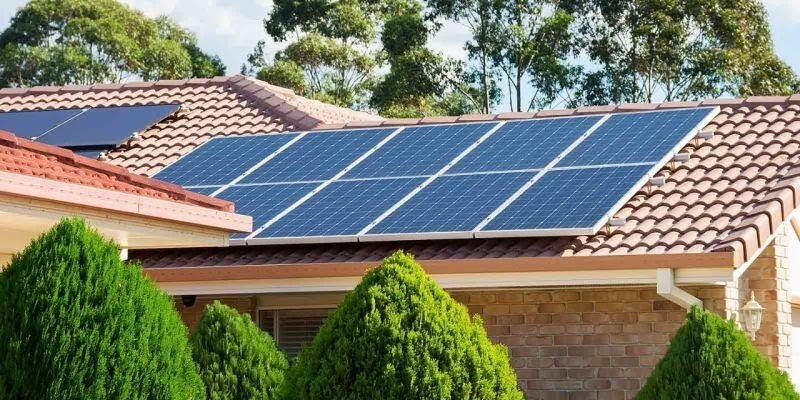
Future-Proofing You’re Solar Energy System for Long-Term Savings
The world is changing quickly, with new standards, technologies, and regulations emerging a day. Just believe all the obsolete phone chargers you've got within the drawer – or how often you put in new updates on your mobile device.

The world is changing quickly, with new standards, technologies, and regulations emerging a day. Just believe all the obsolete phone chargers you've got within the drawer – or how often you put in new updates on your mobile device.
Again, the planet is moving fast. And nowhere is this transformation more pronounced than within the energy industry. For instance, solar panels were a fringe technology just 10 or 15 years ago.
No one likes being locked into a choice – especially with numerous changes on the horizon. However, with solar and storage solutions, it’s possible to future-proof your residential solar energy system in order that it continues delivering reliable savings for many years to return. Below are just a few of the ways in which future-proofs your home energy solution – regardless of what the longer term holds.
Solar economics are eroding
Electric utilities everywhere the country are proposing changes to their utility rate designs and net metering frameworks. In Q3 2017 alone, 41 states took action on distributed energy solar policy and/or rate design, consistent with the foremost recent 50 States of Solar Report, published by the NC Clean Energy Technology Center. The kinds of changes being proposed and implemented are all different, counting on the state and utility territory. The one commonality they share is that the changes nearly always erode the worth of solar. Meaning that the “avoided cost” that solar is able to do, gets diminished due to the about-face.
A great example of this is often the new time-of-use rates that went into effect within the San Diego Gas & Electric (SDG&E) territory in December 2017. The new rates, which solar customers are now being defaulted onto, dramatically shift the summer season on-peak period (the highest-priced energy) from 11 a.m. to 6 p.m., all the answer until 4 p.m. to 9 p.m. within the evening. This radical shift erodes the worth of solar, as afternoon solar production now gets valued at a lower-priced mid-peak rate, rather than the premium on-peak rate.
Modelling how an ESS can future-proof solar savings
Determining what proportion a change to rate design or NEM reduces the avoided cost of a solar project is very specific to every customer—as is quantifying what proportion an energy storage system can save them. The solution to both questions depends on a variety of project-level specifics, like the load profile of the customer, their system size and production, their utility rate schedule and therefore the about-face to be implemented. Energy Tool base has published a replacement video tutorial that illustrates the way to find out and model this sort of study.
Turning a threat into a chance
Utilities everywhere the country are proposing and implementing new changes to their rate designs and NEM frameworks. These changes nearly always erode the worth proposition of solar. This is often the truth today, and this trend is predicted to continue. The great news is that this market threat to solar is a chance for energy storage. As storage are often adaptably re-programmed to assist limit the erosion of savings from future changes. Many solar and energy storage developers are leveraging energy storage’s ability to future-proof solar PV savings as a key point to shut deals.
Protection from rising electricity costs and time-of-use charges
In a recent interview, a home-owner told us, “I don’t know where utility rates are going to be within the future, but they certainly won't be lower.” This powerful storage solution, you'll store power on-site during cheaper hours to avoid buying grid electricity when it's costliest. Combined with residential solar energy system, you'll “lock-in” self-generated power to offset unknown future electricity costs from the grid.
Infinite expansion capabilities
It’s okay if you buy a solar plus storage system to satisfy your electricity needs today, albeit you think that they could increase within the future. Because of Enphase’s modular design, our AC-coupled systems remove the necessity to switch other components when adding more solar and energy storage capacity within the future. No problem. You’ll easily add additional AC modules and exchange storage units as required – with minimal modifications required.
Put your solar savings on autopilot
Most homeowners aren't tracking utility costs from day to day or maybe year to year. That’s why we make our all-in-one system as seamless as possible to get rid of the guesswork once you should consume solar energy, stored energy, or grid power.
Our Ensemble™ energy management technology intelligently manages the electricity supply throughout your home via a user profile that you simply manage within the mobile app. Once configured, your solar system will automatically switch to the energy source that's cheapest and most available.
Backup power during grid outages
Worried about blackouts and grid outages? You’re covered there, too. Our all-in-one solar plus storage solution allows your home to seamlessly switch between grid-connected and backup modes. Albeit the remainder of the neighborhood is without power, you'll still enjoy access to reliable electricity from Recharge.
Over-the-air software updates
Every component in your solar panel benefits from over-the-air firmware updates sent via Wi-Fi. This connectivity makes it possible to upgrade your profile in real-time - supported local weather, grid prices, and other variables.
These software updates assist you to extract the foremost power from your existing system while keeping it up so far today, tomorrow, and lots of years into the longer term. Better still, you'll manage and monitor all the above through Enlighten - our dedicated mobile app. albeit you're far away from home, you continue to have cloud-based access to your PV system.

