

A resource for those seeking information on organizing and transforming spaces.

Guest Post - How to Make the Most Use Out of Your Balcony
If your apartment has a balcony, it is the extra square footage that you probably severely underutilize. Using this space as nothing more than storage for things you rarely use is a huge waste of potential. A balcony, no matter how small, can have a myriad of different functions. Also, it can become your favourite part of your home, only if you devote enough attention to it. From a pleasant outdoor lounge area where you can chill and enjoy your afternoon coffee to a full-fledged home office, you can choose from simple to more expensive projects. Here are a few ideas to inspire you.
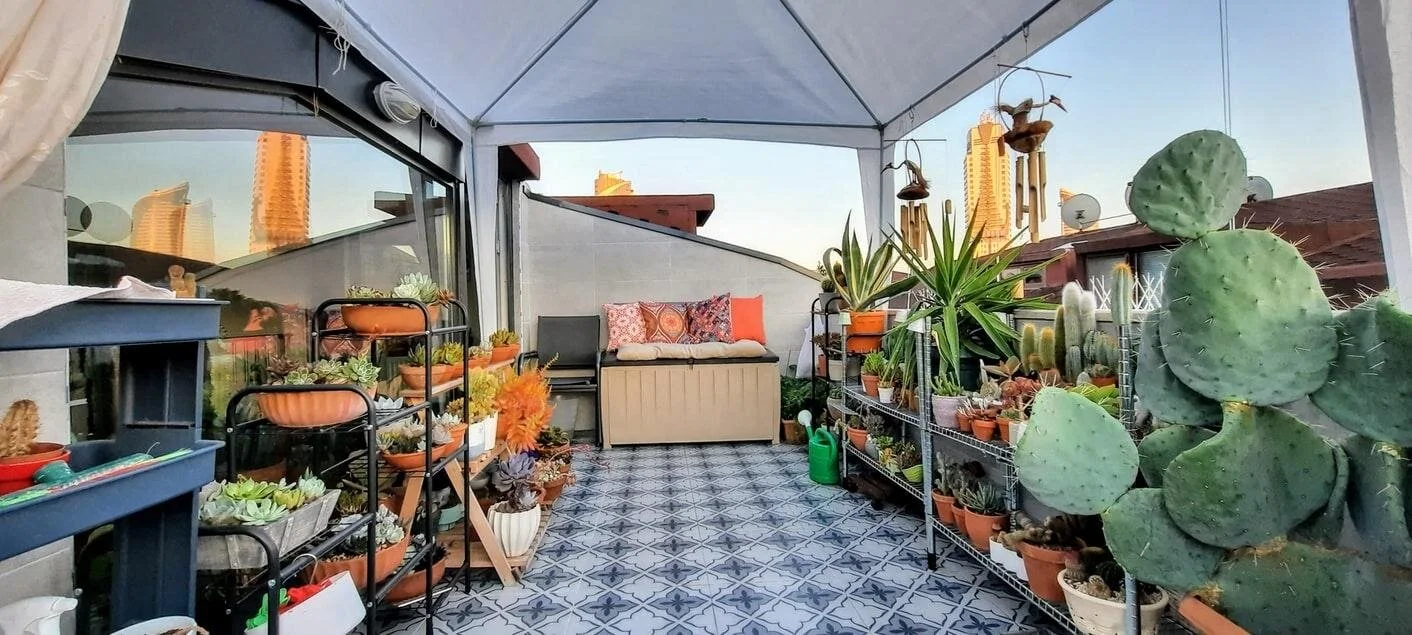
If your apartment has a balcony, it is the extra square footage that you probably severely underutilize. Using this space as nothing more than storage for things you rarely use is a huge waste of potential. A balcony, no matter how small, can have a myriad of different functions. Also, it can become your favorite part of your home, only if you devote enough attention to it. From a pleasant outdoor lounge area where you can chill and enjoy your afternoon coffee to a full-fledged home office, you can choose from simple to more expensive projects. Here are a few ideas to inspire you.
Create a simple reading corner
It doesn’t take much to make your balcony functional. Start with clearing it of all the clutter that has accumulated and giving it a good cleaning. Then, you can get started by rearranging it and creating a cozy reading corner where you will be able to enjoy the sun while getting immersed in your favorite book. First, pick comfortable furniture! A stylish rattan egg chair you can nestle into is a perfect choice. Make sure you add some cushions that you will keep indoors when they are not in use. You can also pick cushioned furniture as long as it’s weatherproof and you can wipe it of dust. Complement it with a small table to place your mug and book on and decorate with plants.
Convert it into a sunroom
If you are particularly concerned about bugs and weather conditions but you still want to maximize the amount of time you can spend on your balcony, you can look towards the idea of turning it into a sunroom. Installing retractable screens will give you the best of both worlds: you can enjoy the fresh air while still having privacy. However, using glass would give you the true sunroom experience. You can use a sunroom for many things; it will provide you with extra space with plenty of light to use however you want. Leveraging this will even help you save electricity and be more eco-friendly!
Turn it into a home office
The next creative way to make the most of your balcony is turning it into a study area or a full-fledged home office. It’s the perfect spot for it after all: you get plenty of natural light to work productively all day long. It is not a one-afternoon project. There will be some construction involved, but it will pay off in the long term. You can install a bar counter along with the windows that will give you enough space for your laptop and stationery. However, you can also use it as a breakfast bar as it would be nice to enjoy the view while having your meal. Install folding ones if you want a multipurpose space to save room!
Use it as a garden
The next and certainly one of the best uses for your balcony would be turning it into a mini garden. Adding plants to your balcony is a must no matter what you decide to convert it. Plants are going to turn a boring balcony into a real oasis. However, you can take it a step further and dabble into gardening even without a garden space, thanks to this small outdoor area. A balcony is a perfect spot to grow herbs to always have them fresh on hand. If you're more into flowers, you can get hanging planters and cover your walls and railings in beautiful colors. You can even grow vegetables despite the limited space. You can try hydroponic farming in vertical planters and make the most of every square foot you have.
Create a nap spot
An afternoon nap on warm summer days is best when had outdoors! Just because you don’t have a garden, you don’t have to forget about napping in the fresh air. You can turn your balcony into somewhat of a second living room and use it for lounging. A built-in couch would be a seamless way to bring in comfort, and it's also the most space-efficient way. However, if you want something that has a real wow factor, consider installing a hammock. A comfy hammock paired with a few tropical plants will make you feel like you’re in a completely different place. It’s a good idea to think about sun protection and privacy if you want to go this way, though. Retractable awnings, roller shades, or anything of the sort will work!
If you have an unused balcony, you could improve your living space by miles if you found a use for it. Think about what you need and allow your balcony to reach its full potential!
Author bio:
Alison Pearson is an interior design student. She is a writer and designer, but her ultimate passion is design and creation. She is also a bibliophile and her favorite book is "The Sound and the Fury" by William Faulkner. Follow her on Twitter.

Everything You Should Know When Purchasing a Home
Regardless of if this is your first time, or you are a seasoned veteran of making large asset purchases, the tedious nature of buying a home can be exhausting. Some buyers are too picky, others are too reckless with their finances, and others struggle to find just the right property even if it’s right in front of them with the right price tag.
Regardless of if this is your first time, or you are a seasoned veteran of making large asset purchases, the tedious nature of buying a home can be exhausting. Some buyers are too picky, others are too reckless with their finances, and others struggle to find just the right property even if it’s right in front of them with the right price tag.
Many experts say the home buying process is more art than science and to go with your gut, meanwhile others say you should be risk averse and methodical with your process to ensure you land on the right decision. There’s no blueprint that works across the board for every buyer (regardless of if this is your forever home or an investment property). However, you can draw key takeaways from other people’s successful (or failed) ventures to make your experience a more fruitful one. So, we’ve compiled some best practices below that should make the process of buying a house easier for you and your family.
Understanding Your Budget
If you’ve purchased a home before, you are no stranger to the process. However, if until recently, you’ve been a veteran renter, getting a firm understanding of the home buying process will make everything feel less foreign. Additionally, with many of the new social distancing stipulations and increased emphasis on cleanliness for agents, sellers, buyers, and property owners due to COVID, if you haven't bought a home since before March 2020, this will serve as a good primer for this process.
So if you are ready to turn your monthly rent payments into a way to invest your money, the first question you should ask yourself is, “what are my (or my family’s) goals?” Are you looking to purchase a home in a good school district for your children’s education? Are you interested in investing in a property to then turn it into a rental? Is this a starter home for you and your spouse? Having a firm understanding of your goals, and the different properties that align with them is a crucial first step in the purchasing process.
Once you understand the type of property you are looking for, before you start shopping for specific homes, you should start a dialogue with your preferred financial institution to establish how much home you can afford. One of the top mistakes homebuyers make is only talking to one lender, or buying more house than their budget allows for.
While you could qualify for a $350,000 or $400,000 home, how much strain is that going to put on your monthly or annual budget? Additionally, can you sustain payments for a prolonged period of time if something were to happen to your family’s income? The pandemic has shown us that things can change at the drop of a hat, so it’s best to avoid over-leveraging your finances and settling on a home that firmly fits within your financial window.
Conventional wisdom says that, in order to remain financially solvent, your mortgage payment should not exceed 30 percent of your monthly pre-tax income, and as a whole, the best financial experts recommend that you keep your total monthly debt obligations to 33 percent.
House Tours
Once your goals are established, and the bank has confirmed how much house you can afford, it’s time to go shopping. Admittedly this step should take the longest out of any in the process, because it requires all the right pieces to fall into place. Not only do you have to find the right property that checks all of your boxes, it then has to also be in budget, and in a quality neighborhood, AND you have to beat out other offers to put ink on paper.
While this process can feel extremely daunting, and a few failed attempts can let frustration build, experts say that moving too fast on a deal for the sake of making progress is a bad move. Home-buying requires patience. Additionally, the way we view homes in 2021 is completely different from just a few short years ago. Many agents and realtors will offer virtual open houses, or do showings on social media to weed out the general curious shoppers from the more serious ones.
Once you have a handful of prospective properties that could be the one, you should reach out about a formal tour. We have heard cases of delays in this process because some realtors have homes disinfected in between showings to prevent the spread of any sickness and to make buyers and sellers feel comfortable with unknown parties in their homes.
Inspections, Offers, and Closing
So you’ve found a home that is perfect. It’s within your budget, in a great neighborhood for your lifestyle, and it checks all your boxes (who could say no to that master bath?), so it’s time to put in an offer. Due to the current low interest rates, many real estate outlets are reporting that the offer process feels more competitive than anyone in recent memory can remember.
In big cities like Nashville or Seattle, some homes are receiving half a dozen offers within a few hours of being listed, and oftentimes for more than the asking price. Don’t let this frustrate you. Financial experts say this is how you can potentially overleverage yourself by paying more than you can afford. Instead of coming in over the top with price, try and negotiate sweeteners in the deal such as reducing closing costs, or paying broker fees, to make your offer more competitive without breaking the bank. They also say cash is king, so if you can use that to your advantage, sellers will be more likely to hear you out over competitors.
Once your offer has been approved, a critical step stands between you and closing, and that’s the home inspection. The inspection process is to ensure that there aren’t any physical or metaphorical skeletons in the home’s closet. The last thing you want to happen is that you invest hundreds of thousands of dollars into a house that has foundational issues, or a leaking roof. Some experts recommend having a home inspected twice for due diligence to ensure no large expenses will pop up a couple of months down the line. The inspector will put together an itemized list of things he believes could be repaired or upgraded and it’s up to you and the involved agents to come to an agreement on who, if anyone, is responsible for the repairs. Once all parties have come to an agreement, you’re nearly to the finish line!
Now all you have to do is make it to closing day without any bombshell revelations coming to light. On closing day, contracts will be signed, money will be transferred, and the property is now yours. Congrats on the home of your dreams, and good luck over the next few months and years getting settled and decorating to fit your style. If you have any additional questions regarding the process, feel free to reach out to your realtor or turn to the abundance of online resources.


The Importance of Regularly Scheduled Deep Cleans
One of the cultural changes that has resulted from the Coronavirus pandemic has been our society’s increased emphasis on hygiene and cleanliness. Personal hygiene, cleanliness around the house, and for those of us that have had to resume work back in an office, that also means an increased emphasis on deep cleaning shared spaces.

One of the cultural changes that has resulted from the Coronavirus pandemic has been our society’s increased emphasis on hygiene and cleanliness. Personal hygiene, cleanliness around the house, and for those of us that have had to resume work back in an office, that also means an increased emphasis on deep cleaning shared spaces.
While the science is still a little murky as to how much risk is associated with COVID-19 germs on surfaces and the ability to contract the virus from surfaces, residential property owners have incorporated regularly scheduled deep cleans to mitigate risk and instill peace of mind especially when they begin to resume socializing with others.
But how often should community spaces such as your kitchen and living room be deep cleaned, and how intense should those cleans be? Is a simple wipe down with a lysol wipe as effective as a residential cleaning service, clad in PPE from head to toe? We’ve compiled our best practices below.
How Clean is Clean Enough
Did you know there is a tangible difference between cleaning, disinfecting, and sanitizing? Cleaning is the most simple way to remove germs from a surface, but also the least effective of the three. Soap and water removes dirt and germs, but does not ‘kill’ germs.
Cleaning a surface is akin to sweeping a floor whereas disinfecting and sanitizing are like moping. To disinfect is to use stronger chemicals to kill bacteria and allow those chemicals to remain on a surface for 3-5 minutes so they can properly do their job. The truth of it is that a shared work space should not only be cleaned or disinfected or sanitized, but routinely get all three treatments.
The CDC recommends to clean any surface first with soap and water, and to follow up with a disinfectant. Additionally, when it comes to using a commercial disinfectant, either use the necessary PPE to eliminate any risk of getting chemicals on your skin or in your eyes or call in the professionals who have experience using them with safety and regularity.
Peace of Mind
One of the biggest hurdles that property home owners face when trying to resume normal socializing at home is making them feel safe and secure when they are around others. If people in your home are in constant fear or suffering from severe anxiety because everyone is shoulder-to-shoulder, or people are not wearing masks, it could potentially cause friction in your relationships.
That’s where homeowners can put their money where their mouth is and demonstrate how serious they are taking this issue by implementing proper safety precautions in place, chief among them should be regularly scheduled deep cleans. As much as it can be about reducing the number of potential contagions on surfaces, deep cleans can also be a signal that they are taking every available precaution to keep people safe. While these routine deep cleans can be costly, the peace of mind of feeling safe is priceless, and that’s where the priority should lay.
What Spots Should Receive the Most Attention
When several people are confined into a home, there are always going to be high traffic areas and dirty spots that need to be disinfected more intensely than others: living rooms, kitchens, bathrooms are three that immediately come to mind. If you are a homeowner that has hired a commercial cleaning service, you should compile a list of spots or furniture pieces that you want them to focus attention on.
Front door and handle
Living room couches and tables
The Kitchen: coffee pot, refrigerator, sink, trash can
Bathroom door and amenities
While some people think it might be beneficial to clean the floors, the truth is that because most people aren't putting their hands on the floor, it’s not as high of a priority as other areas. Instead, home owners should commit additional time and resources to ensuring that ventilation in the building meets a higher threshold so it is not recycling airborne bacteria.

Guest Post - Tips for Designing Outdoor kitchen
Determining the best type of outdoor kitchen depends on your budget, lifestyle, and space, among other factors. The most basic form can include a grill and an outdoor bar purchased at a store that acts as a counter. The sky is the limit of luxury! Like all, it's as elaborate as you like to spend as much money as you want.
You do need a kitchen fully functional, or you need to decide if you need simpler things. What is essential, what is a service, and you can determine whether or not the more there is room in the budget and preferences.

Determining the best type of outdoor kitchen depends on your budget, lifestyle, and space, among other factors. The most basic form can include a grill and an outdoor bar purchased at a store that acts as a counter. The sky is the limit of luxury! Like all, it's as elaborate as you like to spend as much money as you want.
You do need a kitchen fully functional, or you need to decide if you need simpler things. What is essential, what is a service, and you can determine whether or not the more there is room in the budget and preferences.
Available space
If you live in a vast land with lots of acres, your challenge may be to make sure you don't have to walk too far from your home to the outdoor kitchen to burn the grill. Most properties are small and have less choice of locations for grills and outdoor cooking areas.
Moveable
If you plan to rent or move within the next few years, they recommend you supply your outdoor kitchen with some useful appliances and features that you can move with.
If you don't go anywhere or love DIY, it can be a satisfying project for designing and building an outdoor kitchen. Determine a convenient and safe place, match the look of your home, use locally available materials, and look up floor plans
Budget
Make a budget and work within it. Things may easily get out of hand and cost more than you expect, such as materials, appliances, and labour costs. Additional costs include recruitment of designer services, permits, acquisition of tools, and professional assistance in electrical and plumbing.
Kitchen style
Decide on your favorite style and outdoor cooking method-do. Do you like grilled fish or charcoal-cooked burgers? How about a pizza cooked in an outdoor brick oven? Tandoor or smoker?
The exterior can contain anything from gas, propane, electricity, or charcoal grills to various ovens and stoves. Do you prefer to cook fish outdoors, or do you agree to cook indoors and take them outdoors? Do you need a sink outside?
When you design, think about the maximum number of people you cook. Plan some of your favorite dishes and accommodate guests while ensuring that the outdoor kitchen you are thinking of can handle the actual preparation and cooking. From there, make adjustments.
Climate and environment
If you live in areas with warmer climates, you'll spend more time in that outdoor kitchen. Probably, even more, the indoor counterpart. If this is the case and you realize that you live outdoors, a larger outdoor kitchen could be justified.
In other areas experiencing more extreme weather conditions, the location in your garden is important. Beware of microclimate. I want to avoid places that are too windy, too hot, shaded, or too cold. If you live in a heavy rain area, consider placing a grill or stove under the roof.
Proper maintenance
The outdoor kitchen is uncovered to the elements. Even if you don't use it often, it's outdoors and needs to be covered and maintained on appliances and surfaces. Think about the time and effort it takes to maintain a kitchen that you build and install. Do you have any help, or will you be the only chef and cleaner? Make it easy for yourself. Sometimes it's better to be simple.
Outdoor kitchen materials
If your kitchen is permanent, look for bricks, concrete, stucco and other materials used for the outer walls of your home, as well as metal and tile accents. They look attractive and create continuity when used in outdoor structures such as kitchens.
In addition to appearance, budget, availability, and finish, the size and range of the outdoor kitchen influences the choice of materials.
Home lifestyle
How many household members cook outdoors, and what kind of food do they like? How often do you and others use the grill and stove? Be realistic. Once you get used to it, you can always start small and add appliances and extras.
Resistant and durable
Durability is essential for everything you use outdoors, so it's an important consideration when choosing kitchen accessories and materials. Even stainless steel barbecues will eventually rust in coastal areas, but protective covers extend their lifespan.
Choosing sturdy materials for your outdoor kitchen keeps your maintenance workload low. Also, keep in mind that cabinets and benches need to be weatherproof unless they are in a protected area.
Choose grease-resistant materials for benches, cover decks, concrete, stone, or pavement with caulking to prevent food stains.
Slippery flooring, such as tiles, is not ideal for outdoor kitchen areas.
Avoid tile backsplashes and benches in very cold weather, as heavy frost can crack them.
Author Bio
Miranda Jones is a Professional writer and has experience on writing on various topics Like Health, Lifestyle, Business. Also Read about celebs at made in abyss season 2 .

