

A resource for those seeking information on organizing and transforming spaces.

How to Get Your Garden Summer-Ready
Read on to learn what you need to do to prepare your garden for summer.

Are you ready for your garden to look spectacular this summer? We all dream of having a beautiful garden to entertain in. After colder months, though, your garden probably needs a little love in order to look summer-ready.
To have a lush, awe-inspiring garden during the warm summer months, you’ll need to do a little preparation first. The good news is that it doesn't all have to be done at once.
By planning out what you’ll need to do to get your garden ready, you can break up the tasks and do your gardening whenever you have some spare time.
Read on to learn what you need to do to prepare your garden for summer.
Make Sure Your Tools Are in Good Condition
Most of us don’t use our gardening tools in the colder months. Before you set out to get your garden ready for summer, check that you have all the tools you need and that they’re in working condition.
Make sure any electric tools are working properly and their cables look okay. Clean off and sharpen blades of the tools that need it, too.
Get rid of anything damaged. If it can’t be fixed easily, it’s better to replace old tools than to try to use them if they could pose safety risks. Make a list of anything you need to shop for before you start cleaning up your garden.
Clean Up Your Garden Beds
A great first step is doing a general clean-up of your garden beds. Take some time to pull out any weeds as soon as you see them popping up. It’s always easier to weed before roots grow too long and sturdy. You’ll also want to try to catch them before they start to spread.
Weeds can compete with your other plants for nutrients from your soil. Pulling weeds out as early as possible will let the rest of your plants grow better.
As part of your seasonal clean-up, prune any shrubs that need some neatening up, too. Check if anything was damaged during the winter, and remove dead foliage from last year to make room for new growth this summer. Check any trees in your garden for damage, too.
The last step of garden clean-up is to rake up any dead leaves from your garden beds and edge them, if you’d like to.
Once your garden is cleaned up, you can take a step back and see where you have room to plant new things this season.
Prepare Your Garden for New Growth
Once your gardens are cleaned up, you can get to work on enriching your soil for the best possible growth this summer. Whether you’re growing a vegetable or flower garden, it all starts with great soil.
You can buy soil to refresh your gardens, or you might even want to create your own soil. Creating your own soil will give you a great base for any new raised garden beds you’d like to start, and it’s perfect for seasonal potted plants.
The same goes for fertilizer. While a store-bought option may seem easier, you can also inexpensively make your own fertilizer. Fertilizing your garden will give your plants the extra nutrients they need to really take off. In no time you’ll be surrounded by beautiful flowers or be harvesting tons of fruits and veggies.
If you have pets, you should double-check that any of the products you use in your gardens are pet-friendly, too.
Start Planting
Most people would agree that the best part of preparing a garden for summer is choosing new plants. With so many options, though, how can you decide what to get?

When you look at your garden, do you see a lot of colors? If not, you may want to look for flowers that will add depth and pops of color.
Think about when each plant will bloom throughout the summer months. Getting flowers that bloom at different times will keep your garden colorful all summer long.
You may also want to attract hummingbirds, butterflies, and bumblebees to your garden. Do some research on what plants will attract these creatures. You’ll have to consider how much sun or shade your garden gets, too. Your plants won’t be able to thrive and bring in pretty hummingbirds and butterflies if they aren’t given the right amount of sunlight.
Succulents are a popular choice for sprucing up a summer garden, too. Succulents can be very easy to care for because they don’t need too much upkeep. As long as they’re getting plenty of sun, they’ll add a fun touch to any outdoor garden space.
Growing the Perfect Summer Garden
Having a cleaned-up, fertilized, and well-thought-out garden will ensure you have a great outdoor space to entertain. All that’s left to do is hose off the garden furniture!
Now you can enjoy relaxing with a good book or spending time with family and friends in your colorful, gorgeous summer garden.

How to Make Your Kitchen Sparkle and Shine With a Few Repairs
One of the highest areas of foot-traffic is the kitchen and it's easy to see why - it is the hub of the household; the area we prep, cook and eat our meals; where we sit down to pay the utility bills or gather around the table to do a puzzle as a family. Because of how frequently it is used, the kitchen goes through a lot of wear and tear over the years. If you're wanting to make your kitchen feel new again without having to go through expensive full-kitchen remodels that can take weeks or even months to finish, you might want to consider doing a few smaller repairs that will make a big impact.

One of the highest areas of foot-traffic is the kitchen and it's easy to see why - it is the hub of the household; the area we prep, cook and eat our meals; where we sit down to pay the utility bills or gather around the table to do a puzzle as a family. Because of how frequently it is used, the kitchen goes through a lot of wear and tear over the years. If you're wanting to make your kitchen feel new again without having to go through expensive full-kitchen remodels that can take weeks or even months to finish, you might want to consider doing a few smaller repairs that will make a big impact.
Countertop Repair
Our countertops take a beating, setting groceries on top of them, using them as cutting boards, sliding items across the surfaces and putting hot pans or sharp objects directly on them can all take their toll on your surfaces. A wrecked countertop is a hard thing to cover up and isn't unsanitary to continue living with, as dirt and bacteria can hide on surfaces if they aren't easily able to be sanitized and cleaned. It's worth it to ask around for quotes on countertop repair if yours has sustained damage over the years of use. You can repair all types of countertops, from laminate to stone and other solid surfaces. Getting your countertops repaired helps keep your kitchen looking new and fresh and gives you more surface area to work with.
Fresh Coat of Paint
One of the easiest ways to brighten up a room is to hit it with a fresh coat of paint. Get 2-4 paint samples and paint swatches on the wall before deciding on which color. The color in the store will look very different in your own household due to the color temperature of your light bulbs, your indirect/direct sunlight, and the colors of the furniture and decor around it. Once you've picked a color, tape off your outlets and baseboards and roll on a fresh coat or two, and voila. Bright, shiny new space in under $100.
New Cabinet Hardware
Another quick way to revamp your kitchen and add more sparkle is to install kitchen hardware (drawer pulls and door knobs) or if you already have them, swap them out for a more updated, modern style. There are plenty of how-to's online, and most hardware stores sell a handy plastic guide you use to mark where to drill the hole for the screw to mount the handle or drawer pull.
You don't need to move to a new house to have that new kitchen feel, all it takes is a few repairs and upgrades and your house will be looking good as new all over again.
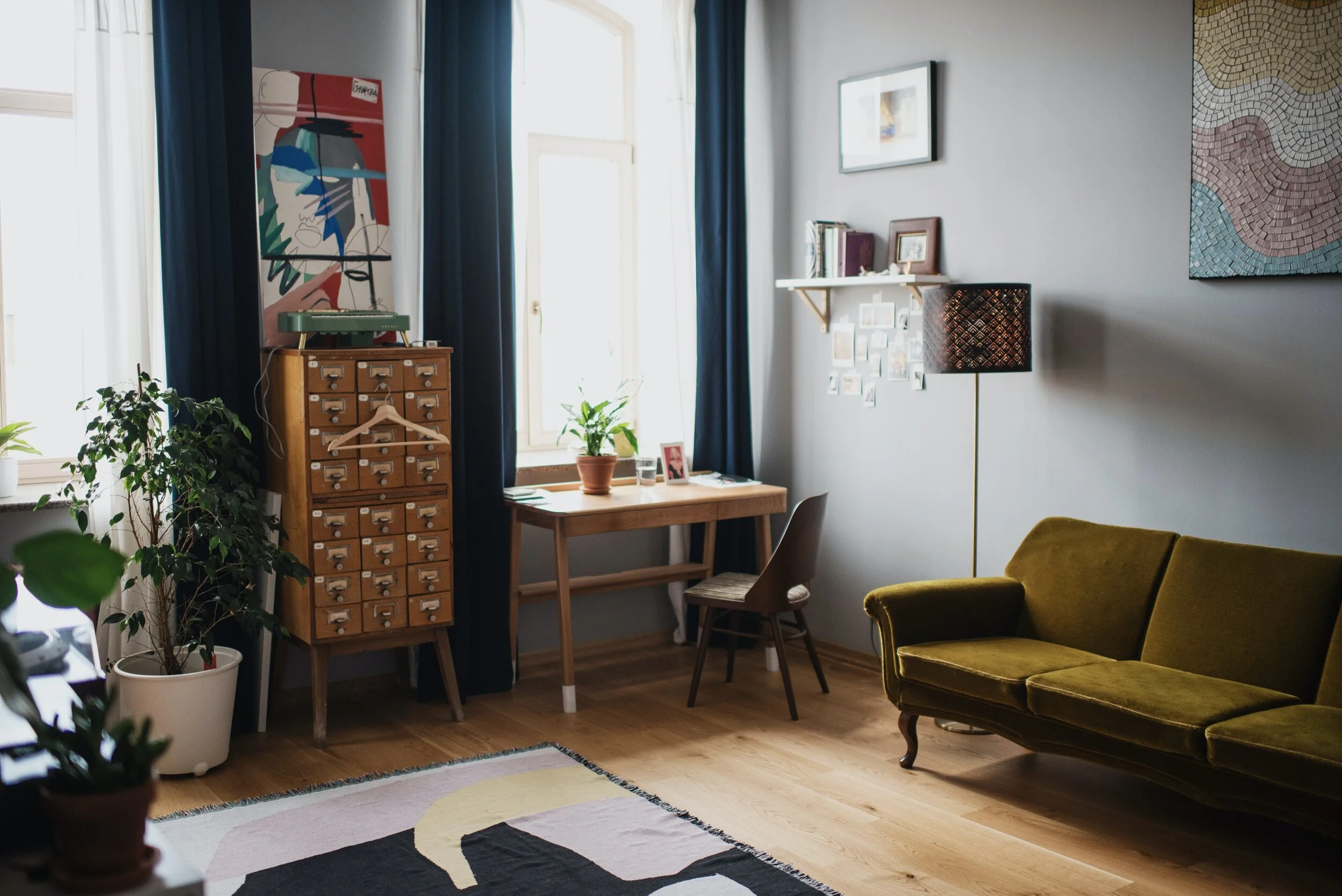
Why Is Sound-absorbing Flooring So Important?
Foot traffic is a major source of noise indoors. This auditory distraction can lower one’s productivity if they’re trying to work and disturb those who are trying to get some rest.
The problem with sound-based distractions is that it travels between barriers, which means that you may even be distracted by the footsteps in the adjacent room. It’s not uncommon for one to create a silent home office only to be distracted by the footsteps from the hallway in front of it.

Foot traffic is a major source of noise indoors. This auditory distraction can lower one’s productivity if they’re trying to work and disturb those who are trying to get some rest.
The problem with sound-based distractions is that it travels between barriers, which means that you may even be distracted by the footsteps in the adjacent room. It’s not uncommon for one to create a silent home office only to be distracted by the footsteps from the hallway in front of it.
The importance of proper flooring
What if we’re talking about a flooring option for a home with multiple floors? Wouldn’t a low sound absorption make spending quiet time in the rooms on the first floor nearly impossible? How would this constant banging noise from above affect your mental health in the long run? Overall, this is the scenario in which soundproofing the area is an even greater priority.
So, how does one fight this menace?
The simplest solution is to install sound-absorbing flooring. There are several ways you can get there, and here are some of them.
Impact Insulation Class (IIC)
The first thing you need to do is develop an in-depth understanding of floor acoustics and industry averages (with metrics). Some floor types have a naturally higher sound absorption quality than others. This is something worth considering for all those who plan to build a house rather than buy it.
In order to understand this, it’s crucial that we mention that the unit for measuring the sound rating of the flooring option is the IIC (impact insulation class). Here’s a brief example of what we’re talking about.
IIC 50: This is a particularly low sound absorption level. For instance, a stone floor would be classified in this category. It is something that you can go to in a ground floor room but would be best to use outdoors or in areas in which keeping it quiet isn’t that important.
IIC 60: This is the mid-level category. Generally speaking, the best examples of this would probably be wood, laminate, and vinyl. In other words, materials that are generally soft but not designed with the intention of being sound-absorbent.
IIC 65: This is the pinnacle of noise-reduction. These types of flooring offer high-impact absorption and can transmit the noise through their fibers. Two flooring types that naturally fall into this category are cork and carpet.
Still, just because the flooring you have in your home or room doesn’t match some of these requirements, this doesn’t mean that there’s nothing you can do about it. As we’ve mentioned, carpets have the sound absorption quality of IIC 65, and they can be added atop the majority of other flooring options. Even area rugs can make a difference.
Solutions for Home Office
Keeping your home office quiet will probably affect the productivity within the room. Now, some people may wonder why this is so important. If you’re working, you cannot walk across the room at the same time, right? Well, not necessarily.
A lot of modern couples telecommute together and have a shared home office. So, it’s not inconceivable to imagine one of them being distracted by the footsteps of the other. In that scenario, it’s paramount that you cover the flooring with acoustic sound absorbing materials.
Strategic placement
We’ve already mentioned the fact that the footsteps outside of the home office may be problematic, as well. Here, you have two solutions to the problem. You could either soundproof the room so that you block out all the noise from the outside (including the foot traffic). Another solution is to consider spreading a runner rug in the hallway in front of the office.
Lastly, what if your home office is on the first floor and you have your housemates/family running above you? First of all, the strategic placement of your home office is essential. If you have a choice, keep it on the second floor. Second, make sure that you avoid placing a high-intensity foot traffic area (like a children's room) above your home office. Then again, soundproofing a floor by using a number of methods could make a difference.
Effective Methods
There are several great methods you can use to reduce foot traffic noise. For instance, it is estimated that carpets can reduce noise by 35%, which is a fairly impressive feat. Keep in mind that this depends on the material of the carpet, which is why a woolen carpet can lower the noise by 46%.
Now, keep in mind that this is just the carpet without an underlay. For those who do decide to go for an underlay, the reduction can go up to anywhere between 50% and 70%. Once again, your choice for the underlay material should probably be wool. So, you should stack woolen carpet on top of a woolen underlay for maximum effect.
Sometimes, the methods used to increase the sound-absorbing properties of the floor depending on the type of flooring used. For instance, hardwood floor is one of the most commonly used flooring options for those who aim for elegance. If the floor is glued-down or nailed-down, there are several solutions that can help. Some of these are:
Rubberized membrane
Reinforced fabric on the face
Siliconized release sheet (on the adhesive side)
Keep in mind that the quality of the installation makes a difference, as well. Cracks and squeaking noises are a result of poor insulation, and they can make the situation a lot worse.
The underlayment is not just a product designed with hardwood in mind. Some materials are specifically engineered as a thin-set mortar that can be applied beneath stone or tiles. This way, even the sound-absorbing properties of flooring choices we previously mentioned as IIC 50 can be improved.
Airborne Sound
Previously, we’ve mostly focused on the noise caused by foot traffic, but this is not necessarily the only point of concern here. You see, airborne sound is just as big of an issue.
If you don’t have just one living partner, people are going to talk even while you’re working or trying to focus. The sound of other people’s conversations can be quite distracting. In-home offices, office spaces, studios, etc., this could become a massive problem. Keep in mind that these noises:
Bounce off the floor areas
Are transmitted through the floor if the rooms are one on top of the other
This is why sound-absorbing flooring could help keep the noise in surrounding rooms to a minimum. Naturally, if the airborne sound is a major issue, you should combine your floor soundproofing with other soundproofing methods.
Rubber Flooring
The reason why we thought that rubber flooring deserves its own section is fairly simple – production facilities and workshops. This flooring type is both sound-absorbent and slip-resistant.
You will use sharp, heavy, metallic tools and sturdy raw materials in production facilities and workshops. This means that slipping is a considerable hazard, and by choosing slip-resistance flooring, you will drastically improve safety.
From the standpoint of sound absorption, dropping some of these items would cause quite a bit of ruckus. Just imagine the noise of a claw hammer dropping onto a concrete/hardwood and compare it to the noise of it dropping onto a rubber surface.
One more thing that makes rubber flooring so impressive is the fact that it’s more durable than cork or carpet. Dropping a hammer could dent cork (which is definitely one of the softest flooring options that you could pick). There’s even a risk that your carpet would be dented or damaged (even cut) this way. In other words, when it comes to workshop/industrial scenarios, rubber is the way to go.
In Conclusion
Foot traffic is never a desired effect in one’s home, and improving the acoustic properties of the place is bound to increase the quality of life in your household. Moreover, it will also increase the resale value of your property.
Keep in mind that unless you’re building the place from the bottom up, this probably won’t be an easy thing. Still, by choosing the right flooring options and applying some of the above-listed techniques, a lot can be achieved.

Guest Post - 6 Benefits of Installing Home Security Cameras
One of the excellent ways to protect your home from breaking and entering (B & E) is installing home security cameras.
If you are thinking of installing one for your house, here are six benefits that you can reap:

One of the excellent ways to protect your home from breaking and entering (B & E) is installing home security cameras.
If you are thinking of installing one for your house, here are six benefits that you can reap:
1. Criminal Deterrent
Security cameras help you identify potential threats within your vicinity. You can even record them so that you have something to submit to authorities in case of suspicious behavior.
However, the criminal deterrent is not the only thing that a home security camera system will help you with.
Another use of a visible alarm com outdoor camera is that it can be an effective crime deterrent.
It is much more complicated and a lot riskier to deal with criminals as they are in your home. So investing in security measures that will deter criminals from targeting your home in the first place is valuable.
It will prevent criminals from planning to steal from your house because it will be challenging for them to get into your home.
If you have a fence or anything outside, you can even add the cherry on top by having a sign stating that you have CCTVs around your property at all times. That way, even if the cameras are far away from sight, you can still make them conscious of the cameras' presence.
2. Remote Monitoring
Aside from being a visible deterrent against criminals, another benefit to installing home security cameras is monitoring your house anywhere, anytime.
It doesn't even have to be because you are worried that security concerns are happening outside your home. You can use that feature to see what's going on or look back at what happened at a specific hour. There are even a variety of sizes and types of security cameras for your house.
Some can be visible to serve as a deterrent for criminals. Others can be more hidden so that they're not as obvious.
Nowadays, there are plenty of security cameras where you can access the feed no matter where you are, as long as you have access to the Internet. Whether you are on vacation or just out to buy groceries, you can still see what is going on around your house to check if things are okay.
It might even notify you if there's anything noteworthy going on outside your house, which will lead you to a live feed of the cameras.
3. Enhanced Home Security
A basic home security camera or monitoring system can help get you by for most days, but you can also upgrade it to get more features out of it.
Aside from home monitoring and criminal deterrent, you can use your home security system in case of emergencies.
Did you see someone in your home passed out? You can contact 911 immediately.
One feature that some home security cameras have would be a night vision to ensure that you can still see what's going on, even when the sun has set.
A wide-angle lens can also help you see a larger span without getting another camera for it. Some home security systems have lurker detection, which will notify you if something is up or someone is lurking around.
There are even home security monitoring systems that include a two-way talking feature. This feature enables you to talk to someone through your camera, even if you're not there. All of these are useful, even during times of non-emergencies, but especially during them.
4. Reduced Homeowner's Insurance
A common concern that homeowners have when installing home security cameras is the need to pay a monthly fee.
It might seem like you're taking on extra expenses that you have to pay monthly, but it should be worth the price for your safety and security. Nonetheless, one perk that comes with installing home security cameras is that you have the chance to reduce the homeowner's insurance price.
Aside from getting that, you can also contact the police or emergency responders when needed.
5. Cost-effective Security System
We have already mentioned that security systems and cameras are an additional cost you have to take on monthly in the household. However, if you are going to install any security measures in your house, it might as well be the security cameras.
They may not come with a high cost, but they are still helpful even when you are not talking about a security feature. It can be the building block of your growing security system at home. If you plan on upgrading, you can always do so, but the most basic security measure that you can have for your house would be a CCTV system.
Once you have set everything up, you do not even have to worry too much about them because they are low maintenance, and you do not need to repair them all the time. They are also weatherproof, so you should not worry about your cameras' state unless the weather condition is inclement and extreme.
6. Safety and Security
When you don't have any security measures in place around your house, it can be a cause for concern that you sweep at the back of your mind. Even if you're trying to ignore that concern, you don't know how big of a burden you'll take off of your shoulders when you install home security cameras.
It's comforting to know that your house is safe and secured because you have security measures in place. It can help ease your mind, and you can always look at the live feed even when you're far away to assure you that everything is going well.
It will help make you feel at ease and relaxed.
Conclusion
From deterring criminals to reducing waiting time for emergency responders to arrive, home security cameras are more than just a monitoring tool.
Although their monitoring ability is one reason you should have them, the other benefits are also compelling. So, if you don't have any yet, you might want to install a home security system as soon as possible.
That way, you can create a happier, more comfortable, and secure home for you and your family.
Author Bio: Meredith Davis, is a freelance writer.

