

A resource for those seeking information on organizing and transforming spaces.
Tips for Better Hobby Organization and Storage
If you’re in need of some tips for better hobby organization and storage, this is the right place to be. Start organizing your craft room-slash-nook today!
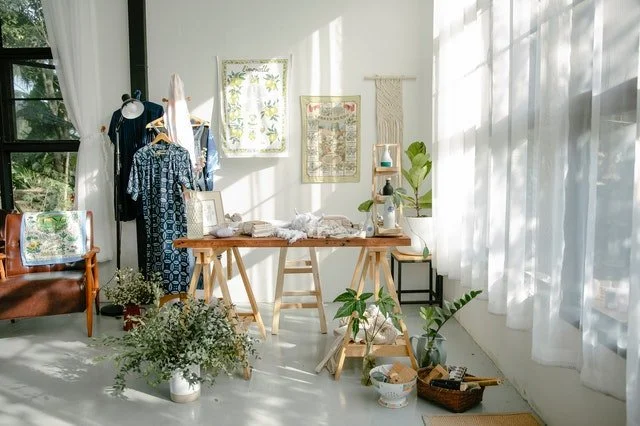
Gorgeous minimalistic craft room
In a world of full-blown technology addiction and lives structured around work rather than play, few things can be more fulfilling than a little hands-on crafting or a trip to nature. But any passionate crafter and hobbyist will tell you a hobby is far more than just a simple pastime. No matter what form it takes, hobbies can nurture our creative side, feed our soul, bring mindfulness into our lives, boost our overall health, and help us grow as a person. So, it's not hard to see why we deem our little craft nook or room a sacred place. That said, there's probably nothing that can crush creativity, motivation, and exhilaration quite as much as clutter and chaos in our personal sanctuary. If keeping your space neat is a bit of a problem area for you, like for many crafters, we give you some valuable tips for better hobby organization and storage.
Go back to square one
Do you wish to be completely thorough in organizing your hobby room? If yes, then clearing the space and starting from there may be the best approach. And by this, we don't mean just getting rid of your old materials, patterns you don't intend to complete, and leftover bits of projects. We're talking blank canvases, bare bones, and that sort of thing. Completely emptying the space allows you to look at the area through a fresh pair of eyes, which is vital for the following step.
Get building

Now that you've got everything out of the space, it's time to start planning the area and get building. If you're short on space, perhaps the most practical solution for better hobby organization and storage is to choose an empty wall to dedicate to shelving units. Shelves and cubbies can be customized according to your needs and the area's available space. It should give you plenty of space to store your tools, supplies, and other equipment in one place but also free up some floor space and the rest of the room for your actual work.
You can also opt for some hook and panel wall storage for holding all kinds of smaller items. For example, if you're designing a home gym, these work wonderfully for hanging jump ropes or resistance bands. Or, if you're setting up a sewing room, you can hang your pattern collection for display.
Other than wall storage, we've seen lots of crafters resort to a customized table or desk. The top serves as their primary workspace, whereas built-in storage drawers add the convenience of setting up the supplies right under the work surface, thus providing easy access to the most-used items.
Organize tools by craft
How do you categorize your tools and supplies when everything is crammed into random boxes or cluttering your work surface? Although a quick Google search will uncover a sea of organizing methods touted by expert crafters, organizing by craft, such as scrapbooking, painting, sewing, knitting, etc., is probably the most prevalent one. This allows crafters to whip out whatever they might need in one fell swoop. But, in the end, there is no one right way to do this. Perhaps the best thing you can do for yourself is store things in categories that make sense to you. Of course, you can always tweak your system later. So, if you want to do some experimenting with the categories, go for it.
Find everything a home

After you've gathered your tools and supplies and organized them by category, it's time to move on to the next step. Assigning a designated spot for everything may be one of the most important guidelines for effective hobby organization and storage.
While sorting the items for your current crafts, odds are your subcategories emerged as well. Now you know what you want to store. So, let this guide you as you head out to the local shop to purchase some storage solutions like Tupperware, baskets, and clear bins, as well as some organizers.
Then, start sorting the contents of each category into those smaller categories, placing your items into storage containers. For instance, if you're sorting out your knitting supplies, you would have categories like these: needles, yarn, patterns, notions, works in progress. Also, suppose you need to store and keep your camping equipment safe. Make sure to purchase bins in different sizes because you'll need bigger totes for things such as tents, chairs, hammocks, and other large camping gear. In contrast, you'd need smaller totes for items like water filters, first aid kits, and hammocks.
Don’t save things “just in case”
At this point, it's essential to include a little decluttering session. While in the sorting stage, keep a lookout for anything that no longer tickles your fancy. This could consist of supplies for the crafts or a craft you no longer do. Got it? Now kiss it goodbye. Throw it away, give it away, or sell it. Sure, it might feel painful at first, but once you've pared down to the essentials, you'll feel light as a feather – and your craft room organization will too.
Emphasize functionality and accessibility

You probably won't use your hobby area only for storing your supplies and equipment but for actual work. So, think about how your ideal space would look like, not only in terms of aesthetics but functionality as well. Consider what you might need to include in it to make it work for you. Here are some ideas:
Establish your central command area. A good rule is to establish an area where you get your crafting done. Doing so will help you avoid spreading your projects and supplies all over the house. A simple desk or table will work well.
Store frequently-used items in plain sight. Keep the containers and baskets of your frequently-used items close to your workspace and in plain sight. There are few things more frustrating than having to stop in the middle of your crafting process to look for that ever-elusive pair of scissors.
Use bins without lids. This way, you won’t find yourself stacking items on top of bins instead of opening them and putting items away. This is, of course, unless you plan on stacking bins on top of one another, which is necessary sometimes.
Think about portability. Creating kits of supplies for specific projects will make it easy for you to move from room to room, from inside to your backyard, as well as to leave the house for group projects and clubs.
Label everything. Labeling is a huge game-changer when it comes to organizing your hobby room or storage successfully. It makes both finding items and putting them away easy.
Leave extra space. Inevitably, craft supplies of any serious crafter grow exponentially over time. Regardless of how much of a minimalist you strive to be, it’s going to happen. So, do yourself a solid and remember to leave some extra space for those supplies heading your way.
Establish some ground rules for neatness
Congrats! You've successfully conquered the craft catastrophe that once was. From now on, you just have to make sure to keep it that way for more than a few hours. This may not be so easy, given you're using the space regularly, but it is crucial for better hobby organization and storage that remains in top shape. For starters, try setting a daily 5-minute tidy timer. The reason this method is so effective is that five minutes isn't at all long – so you'll stay motivated. Still, it's long enough for you to make a significant difference in your hobby room before the time is up. However, it's hardly a cure-all. So, you will need a better plan. True craft addicts might consider scheduling a deep-clean day once a week, whereas those who are only popping in the room once or twice a month could schedule it once a month.
Guest Post - 5 Inspiring Home Design and Remodeling Trends For 2022 and Beyond
Are you looking to revamp your home? Congratulations! Staying on trend with your home design might not be of utmost importance for just about everyone, but there is no good reason not to take heed of the latest developments on the décor market if you have made the decision to conduct a floor-to-ceiling remodel. In the past few years, minimalism and simplicity have swept over the home décor arena.
As of this year, nests around the globe are taking on an even more minimal and sustainable guise featuring clean lines, no nonsense design, and maximum functionality. If you are ready to turn your home into a testament to functionality and appeal in the years to come, you should check out these five tips on how to pull off the clean and functional ambiance in your nest.
Are you looking to revamp your home? Congratulations! Staying on trend with your home design might not be of utmost importance for just about everyone, but there is no good reason not to take heed of the latest developments on the décor market if you have made the decision to conduct a floor-to-ceiling remodel. In the past few years, minimalism and simplicity have swept over the home décor arena.
As of this year, nests around the globe are taking on an even more minimal and sustainable guise featuring clean lines, no nonsense design, and maximum functionality. If you are ready to turn your home into a testament to functionality and appeal in the years to come, you should check out these five tips on how to pull off the clean and functional ambiance in your nest.
A snug, minimal home office

With COVID-19 still shaking up the world economy, more and more people are starting to work out of the comfort and safety of their homes. To dress up your snug home office, you can paint the walls in neutral hues as this will help you achieve an air of comfort and spaciousness. You can even go a step further and soundproof your walls to minimize the amount of noise during work hours.
In addition to that, you should think in terms of functionality as regards storage space and buy multipurpose furniture to save both cash and space. Or, you can also build a small modular pod in the backyard for your home office and thus capitalize on work-life balance, productivity and office organization.
Your personal home gym

As the authorities curb work hours of independent gyms, this year’s decor trends are built around the concept of at-home training. If your house size allows it, it might be wise and cost-efficient to organize your own gym and thus make sure you do not skip regular workouts due to curfew or lockdown.
Another simple trick to add functionality to your private exercise center is to top it off with a custom-designed sauna or steam room and thus amp your property’s market value and practicality. A few basic exercise machines are enough to do the trick combined with weights, a yoga mat, and a few other gym accessories.
New bathroom with wellness in mind

Judging by the properties in Australia, one more innovative health-centered home upgrade for your home could be a bathroom designed with wellness in mind. A modern bathroom with aromatherapy shower head and soaking tub with jets will be both highly functional and visually appealing. In case you are just another Aussie who isn’t sure how to pull off the update, you can consult experts in home renovations in Australia and let them help you choose the best layout, materials, fixtures, and overall décor. New bathroom is also essential for increasing the overall value of your home, so be sure to make room for it when planning your budget.
Eco-friendly is the new black

Sustainability and environmental protection are all the rage these days, and home décor is not an exception. Sustainable materials such as wood, stone, and glass are a true head-turner in trending homes. Depending on your place of residence, you may also be in for rebates when shopping for insulation, air sealing, and new doors and windows.
On top of that, plants and other natural details have sneaked into all areas of a modern home and are here to stay, so you might just want to add a few green herbal accents to your kitchen or bathrooms and thus create a truly eco-friendly home.
In with smart equipment
Introduced a while back, smart homes are still steadily climbing up the property ladder. This year’s home décor is characterized by high-tech equipment which both saves time and money and reduces the carbon footprint of a sleek, modern home. Electronic home features are pretty popular, ranging from bluetooth door locks, touch-sensitive faucets and voice-activated LED light systems.
Though somewhat costly, integrating smart elements will prove to be a worthwhile investment down the road as it will add appeal and value to your property. For this reason, be sure to set aside some of the remodel budget for a few smart home upgrades.
Over to you

Next year’s trend-setting homes are delightfully charming and functional, and they are built for a bright, sustainable future. Smart technology, sleek and productive home offices, sustainable materials, home gyms and energy-efficient systems are revamping the home décor arena, so be sure to check them out if you decide to remodel your home any time soon. Remember: less is more, especially when it comes to trending home designs, so take the tips below into account and act on them. Good luck!
About the author: Mike Johnston is an experienced blogger and editor with a background in creative writing and digital media. He’s a regular contributor to numerous online publications where he writes primarily about real estate, construction, home improvement, and interior design.

5 Maintenance Tasks That You Should Check Off Your List Each Autumn
As soon as the weather begins to cool off, it is time for homeowners to start thinking about winterizing their homes. With a little bit of preventative maintenance, you can rest assured that your home will be able to withstand cold temperatures and harsh winter storms.
As soon as the weather begins to cool off, it is time for homeowners to start thinking about winterizing their homes. With a little bit of preventative maintenance, you can rest assured that your home will be able to withstand cold temperatures and harsh winter storms.
Inspect the Roof
Your roof is your home's first line of defense against the elements, and it should be thoroughly inspected at least a few times a year. In addition to inspecting the exterior shingles, you should also take a look at your attic to ensure that there is no water damage. As long as you catch the damage early on, it should be fairly easy for a contractor to repair small leaks and cracks. This can help prevent ice dams and water damage from snow on the roof this winter.
Reverse the Ceiling Fans
Many people assume that ceiling fans are just for cooling rooms. They don't realize that they should reverse their ceiling fans during the coldest months of the year. When your ceiling fan is spinning clockwise, it is going to disperse all of the warm air in the room to maintain a consistent temperature. That simple change could end up to 10 percent on your heating costs. You can reverse the direction simply by flipping the switch located around the motor of the fan.
Seal Up Cracks Around Doors and Windows
When the temperature or humidity levels change, small cracks might appear throughout your house. If those cracks aren't addressed, then you could end up wasting money on your energy bills every month. Small cracks around doors, windows, and vents might not seem like much—they may even seem inevitable—but they can let warm air escape your home, forcing your heater to work harder. Fortunately, these can easily be sealed with high-quality caulk and a caulking gun.
Trim the Trees
Trimming all of the trees on your property is another important maintenance step that you shouldn’t ignore. When the first winter storms blow through, damaged tree branches could end up falling onto your home. This could damage the roof, windows, siding, porch, and structural supports of your home, depending on the size of the fallen branches. Additionally, since trees go dormant during the coldest months of the year, this is the perfect time to do some trimming. They’re better able to heal quickly and avoid pests and disease if they’re trimmed while they’re dormant.
Service the HVAC System
This is the time of year when you’re shutting off your air conditioner for the year and getting the furnace ready to turn on. To avoid needing to call for emergency services later when your furnace goes out in the middle of a blizzard or your air conditioning goes out during the first heatwave next year, get your HVAC system serviced.
Your HVAC contractor will be able to carry out any necessary air conditioning maintenance so that problems don’t accumulate during the winter months. It’s often much more affordable to get this taken care of in the off season.
While home maintenance might seem like time-consuming chores, these few tasks could prevent major problems down the road. Some simple maintenance projects could also potentially reduce your heating and cooling bills by thousands of dollars every year.

Guest Post - 5 Ways to Prevent Winter Water Damage in Your Home
Your house is a refuge from cold weather, but only if you take precautions and avoid potential problems. Freezing temperatures, snow and ice can cause costly repairs if you don’t know what to expect. Here are five ways to prevent winter water damage in your home so you and your loved ones stay safe and warm.

Your house is a refuge from cold weather, but only if you take precautions and avoid potential problems. Freezing temperatures, snow and ice can cause costly repairs if you don’t know what to expect. Here are five ways to prevent winter water damage in your home so you and your loved ones stay safe and warm.
1. Avoid Adjusting Your Thermostat
Many people turn their thermostats down at night to save money on their electric bills. It may save you a few dollars, but that savings won’t mean much if your pipes burst. A cold house makes it more likely that outdoor freezing temperatures will cause plumbing problems. Avoid expensive repair bills by leaving your thermostat at the same temperature.
2. Leave the Heat On
Winter is a popular time to take a fun vacation or travel for the holidays. Before leaving home, avoid the temptation to turn your heating unit off. Plunging your home into freezing or below-freezing temperatures makes plumbing problems more likely and may cost more to reheat after you get back home.
3. Check Your Pipes
It’s always a good idea for homeowners to look for cracks in their indoor piping. They make pipes more susceptible to exploding from freezing and thawing water. Leaks release grey water into your home, posing a health concern. Grey water includes contaminants, such as discharge from your dishwasher, kitchen sink and bathroom sinks. Look for cracks and repair them to maintain a healthy home environment.
4. Open Your Cabinet Doors
If your nightly weather report warns of temperatures dipping below 32 F, leave your cabinets open before going to bed. It helps warm air circulate around the piping under your sinks so the water inside them doesn’t freeze. You’ll get more use from your piping and prevent winter water damage in your home.
5. Inspect Your Roof
Storm damage can loosen shingles or make tiny cracks in your roof. Water that melts, freezes and thaws expands existing flaws and allows more water inside. You could deal with roof rot or mold, so schedule an inspection every winter. A professional will look for tiny structural problems after storms or during annual visits and prevent expensive repairs.
Prevent Winter Water Damage in Your Home
Prevent winter water damage in your home before the first seasonal storm blows through town. Simple steps like checking your plumbing, keeping your thermostat the same temperature and inspecting your roof will make your holiday season much safer and more enjoyable.
Author bio: Rose Morrison is the managing editor of Renovated, where she offers advice on home renovation, maintenance, and organization.

