

A resource for those seeking information on organizing and transforming spaces.

Upgrades to Make in Your Home That Will Add Value Over Time
Home upgrades help you add functionality to your residence, so it keeps meeting your needs. However, certain home upgrades can also add value over time. That can let you space out the expense of upgrades that boost resale value over a longer span of time. Even if you don't plan on selling anytime soon, boosting your home value can increase your total net worth and possibly even unlock more money through a mortgage refinance.
Home upgrades help you add functionality to your residence, so it keeps meeting your needs. However, certain home upgrades can also add value over time. That can let you space out the expense of upgrades that boost resale value over a longer span of time. Even if you don't plan on selling anytime soon, boosting your home value can increase your total net worth and possibly even unlock more money through a mortgage refinance.
Open-Concept Living
The trend towards open-concept floor plans for the main living space has been around for a while, and it shows no sign of letting up in the coming years. If you can knock out any walls or awkward junctions to turn a kitchen, dining room, and living room into one continuous space, then you should do so.
Home Office
Remote work is here to stay. Freelancers already work from home a lot, but even many full-timers working for corporations are starting to do a lot of work from home. Many people that still report to an office or location still want a private space to work on personal projects and hobby income. Home office spaces are very valuable commodities and an expectation in many modern homes.
Swimming Pool
Most people love swimming, or at least playing in the water. Families enjoy having a space for the kids to have an outdoor activity while in the safety of their own yard, and nearly any homeowner loves having a place to gather up friends and family for a BBQ or party.
Improve the Bathrooms
The older your home is, the more your bathrooms have room for improvement. Think bigger, and think more. Adding an on-suite to any bedroom is a great move, and just putting in an extra bathroom can help the whole home. Have a powder room with a linen closet? See if you can knock out the closet to add a standalone shower and make it a full washroom.
Add More Space
Whether you finish an attic or basement as a bonus room or put a new hardwood floor on a deck or patio out back for enhanced entertaining and relaxation, anything you can do to add more functional square footage will also add to the value of your home.
In conclusion, there's no guarantee that any of these home improvements will absolutely boost home value over time, especially if your local market makes a downturn. Having said that, there are reasons why prospective home buyers look for features such as these, so consider them as good gambles.

Most Forgotten Things To Clean Around the House
When it comes to cleaning, it’s easy to forget about some objects. Hopefully, this list will help you remember them the next time you have to clean.
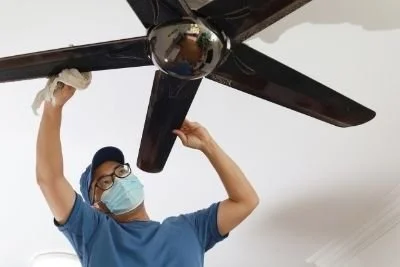
While most homeowners know the value of keeping their houses clean, no one is ever perfect at following through. As a result, we often overlook some areas or objects during this process. That’s why we made a list of some of the most forgotten things to clean around the house. Whether you’re a compulsive cleaner or only do it every once in a while, you’ll want to ensure you don’t skip over these items.
Ceiling Fans and Light Fixtures
If you’re a seasoned house cleaner, checking ceiling fixtures might have become a regular part of your routine by now, but many people tend to forget to look up when they’re cleaning. Ceiling fixtures—fans, in particular—get filthy very easily. Dust can reach quite high up into the air, and these fixtures are the only surface it can land on up there.
Fortunately, once you’re aware of it, these lights and fans are pretty easy to clean. The most challenging part will be reaching them if they’re too far from the ground. A stool or a duster with an extension rod will help you accomplish the task.
Air Vent and Filter Grates
For the same reason that a ceiling fan can accumulate tons of dust, air vent and filter grates can get dirty as well. Vents are usually more noticeable unless furniture obscures them, so we tend to clean them more often. However, the grates over the air filter are much harder to notice, so we often neglect them.
If it’s been a while, you might need to bring your grates outside and take a hose to them. However, once you get into the habit of cleaning them, a simple dusting will do the trick.
Propane Tanks and Appliances
While many people forget to clean the top of the refrigerator or behind the washer and dryer, none of these are more important than cleaning gas appliances and the tanks that supply them. You need to do a lot to care for these items properly, but keeping them clean is vital to ensuring their longevity.
As long as you give them a gentle scrub every few months, you shouldn’t have anything to worry about. Of course, it’s also a good idea to be more careful about creating the mess in the first place.
The Inside of Trash Cans
We’ve saved the best for last in this list of the most forgotten things to clean around the house: trash cans. Most people just assume that it’s okay to leave the inside of a trash can a mess, especially if it’s the one that you take outside every week for the trash collectors to dump. Think again. The object that collects all your waste should be the thing you clean most often. All kinds of germs can form in them, which could very easily get you and your family sick.
Make sure to clean them out regularly, either with a hose or, if it’s gotten really bad, some soap and a sponge. In extreme cases, it might be better just to throw it out and buy a new one.

Deciding a Roof Hatch That Fits Your Requirements
Choosing what type of roof hatch you will purchase for your establishment might be a difficult decision. Roof hatches are an essential part of your establishment because this product will allow your maintenance crew easy access whenever your roof needs repairs or checkups. Thus, you must thoroughly deliberate the quality and type of roof hatch you want to purchase.
Choosing what type of roof hatch you will purchase for your establishment might be a difficult decision. Roof hatches are an essential part of your establishment because this product will allow your maintenance crew easy access whenever your roof needs repairs or checkups. Thus, you must thoroughly deliberate the quality and type of roof hatch you want to purchase.
The roof access hatch usually contains horizontal doors covering roof openings and providing easy access using an interior ladder, service stairs, or ship stairs. The size and type of a structure usually determine the method of egress required. This article will lay out all the essential information about roof hatches to help you make the right choice.
Figuring Out Your Roof Hatch's Purpose
Determining who will use a hatch to gain access to the roof or serve as an entry for large types of equipment can help choose the hatch size required. You can often specify a small, single-cover model in conjunction with a fixed ladder, ship, or service stair if a hatch is for personnel access only.
The frequency and reason to access the roof area can also impact the hatch size. One good example is how a larger hatch with a ship or service stair will enable workers to carry extensive tools to the roof for service purposes. It is essential to contact the roof hatch manufacturer to verify the hatch's hardware locations and clear opening.
Retrofit Vs. New Applications
Commonly, establishment owners purchase roof hatches for installment on a new roof, while some applications also need replacing an old or worn-out hatch. If you want a low-profile replacement hatch, This is perfect for retrofit applications. These hatches can cap over an old hatch curb without the need to replace your roofing material. The low-profile curb can be mounted directly to the existing curb if you remove the old hatch cover.
Facility Type
The facility where professionals install the hatch can also initiate choosing the type of roof hatch they desire. High-security applications, storage facilities, highly corrosive settings, or projects requiring special aesthetic considerations will require roof hatches that address the needs of these specific environments.
High-security environments such as prisons, pharmacies, banks, and embassies require highly secured entry and exit points, including roof openings against unauthorized access. Because of this, hatches can be manufactured from heavier gauge materials and modified with several modifications for enhanced security. You can include options such as gun ports, bullet-resistant view windows, and deadlocks.
Suppose you have highly corrosive environments like chemical plants or in areas with extreme weather conditions. For the highest level of corrosion resistance, your roof hatches should have aluminum or stainless steel material. Copper roof hatches can match the aesthetics of heritage projects and for buildings located in historic districts.
Cost
The cost of roof hatches will also vary depending on their material. You can specify hatches made of galvanized steel from a cost perspective. They provide a primary degree of corrosion resistance and are usually with a primer paint finish. If you want a more expensive option than galvanized steel, then aluminum hatches are your next option. This material is commonly supplied with a mill finish and requires only a little or no maintenance. Stainless steel and copper products are the most expensive material. Hatches fabricated to meet particular size requirements generally carry a price premium.
High-Quality Roof Hatches
Contractors should also consider common design elements to select a hatch that will provide a safe means of rooftop access. These factors include energy efficiency, ease of operation, and weather-tightness. A high-quality roof hatch will help sustain efficiency in an establishment, so choose a roof hatch with welded corners with full insulation in both the curb and cover. Many hatch manufacturers also offer insulation options if you want a more enhanced thermal performance.
Custom Sizes
If all the sizes do not fit your preference, some manufacturers can customize their products without compromising the quality or performance. Roof hatches can also be supplied with curb liners or fully enclosed curbs if you want to install them on existing ones. You can also customize curbs so that they can be installed directly on standing-seam metal roof panels. It will allow the hatch to sit straight on a metal roof without a job-built curb or built with louvers into the curb to provide continuous ventilation into your establishment.
Your manufacturers can offer interior and exterior padlock hasps for standard roof hatches as an access control feature. If you want more enhanced security, you can design hatches to include keyed cylinder locks or contact switches that you can wire into a building's alarm system control panel.
Knowing the different factors in choosing the proper roof hatch for your establishment is vital to keep the security and maintain the quality of your roof. You can easily monitor your roof's quality and provide easy access to any needs with roof hatches. When purchasing a roof hatch, make sure you communicate thoroughly with your manufacturer so they can assist you in finding the ideal one for your establishment.

Steps for Turning Your Unfinished Basement Into a Living Room
Your unfinished basement represents a ton of potential. Turning it into a liveable area where you can relax and entertain might be easier than you think. Follow these steps, and you'll be lounging around down there in no time.
Your unfinished basement represents a ton of potential. Turning it into a liveable area where you can relax and entertain might be easier than you think. Follow these steps, and you'll be lounging around down there in no time.
Conduct a Preliminary Damage Assessment
First, you've got to check for any potential damage. A lot of times, there might be a crack in the foundation. Foundation repair is crucial if you want to turn your basement into a living room. Otherwise, all your hard work could be lost. Repairing the foundation doesn't take too long, and it'll make the rest of the work worthwhile.
Properly Seal the Room
After checking for damage, it's time to think about sealing the basement properly. Most unfinished basements aren't entirely waterproof. As such, small amounts of moisture might find their way inside. Applying an industrial-grade sealant to the corners should solve the problem, though. After this important step has been completed, you can move on to other projects.
Think About Floors
Flooring would be the next project on your list. Don't fall for the wooden floors, though. Those tend to wear down a lot faster than other options. We'd suggest tile for the easiest solution. Tile doesn't need a whole lot of attention. Plus, you could always throw a rug on top of it. You can also choose to install carpet if you want something more warm and cozy. Carpets can require more cleaning, especially in a dusty basement, but it can be worth it if you want the warmth. Concrete can be another option. This is an inexpensive option, but isn’t very comfortable. However, you can add rugs to make it more cozy and warm. Concrete flooring is becoming more popular, so it can be a good option if you want your basement to look trendy and modern.
Get Creative With the Walls
Have you thought about what you're going to do with the walls? For a truly sublime experience, start by hanging up some drywall. Make sure there is a little space between the basement's walls and the drywall. Once the drywall is in place, the space will start feeling livable instead of feeling like a dingy basement. After drywall is installed, you can start decorating. Wallpaper tends to be pretty easy to work with, especially if it is peel and stick. So, you might want to use some of that. Nevertheless, there's always something appealing about good old-fashioned paint. You might want to purchase some wall decor too. Unique paintings can start to give your living room character. Don’t underestimate the importance of focusing on designing and decorating your walls.
Choose Lighting
Next, it's time to think about how you'd like the lighting to look. Most basements don't have a ton of windows, and some of them don't have any at all. So, how you plan your lighting will make a huge impact. Blue lights might not feel super relaxing. So, if you want it to feel like a living room, you might want to use something with a reddish hue. You might also want to purchase a few lamps if you don’t want the lighting to be too harsh at night. It will lighten up the room, without being too bright while you are relaxing.
Purchase Furniture
The last thing you will want to do is purchase furniture for your new living space. Think about how much space you have to work with. If you have a large living room, a large sectional sofa can be a great option. If you don’t have enough space for a sectional, a loveseat and some chairs will work great too. Choose a furniture style that you know you will love for years to come. Don’t go with anything too trendy, but also don’t be afraid to show off your personality and taste through furniture. Furniture will tie the whole room together and can create a focal point for the room. Make sure you take enough time to make a decision before purchasing the furniture.
Turning your unfinished basement into a living room is pretty straightforward. Follow the tips in this guide, and you'll be done soon. Then, you can focus on enjoying it.

