

A resource for those seeking information on organizing and transforming spaces.
The Design Benefits of Having a Beautiful Roof
There are numerous design benefits of a beautiful roof. Immerse yourself in the possibilities of enhancing your home by accentuating this unlikely feature.
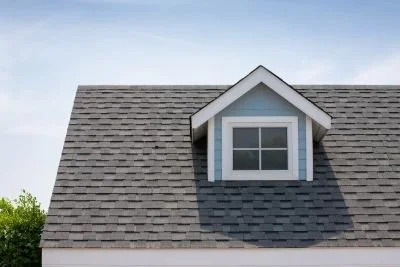
Believe it or not, your roof can do wondrous things for the aesthetic and style of your home. In fact, with a bit of vision and creativity, you can use bold colors, textured roofing materials, and existing features to enhance your roof and accentuate your home’s design. Scan this guide and delve into some simple methods that can help you make the most of your roof.
Architectural Elements Accentuate Exterior Features
The architectural elements of your rooftop may not be something you think about often. But the truth is, features like the pitch and general shape of your roof can dramatically enhance your home’s curb appeal, value, and overall style. It doesn’t matter if you choose tile, slate, or asphalt, either.
The right architectural design will help you define your home’s personality and accentuate its other exterior features, such as window shutters or a wrap-around porch. For instance, if you air on the side of understated and dignified, you can choose simple rooflines to express that style.
On the other hand, suppose you’re looking for something more extravagant. If so, you could opt for a more complex roof with features like cross-gables to demonstrate a more elegant aesthetic. Either way, considering your roof’s architectural features can help you accentuate and add style to all of your home’s exterior features.
Bold Colors Serve as Captivating Accents
Of course, we can’t discuss the design benefits of having a beautiful roof without mentioning the opportunity to play around with color. In decades past, homeowners were given a minimal array of rooftop colors to choose from.
But nowadays, boldly colored roofing is all the rage. Because of this trend, homeowners are exploring the possibility of using their roofs to create captivating and stylish exterior accents. With vibrant options like green and blue, people are finding innovative ways to coordinate the color of their roofs with other external fixtures. Inherently, roofs are quickly becoming an opportunity to create charming exterior accents.
In doing so, they’re making their home’s appearance more dynamic and cohesive. These roofing options aren’t just exclusive to traditional materials like shingle and slate, either. Even if you have a metal roof, you can enjoy the benefits of a brightly colored roof by simply painting your existing roof a new color.
Roofing Materials Add Style and Texture
The roofing materials that you use can significantly impact your roof’s design. For instance, shingles and slate can help you achieve a more classic and modest style. On the other hand, stucco-finish tiles can help you accentuate the look of a modern Mediterranean design.
Or, if you’re looking for a way to update your classic Victorian, you can try asphalt or metal roofing meant to look like wood or clay tiles. In any case, the materials you choose for your roof can help to add some texture while accentuating the stylish features your home already has. So explore the possibilities of different textures when you’re trying to figure out the design benefits of a beautiful roof.

What To Do With All That Holiday Garbage
Merriment begets mess; after the chaos of a holiday morning or meal, you get piles of gift wrap and leftovers. Here’s what to do with all that holiday garbage.

Just when you have your home looking its best for the holidays, an eruption of gifts, food, and toys throws it all out of whack. Holiday get-togethers, even small ones, generate gift wrap, boxes, and leftovers everywhere.
How do you derive order out of this happy chaos? Here’s what to do with all that holiday garbage. In fact, if your sustainability skills need a boost, the holidays are a great time to pick up responsible waste management habits.
Trees and Other Organic Decorations
What came from the earth can usually return to the earth. Check with your local forest preserve agency or municipality to see if they run a tree recycling program. Many agencies designate a drop-off area where they’ll collect natural trees, garlands, and other decorative evergreen branches. They’ll run these through chippers to create mulch to use along woodland paths and in gardens.
Wrapping Paper and Cards
If paper and cards have flourishes like glitter, mini pom-poms, or plastic pieces, don’t put them in your recycling bin. The same is true for ribbons and bows; these can tangle up recycling equipment and ruin a bale of recycled material with impurities.
Save bows and ribbons to reuse next year. With greeting cards, tear off the part that doesn’t have any embellishments for recycling, and get crafty with the rest. Use glittery holiday scenes from greeting cards in glass jar centerpieces or cut them into jigsaw puzzles for the kids.
Leftovers
Reduce plastic waste by investing in reusable silicone food storage bags for leftovers. These can go in the dishwasher and come out clean to pack up the remains of next holiday’s feast. Of course, the best way to deal with leftovers is to eat them! Don’t store them for so long that the food goes bad and you have to throw it away anyway.
Boxes, Bottles, and Cans
Cardboard is recyclable, and you’ll get a lot more of it into your bin if you break the boxes down first. In fact, recycling a ton of cardboard saves as many as 17 trees!
Recycling centers can usually remove packing tape. What recycling centers don’t want is food waste. If you toss a can, carton, or bottle into the recycling bin without rinsing it out first, your good intentions may end up in a landfill regardless. Food residue creates impurities in recycled paper products, making them less attractive to buyers.
Lights, Foam Packaging, and Defunct Electronics
These can’t go in your recycling bin, but your local solid waste agency may offer an alternative option. City or county recycling centers will often accept holiday lights, Styrofoam packaging, and used electronics. If you took advantage of holiday deals to replace an old television, ask if you can drop it off at a recycling center in your area.
When you know what to do with all that holiday garbage, getting your organized home back will seem much less daunting!

Guest Post - The Benefits of Having a Multifunction Printer in Your Home Office
Working from home often leaves you without access to vital equipment such as scanners and printers. These devices can be installed in a home office, but they take up an enormous amount of space. A much more practical solution is to equip your workspace with a versatile multifunction printer. But what are the benefits of a multifunction printer?
Working from home often leaves you without access to vital equipment such as scanners and printers. These devices can be installed in a home office, but they take up an enormous amount of space. A much more practical solution is to equip your workspace with a versatile multifunction printer. But what are the benefits of a multifunction printer?
1. Organized Multi-Tasking
We love the way a multifunction printer (MFP) combines everything you need in one easy appliance. It prints correspondence and photocopies documents. You usually have the choice of setting these functions in black and white or color. You can even use it as a scanner to upload paperwork or photographs into your PC. An MFP also includes email facilities and a fax machine for transferring documents. Whatever your work requires, a versatile MFP can provide the solution.
2. Perfect for Small Home Offices
Most of the home offices we've organized for clients are small. They often must be incorporated into the corner of a living room or bedroom. Space is at a premium. It's vital to avoid clutter to keep your space more liveable and comfortable to use. An MFP usually has a width of around 15-19 inches (40-50 centimetres). It's similar to the size of a single-function printer, yet you get multiple functions all in one tiny space. It's ideal for any home office.
3. Versatile and Convenient
Maximizing your productivity is important when you work from home. Choosing a versatile MFP can certainly help you be more organized. It usually has a simplified operation with easy to understand instructions. Many have sleek, touch screen control panels. You can even switch between functions by simply pressing a button. An MFP saves you from having to familiarize yourself with several machines and multiple modes of use. A small home office can't usually accommodate separate machines, requiring some to be placed in another room. An MFP is so convenient as it saves you from having to leave your desk.
4. An MFP is less Expensive
An MFP is the perfect piece of equipment when you're setting up a home office on a budget. Purchasing individual items such as a scanner, printer and photocopier can work out expensive. An MFP provides you with multiple functions in one purchase. The cost of an MFP can sometimes be similar to the price of just one individual device such as a fax machine. You might not even need every function regularly. Therefore, an MFP saves you from wasting valuable funds on little-used pieces of office equipment.
5. Reduces Your Carbon Footprint
It's important to run your home office as ecologically as possible. An MFP helps prevent excess carbon emissions from escaping into the atmosphere. You only must run a single device instead of many. Most MFPs are built to a streamlined design that is economical with energy usage. A common feature is inkjet printing technology. It uses less energy than laser printing, which must rely on pre-heating an infuser to operate. The money you save on electricity is a long-term advantage.
6. Smart Technology
Many of today's MFPs are sophisticated home office appliances that are compatible with Smart technology. You can easily find MFPs with wireless and Bluetooth connectivity. It means you can usually integrate an MFP into a smart home automation system. It allows you to operate an MFP through your mobile even when you're not at home. You can be more organized by sending remote instructions for different functions. For example, documentation can be already prepared by the time you arrive back at your home office.
7. Economical Servicing and Repairs
Keeping your home office equipment in good condition can be costly if you have multiple devices. However, an MFP is usually economical to maintain. You only must pay one service charge to keep your MFP operating correctly. Repairs are also less expensive if you call for professional help. Inkjet MFPs are usually made to high standards with a streamlined design. They don't usually include complex components such as transfer belts or imaging units. Any MFP repairs are nearly always quick and easy to fix, allowing you to recover a good work productivity level.
8. Speed and Efficiency
But how does the performance of an MFP compare to separate devices? Many MFPs use the simplicity of advanced technology. It makes them smooth-running and very competitive when compared to individual machines. Typical printing speeds can be around three seconds for one page. For batches of multiple copies, you can expect up to 50 pages in one minute. More expensive models achieve commercial office rates with up to 100 pages in a minute. Scanning and photocopying results are usually just as impressive. An MFP can make your home office maintain fast and efficient standards.
Conclusion
Equipping your small home office with a multifunction printer has many benefits. You can make a small space comfortable to use. It's an economical investment that reduces your carbon footprint and saves on maintenance and repair charges. A multifunctional printer is convenient and versatile. You can even integrate some models into smart home automation. Your home office can be highly organized and efficient when you choose a multifunctional printer.
Author Bio:
Greg Tuohy is the Managing Director of Docutec, a business printer and office automation software provider. Greg was appointed Managing Director in June 2011 and is the driving force behind the team at the Cantec Group. Immediately after completing a Science degree at UCC in 1995, Greg joined the family copier/printer business. Docutec also make printers for family homes too such as multifunction printers.

Guest Post - How to Set Up a Home Office You Love
Technology has been helping more people work remotely from home for years. The US Census Department recorded 7% of adults worked from home in 2019. This figure showed a 5.2% increase compared to data from two years earlier. Since the beginning of the pandemic, more people than ever are turning to remote work. But for the best results, you need a comfortable office space that you'll love using. But what can I do to set up a home office I’ll love?
Technology has been helping more people work remotely from home for years. The US Census Department recorded 7% of adults worked from home in 2019. This figure showed a 5.2% increase compared to data from two years earlier. Since the beginning of the pandemic, more people than ever are turning to remote work. But for the best results, you need a comfortable office space that you'll love using. But what can I do to set up a home office I’ll love?
Finding the Perfect Work Space
Organizing a home office is much easier if you have a small room you hardly ever use. You can install a larger desk and plenty of storage units. You might even keep your home office all to yourself. However, many family homes just don't have the available space. Many remote workers must be inventive and versatile to incorporate a small home office in communal rooms. Some closets offer remarkably large areas where you can at least fit a desk and tiered shelving or equipment such as a multifunctional printer. A small, comfortable space can often be found beneath stairs or in a corner of your living room.
Maintaining Privacy
In a shared environment, it's difficult to maintain a degree of privacy. A simple solution is to invest in a portable, folding screen. You can even make one to custom fit around your desk. Construct an open frame with at least three folding sections for stability, then cover it with fabric or even paper. An alternative is to fix a rail to the ceiling and hang drapes from it. Sometimes you can find a suitable room divider with shelves and compartments that can store some of your folders and files.
Adaptable Office Furniture
Now you've set up your workspace, you'll need some office furniture. If you're building your office on a budget, there are ways you can improvise. A kitchen table works fine as a desk. Open shelves on the wall above your desk can be customized to make the best use of the space. When you design your own home office, you can place furniture where you can reach everything easily. You can use any type of cupboard for equipment such as headphones, printing inks and stationery. If you have sensitive files, fit a small lock to a drawer to keep them safe.
Ergonomically Designed Chair
One item of office furniture you should choose wisely is a chair. Research shows that home working increases your monthly output by 1.4 days. It means you could be spending even more than eight hours every day sitting at your desk. Unfortunately, being sedentary with poor posture can contribute to the musculoskeletal problems suffered by half the adult population.
You can try to avoid future discomfort by taking time for regular breaks. But the most effective solution is to invest in an ergonomically designed chair. You can save money by purchasing an unwanted one from a city office refurbishment. Features to look for include lumbar support, adjustable height, and a backrest and side arms that can be adjusted to suit you.
Avoiding Eyestrain
Eyestrain known as Computer Vision Syndrome includes blurred vision, headaches and uncomfortable, dry eyes. Around 58% of adults in the US suffer from these symptoms when working at their computer screens throughout the day. The 20-20-20 rule helps keep your eyes feeling comfortable. It suggests you should stop work every twenty minutes and focus for twenty seconds on an object twenty feet away. When designing your home office, fix a favorite picture or plant at exactly that distance from your desk to help you remember.
Sympathetic Lighting
Natural light is always beneficial during the day. If possible, choose a part of the room where you have window space. If it faces south, you could have problems throughout the day from the sun getting in your eyes. A daylight window blind can make your space more enjoyable by cutting out the glare of the sun while allowing through adequate natural daylight. On cloudy days or at night, sympathetic lighting could include eco-friendly LED bulbs. Choose LED lighting with a temperature rating between 2,700K and 4,500K. White lighting containing a quantity of blue is supposed to improve your concentration.
Relaxing Decor
Now you've assembled all the components of your new home office, you need to make it a space you can truly love. A relaxing atmosphere is essential. You can even employ Feng Shui philosophy to make sure your shelves and desk are in tune with the other items of furniture in the room. Declutter if necessary to make the area around your home office feel more spacious and calming. If you're improvising with furniture, a quick coat of paint can give your office a stylish, coordinated look. Pastel colors such as gray, pale blue, beige, cream or light green work best. Consider reupholstering your office chair in toning fabric.
Conclusion
Your brand-new home office doesn't have to cost a fortune. Improvisation is fine but making your office comfortable is how you'll grow to love it. If a separate room is unavailable, choose a secluded spot within a larger communal area. Coordinated decor should make it welcoming and stylish. Find an ergonomic chair and pay attention to lighting to keep your eyes comfortable.
Author Bio:
Paula O’Gorman is Promotive’s Design & Marketing Manager and is responsible for planning, leading and coordinating the activity of the marketing agency that specializes in logo design and graphic design. She graduated with a distinction in Design & Communication from Waterford Institute of Technology in 2003 and joined the Cantec Group immediately afterwards. Starting as a junior graphic designer, she now manages her team at the senior management level.

