

A resource for those seeking information on organizing and transforming spaces.

Steps to Take When Planning a Home Renovation Project
Are you considering renovating your home? Whether you want to update a few things or do a full-scale remodel, it's essential to plan the project successfully. If not, you could run into a lot of problems - and end up spending more money than you intended. This blog post will discuss five steps to take when planning a home renovation project. By following these tips, you'll be able to avoid common pitfalls and have a successful renovation.
Are you considering renovating your home? Whether you want to update a few things or do a full-scale remodel, it's essential to plan the project successfully. If not, you could run into a lot of problems - and end up spending more money than you intended. This blog post will discuss five steps to take when planning a home renovation project. By following these tips, you'll be able to avoid common pitfalls and have a successful renovation.
Define Your Goals
The first step in any renovation project is to define your goals. What are you hoping to achieve? Are you wanting to update your home's appearance, make it more functional, or increase its value? Once you know what you want, you can start planning accordingly.
Set a Budget
It's essential to set a budget for your renovation project and stick to it. This way, you won't end up overspending on things that aren't necessary. You may need to get creative and find cheaper ways of achieving your goals - but it's worth it in the long run.
Hire a Professional Contractor
Hiring a professional contractor can help you get the most out of your renovation project. A good contractor will take care of all the details, so you don't have to worry about anything. You'll also want someone who is insured and licensed to avoid any legal issues later on down the line. Depending on your project, you will also want to hire an electrician and local plumber, like one from Spartan Plumbing and Services.
Research Your Options
Once you've decided what type of work needs doing (and how much money it will cost), it's time for some research into different products and services available on the market today. There may be cheaper options than initially thought - but remember that quality counts too. Make sure everything fits your budget before making any final decisions since this might affect things like warranties, etc.
Get Quotes From Relevant Contractors
Once you've researched and found some excellent contractors, it's time to get quotes from them. This is an essential step because it will give you a better idea of how much money they charge per project and what kind of artistry they offer in return for this price (and so on). It would help if you always asked about warranties, too – ideally, these would cover both labor costs or materials used during construction/renovation works. Suppose anything goes wrong within twelve months after completion dates. In that case, however, there are other factors at play here, such as exclusions that may affect whether certain things get covered under warranty terms & conditions.
Planning for your home renovation is highly important. You need to make sure you follow all of the correct steps to making your project run smoothly.
Dealing with Sulfur Smell in Your Home
No matter how big your home is and where it’s located, making sure everything’s in order at all times is a must. This won’t be easy, though, especially when trying to prevent mishaps and accidents that might occur without you knowing it, but even when it seems that there’s nothing you can do, there’s at least one thing – you can react on time and avoid further accidents. This is true when it comes to smelling sulfur in your home, and though this sounds like a simple problem that won’t cause you too many problems, this isn’t the case in reality. Sulfur is one of the most dangerous and poisonous gasses out there, and if you happen to smell it in your living space, you need to react immediately. In case this happens to you as well, here are a few ways to solve this problem before it causes you too many issues.
No matter how big your home is and where it’s located, making sure everything’s in order at all times is a must. This won’t be easy, though, especially when trying to prevent mishaps and accidents that might occur without you knowing it, but even when it seems that there’s nothing you can do, there’s at least one thing – you can react on time and avoid further accidents. This is true when it comes to smelling sulfur in your home, and though this sounds like a simple problem that won’t cause you too many problems, this isn’t the case in reality. Sulfur is one of the most dangerous and poisonous gasses out there, and if you happen to smell it in your living space, you need to react immediately. In case this happens to you as well, here are a few ways to solve this problem before it causes you too many issues.
Learn more about this smell
Probably the only good thing about the smell of sulfur is that it’s a unique and distinguished smell you can’t mistake for anything else. With so many different smells you can track in your home – from your food burning on the stove to a dead skunk in your basement – this is one of those smells you’ll never forget. It reminds people of rotten eggs, which is how you can recognize it as well, and the sooner you learn how sulfur smells the better it’s going to be for you and your home. So, the first time you smell it, try to remember it and do your best not to forget this smell for future notice.
Another thing you need to do is educate the rest of your family and teach them everything you can about the smell of sulfur. This won’t be the easiest thing you’ll ever do and the problem with smells is that you can replicate them, but, fortunately, sulfur can be replicated or at least imitated. So, equip your home with some rotten eggs and make sure everyone knows what they smell like. This is especially important if you have kids who might be home alone and smell something strange but don’t recognize it because they’ve never smelled sulfur before. This might seem a bit too much at first, but if you knew all the problems that might occur because of this smell, you wouldn’t make such a big deal about these experiments.
Learn the dangers of this smell
Once you’ve understood what sulfur smells like, you need to learn why it’s so dangerous and what it can do to your home and your family. Most people have no idea when it comes to sulfur and what it’s all about, but there’s one thing you need to remember – sulfur can cause stress, anxiety, and even lead to a panic attack if you’re surrounded by it for a while. In general, this smell isn’t dangerous per se, but it’s highly unpleasant and difficult to digest, which is why you need to minimize it from your home as often as you can.
In addition to stress and anxiety, sulfur can lead to breathing problems, especially with people who have asthma, bronchitis, and other problems with their respiratory system. This is even harder to deal with now with so many people suffering from COVID-19 that attacks their lungs and other parts of their bodies.
Learn how to handle this smell
As soon as you notice the smell of sulfur, you need to open your windows and check your stove for a possible gas leak. In case this is the source of the smell, leave your home immediately and don’t come back until the police and the fire department tell you it’s safe to do so.
In case there’s another reason why you can smell sulfur in your living space, you need to learn how to remove it permanently. For instance, check out the helpful h2s treatment that might allow you to get rid of this smell forever, and that’s something all families are looking for when it comes to protecting their kids and loved ones.
Learn what to do about this smell in the future
After you’ve solved the problem with the sulfur smell in your home, you need to know what you can do about it in the future. First, check your pipes and make sure they’re in the perfect shape. If you don’t do that, you could have new issues every single week. Do the same with your water pipes and your water heater because the smell of sulfur might be coming from them as well.
If your home has well water, you have to check it also. This might be not just the source of a rotten smell but could also do you tons of harm in the future too. Only after you’ve had everything checked properly and consulted experts can you relax and know that you won’t smell sulfur anymore.
Dealing with sulfur might not seem like a big deal, but it’s harder than you’ve imagined. You just have to identify the problem on time and find a way to handle it quickly – and remember to stay calm every step of the way, of course!
Main Differences Between Concrete and Cement in Construction
Despite the two words being used often in place of each other, there is a big difference between cement and concrete. Cement is used as a binding material to bring together other building substances. The main types of cement used in the construction sector are Asphalt and Portland cement. While many people think that Portland cement is a brand name, it is a type of cement and is present in all concrete preparations. Just like we consider sterling to be silver and stainless to be a form of steel, the same goes for Portland cement. Both cement and concrete are essential in construction activities.
Despite the two words being used often in place of each other, there is a big difference between cement and concrete. Cement is used as a binding material to bring together other building substances. The main types of cement used in the construction sector are Asphalt and Portland cement. While many people think that Portland cement is a brand name, it is a type of cement and is present in all concrete preparations. Just like we consider sterling to be silver and stainless to be a form of steel, the same goes for Portland cement. Both cement and concrete are essential in construction activities.
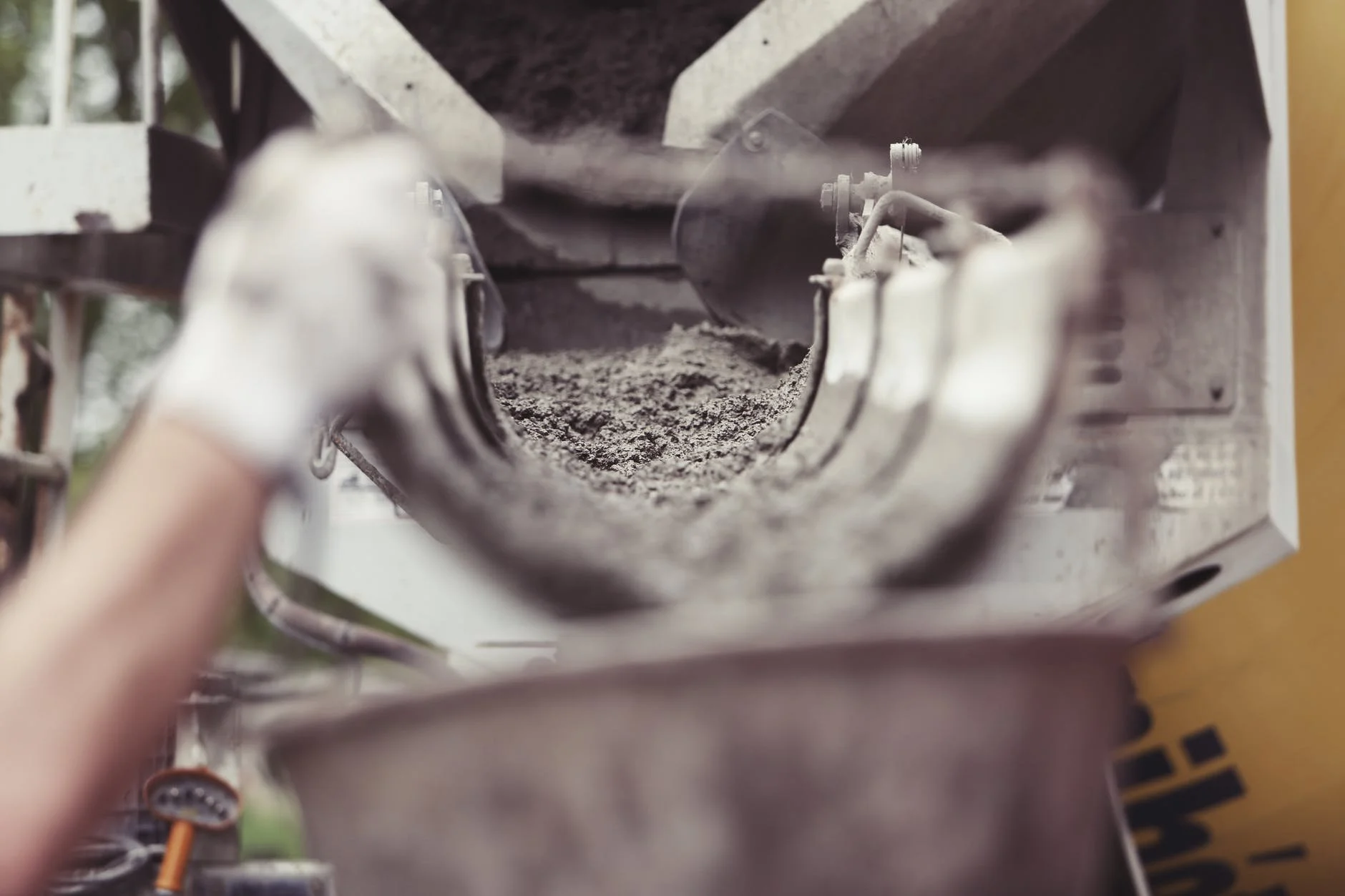
On the other hand, concrete is made when the paste is combined with aggregates to produce a mixture. The aggregates used can be crushed stone or sand and gravel, while the paste is obtained by mixing a suitable amount of Portland cement in some water. In a concrete mix, cement makes up around 10 to 15 percent of the volume of the substances.
The aggregates used are bound together into a solid substance when the water and cement mixture harden, a process known as hydration. The process doesn't stop after the hardening, and it may go on for a long time. This implies that as the concrete ages, it becomes stronger.
The Main Differences Between the Two
Cement is used to bind the materials used to make concrete, such as sand, stone clay, and silt. On the other hand, concrete is used in constructing various parts of a building like slabs and footing. It brings compressive strength to the structure.
Composition
Cement comprises Magnesia, Lime, Alumina, Iron Oxide, Silica, and Sulfur Trioxide, while concrete consists of sand, stone, and cement.
Mode of Operation
Cement works through hydration, which causes a hardening reaction that binds the materials being used. For concrete, the mechanism is quite different. The fine materials occupy any space available while the mixture is prepared, giving the concrete strength and a definite structure.
Definition
Cement can be defined as a binding material for concrete preparations and an adhesive in building processes. Concrete is a mixture of aggregates bound together by a substance like an asphalt or cement.
Conclusively
Both cement and concrete have different types. For cement, hydrophobic, low-heat, alumina, and colored are some available types. Concrete also comes in different forms, including stamped, glass, shotcrete, and polymer types of concrete. To acquire them for your construction, you should contact a reliable cement or concrete company.

Top 5 Flooring Options to Consider Installing When Staging a Home
You might not think that staging a home is necessary if you want to sell it in a market this hot. With practically every home getting multiple offers the first day they are on the market, some sellers are skipping staging. Yet, doing so can open the door to not only more bids but higher bids. One of the biggest staging decisions you'll have to make is what kind of flooring to install.
You might not think that staging a home is necessary if you want to sell it in a market this hot. With practically every home getting multiple offers the first day they are on the market, some sellers are skipping staging. Yet, doing so can open the door to not only more bids but higher bids. One of the biggest staging decisions you'll have to make is what kind of flooring to install.
Laminate
Laminate flooring can mimic the look and feel of stone, tile, and wood. However, the cost is a lot lower. Assembly is easy, too, if you go the DIY route. Tongue-and-groove construction just needs interlocking. Aim for the higher-end options in laminate choices for staging. Lower-end choices look somewhat artificial and turn off some potential buyers.
Renewables
Many modern home buyers are interested in being eco-friendly whenever they can in their lifestyle, so cork and bamboo floors might appeal to them. Bamboo is technically a grass but acts much like hardwood flooring in how scratch-resistant it is, while cork dampens noise and absorbs a lot of shock with its comfort and resilience.
Hardwood
Hardwood flooring is timeless and resilient. You can pick from lots of different kinds and colors, some of which can be refinished multiple times. Solid hardwoods are something you can sand and refinish quite a few times, whereas engineered hardwood has hardwood on top of plywood or high-density fiber cores for cheaper cost and easier installation. If the subflooring is concrete, solid hardwood might not work, but it's also generally thought of as the top option for all flooring options.
Tile Flooring
Tile is an effective choice for rooms with lots of foot traffic and also get wet. Such spaces might include kitchens, laundry areas, basements, and bathrooms. It's durable and doesn't need much maintenance but still has lots of options, including ceramics, porcelain, and natural stone.
Vinyl Flooring
Vinyl is made using synthetic materials, including plasticizers, PVC, and fiberglass. It also comes with as many benefits as physical sources, because it's resistant to scratching and staining, is waterproof, and lasts a very long time. Find it in quite a few colors and styles in planks, sheets, and tiles. You can even put it over most existing flooring for quick and easy installation.
Staging Matters
Staging a home can cost a few thousand dollars, but it also helps potential buyers truly see the potential it holds if they were to buy it and move in. The return on your investment is never assured, but it's more than worth it on average in terms of the possible bidding war and increased interest you'll generate.

