A resource for those seeking information on organizing and transforming spaces.

Why Regular Crawl Space Sewage Maintenance is Essential for Homeowners
For homeowners, crawl space maintenance is often an overlooked task, yet it plays a crucial role in maintaining a healthy and safe environment. Beneath the surface of many homes lies a crawl space, a narrow area that can house essential components like sewage systems. Neglecting this area can lead to a range of issues, making routine maintenance not just a wise choice, but a necessary one.
Understanding the Basics of Crawl Space Sewage
For homeowners, crawl space maintenance is often an overlooked task, yet it plays a crucial role in maintaining a healthy and safe environment. Beneath the surface of many homes lies a crawl space, a narrow area that can house essential components like sewage systems. Neglecting this area can lead to a range of issues, making routine maintenance not just a wise choice, but a necessary one.
Protecting Property Value with Routine Care
Regular maintenance of the crawl space and its components, particularly the sewage system, directly impacts the value of your property. Homes with well-maintained systems tend to retain their value better compared to those with neglected infrastructures. This proactive approach not only protects your investment but can also enhance the saleability of your home, should you decide to sell.
Enhancing Home Safety through Proper Sewage Management
Safety is a primary concern for any homeowner. A well-maintained sewage system in the crawl space reduces the risk of leaks and contamination, which can lead to hazardous living conditions. By ensuring that the sewage system is regularly checked and serviced, homeowners can protect their families from potential health risks associated with sewage exposure.
Improving Air Quality with Adequate Sewage Maintenance
The air quality within a home can be significantly affected by the condition of the crawl space. Sewage leaks or malfunctions can introduce unpleasant odors and harmful gases into the living environment. Routine maintenance helps prevent these issues, contributing to cleaner, healthier air inside the home. This improvement in air quality is beneficial not just for comfort, but also for the health of the home's occupants.
Preventing Costly Repairs with Routine Checks
Neglecting crawl space sewage maintenance typically leads to more significant problems down the line, often requiring expensive repairs. Regular inspections and maintenance work can identify potential issues before they escalate, saving homeowners from unexpected financial burdens. Investing in regular maintenance is a cost-effective strategy that ensures long-term savings.
Boosting Energy Efficiency with Regular Maintenance
A properly maintained crawl space sewage system can inadvertently contribute to the overall energy efficiency of a home. Issues like leaks or moisture buildup can affect insulation and heating systems, leading to increased energy consumption. By keeping the sewage system in optimal condition, homeowners can also help reduce energy waste, contributing to lower utility bills.
Ensuring Longevity of Home Infrastructure
The longevity of a home's infrastructure is closely tied to the health of its system components, including the sewage system housed in the crawl space. Routine maintenance ensures that each part functions correctly, supporting the overall durability of the home. This longevity protects both the home's structural integrity and the homeowner's peace of mind.
Creating a Healthier Living Environment
A functional and well-maintained sewage system is integral to promoting a healthier living environment. It prevents the spread of bacteria and other pathogens that can flourish in compromised sewage systems. By investing in regular maintenance, homeowners can ensure that their living space remains safe and sanitary for all inhabitants.
Sustaining Home Comfort with Regular Care
Comfort in the home is heavily dependent on the seamless operation of all its systems. Routine sewage maintenance plays a vital role in sustaining this comfort by preventing disruptions that can arise from system failures. This proactive care allows homeowners to enjoy a consistently comfortable living environment without worry.
Supporting Environmental Responsibility
Maintaining the sewage system is not just about personal benefit; it also reflects a commitment to environmental responsibility. Proper maintenance minimizes the risk of sewage leaks that can harm local ecosystems. By ensuring that their systems are running smoothly, homeowners contribute to broader environmental protection efforts.
Facilitating Peace of Mind for Homeowners
Finally, regular crawl space sewage maintenance offers homeowners peace of mind. Knowing that one's home is protected against potential hazards and costly repairs brings a sense of security that is invaluable. This assurance allows homeowners to focus on enjoying their home rather than worrying about what might go wrong next.
Final Thoughts
Routine crawl space sewage maintenance is not merely a helpful suggestion—it's an essential practice for homeowners aiming to protect their property, ensure safety, and promote a healthy living environment. By committing to regular inspections and upkeep, homeowners benefit from improved air quality, reduced costs, and enhanced property value. For those looking to further explore ways to maintain their home's health and efficiency, consulting with professionals from trusted companies specializing in crawl space sewage cleanup like KSA Restore, or joining homeowner maintenance networks is highly recommended.

10 Things That’ll Make Your Next DIY Home Project a Breeze
There's nothing quite as satisfying as rolling up your sleeves and doing something yourself. Whether it's a small home improvement project or a complete renovation, tackling DIY projects can save you money and give you a sense of accomplishment. However, they can also be challenging and time-consuming if you're not properly prepared. To help make your next DIY home project a breeze, here are ten things to keep in mind. Let's get started!
There's nothing quite as satisfying as rolling up your sleeves and doing something yourself. Whether it's a small home improvement project or a complete renovation, tackling DIY projects can save you money and give you a sense of accomplishment. However, they can also be challenging and time-consuming if you're not properly prepared. To help make your next DIY home project a breeze, here are ten things to keep in mind. Let's get started!
Plan Ahead
Before diving into any DIY project, take the time to plan out each step. This includes creating a budget, making a list of materials needed, and researching techniques. Having a clear plan in place will save you from unexpected surprises and delays down the road.
Keep in mind that each project may require different planning techniques. For example, if you're doing a painting project, you'll need to think about the type of paint and tools needed, as well as how to properly prepare and protect the area. On the other hand, if you're tackling a home renovation project, you'll need to think about permits and potential structural changes. So be sure to do your research and create a plan specific to each project.
Gather Tools and Materials
Having the right tools for the job is crucial for a successful DIY project. Before you start, make sure you have all the necessary tools and materials on hand. This will save time and prevent frustration. If you don't own certain tools, consider renting or borrowing them from a friend.
The materials needed for a DIY project will depend on the specific project you are tackling. For example, if you're building a shelf, you'll need wood, screws, and nails. If you're painting a room, you'll need paint, brushes, and drop cloths. If you're redoing a part of your roof, you'll want heavy-duty bolts, a stepladder, and some sturdy roof components, such as some from Wonson Frames & Trusses. You'll want to research and make a list of all the necessary materials before starting your project to ensure that you have everything on hand.
Be sure to invest in good quality tools and materials. While it may be tempting to save money by buying cheaper products, they may not hold up as well and could end up costing you more in the long run. Quality tools and materials will also make the project easier and produce better results.
Watch Tutorials and Read Instructions
Even if you're an experienced DIYer, it's always helpful to watch tutorials and read instructions before starting a new project. This will ensure that you are using the correct techniques and following safety guidelines. You may also pick up tips and tricks that you wouldn't have thought of otherwise.
Safety First
Speaking of safety, always prioritize it when tackling any DIY project. Wear protective gear such as gloves, goggles, and masks if needed. Keep children and pets away from the work area and use caution when handling power tools. If you're not comfortable with a particular task, don't be afraid to ask for help or hire a professional.
Take Breaks
DIY projects can be physically and mentally taxing, so don't forget to take breaks. This will help prevent burnout and keep you energized throughout the project. Use breaks to hydrate, stretch, and assess your progress before jumping back in.
Set Realistic Expectations
It's important to have realistic expectations for your DIY project. Don't expect perfection on your first try, and be prepared for some trial and error. Remember, it's all part of the learning process! Don't get discouraged if things don't go as planned and be open to making adjustments.
Ask for Help
Don't be afraid to ask for help if you need it. Sometimes a second set of hands or an expert opinion can make all the difference in completing a project successfully. Reach out to friends and family or consider hiring a professional if needed.
Keep Your Work Area Clean
A cluttered work area can not only be hazardous, but it can also make it difficult to focus and complete tasks efficiently. Take a few minutes to clean up after yourself as you go. This will also make it easier to find tools and materials when you need them.
Document Your Progress
Taking before and after photos of your DIY project is a great way to track your progress and see how far you've come. It's also helpful for future reference if you ever need to make repairs or modifications. Plus, it's always satisfying to look back and see the transformation you've made.
Enjoy the Process
Last but not least, remember to enjoy the process! DIY projects can be challenging at times, but they are also incredibly rewarding. Take pride in the fact that you are creating something with your own two hands! And if you encounter any setbacks, just remember that it's all part of the journey.
With these ten tips in mind, your next DIY home project is sure to be a success! So go on and tackle that project with confidence. Keep these tips in mind and enjoy the satisfaction of completing something amazing on your own. Good luck!

5 Signs the Winter Weather Poses a Threat to Your Home
Winter weather, while often picturesque, can bring a host of challenges that threaten the integrity of your home. Understanding these potential hazards is crucial for protecting your property and avoiding costly repairs. Below are five signs that winter weather might be jeopardizing your home, along with practical advice on how to tackle each issue effectively.
Winter weather, while often picturesque, can bring a host of challenges that threaten the integrity of your home. Understanding these potential hazards is crucial for protecting your property and avoiding costly repairs. Below are five signs that winter weather might be jeopardizing your home, along with practical advice on how to tackle each issue effectively.
Drafts and Temperature Fluctuations
Drafts in your home are more than just a minor annoyance; they are a clear indication that your home may not be properly insulated, leading to significant energy loss. If you detect cold spots near windows or doors, it's essential to take immediate action. Investigate for gaps or cracks in caulking and weather stripping, as these are common culprits for letting cold air seep in. Replacing or reinforcing these barriers can drastically improve your home’s insulation. Additionally, consider adding heavy curtains or thermal blinds to further reduce heat loss during the cold months.
Ice Dams and Roof Damage
Ice dams are a frequent winter issue that occur when heat from your home escapes into the attic, causing snow on the roof to melt. This meltwater flows down to the colder eaves and refreezes, forming a barrier that traps water under the shingles. This can lead to severe roof leaks and structural damage, posing a threat to the integrity of your home. To combat ice dams, it’s essential to ensure your attic is well-insulated and properly ventilated. Proper insulation keeps the heat contained within your living areas, while effective ventilation maintains a stable temperature across the roof, reducing the likelihood of snow melting and refreezing. Installing ice and water shield membranes can provide an additional layer of protection against potential leaks. If your roof has already sustained damage, it’s crucial to contact a roofing professional for assessment and repair. Engaging a roofing contractor, such as those from Alliance Roofing LLC, can ensure that any issues are addressed promptly and effectively, safeguarding your home from further winter-related damage.
Frozen Pipes
During the winter months, frozen pipes are a frequent concern that can result in bursting and subsequent flooding if not addressed. Pay particular attention to pipes located in unheated areas such as basements, garages, or crawl spaces. Insulating these pipes with materials like foam sleeves or heat tape can effectively prevent freezing. In extremely cold conditions, allowing faucets to drip keeps water moving through the pipes, reducing the risk of ice formation. Additionally, opening cabinet doors in kitchens and bathrooms can help warm air circulate around plumbing fixtures, further safeguarding against freezing.
Heavy Snow Loads
Heavy snow loads on your roof can pose significant structural threats to your home. While most roofs are designed to endure typical snow accumulation, exceptionally heavy snowfall can push these limits, resulting in dangerous sagging or potential collapse. Snow accumulation not only stresses the roof but can also cause damage to gutters, leading to water drainage issues once the snow begins to melt.
To mitigate these risks, homeowners should employ preventive measures. Using a roof rake allows you to safely remove excess snow while standing on the ground, reducing stress on the roof structure. Additionally, it's prudent to evaluate your roof and gutter's load-bearing capacity by consulting a professional, such as someone like Jerry Newman Roofing & Remodeling Inc, especially if your region is prone to intense or frequent snowfalls. Ensuring that your gutters are securely fastened or reinforced is equally important, as this prevents damage from the weight of ice and snow, safeguarding your home's exterior.
Condensation and Moisture Problems
Condensation on windows and walls is a sign of high indoor humidity, which can lead to mold growth and structural decay over time. To manage moisture levels, regularly use a dehumidifier and ensure proper ventilation in high-humidity areas like bathrooms, kitchens, and basements. Frequent checks for mold, particularly in hidden or less-ventilated areas, are vital for early detection and prevention of long-term damage. Address any signs of mold promptly to prevent it from spreading and compromising your home’s integrity.
By staying alert to these winter threats, homeowners can take proactive steps to protect their properties. Implementing the solutions outlined above will help maintain a safe, warm, and secure home throughout the colder months. For a comprehensive assessment and tailored advice, consider consulting local experts who can provide specialized services to ensure your home is thoroughly prepared for winter's challenges.

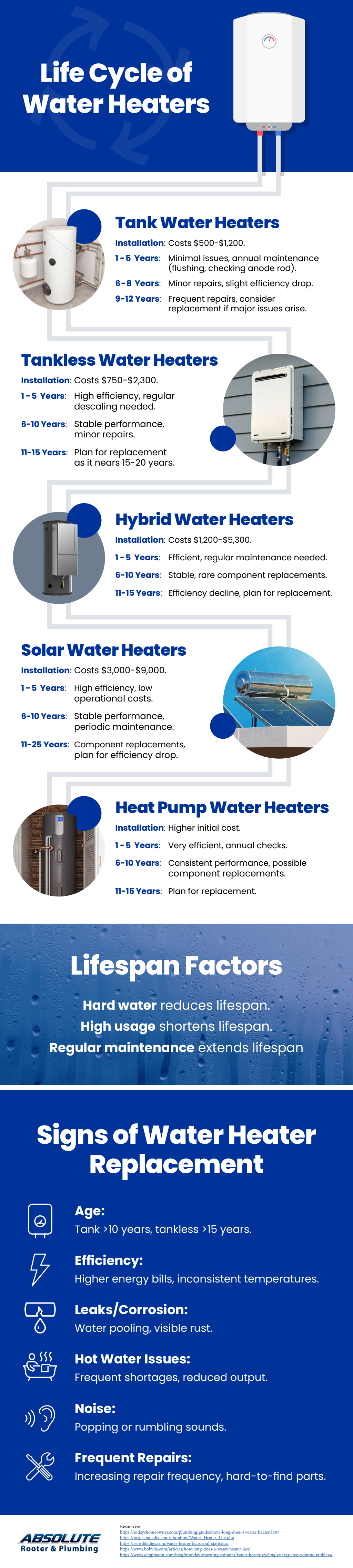
Understanding The Life Cycle Of Water Heaters: What To Expect And When To Replace
Water heaters are essential home appliances, providing hot water for everything from showers to dishwashing. Like most home systems, they have a predictable life cycle, and knowing when to replace or maintain them can save on energy costs and prevent unexpected breakdowns.
Water heaters are essential home appliances, providing hot water for everything from showers to dishwashing. Like most home systems, they have a predictable life cycle, and knowing when to replace or maintain them can save on energy costs and prevent unexpected breakdowns.
Average Lifespan of Water Heaters
The typical water heater lasts between 8 and 12 years, although various factors can influence this range. Tankless water heaters, for example, tend to last longer—around 20 years—since they heat water on demand rather than storing it. Traditional tank-style water heaters experience wear over time, as minerals and sediment in water can accumulate, impacting efficiency.
Signs of Wear and When to Consider Replacement
As water heaters age, they often show warning signs. Reduced hot water availability, fluctuating temperatures, or rust-colored water could indicate that the tank is deteriorating. Another sign is unusual noises, such as banging or popping sounds, which may point to sediment buildup at the bottom of the tank. These issues often signal that it’s time for maintenance or, in some cases, a full replacement.
Regular inspections by a professional offering plumbing services can help identify early signs of trouble and recommend whether maintenance or replacement is the best option. Routine flushing of the tank to remove sediment can also extend the life of your water heater.
Choosing the Right Replacement
When the time comes to replace your water heater, consider factors like energy efficiency, household water needs, and cost. Tankless models are a good option for energy-conscious homeowners, while traditional tanks remain a reliable and budget-friendly choice for many families. Newer models often come with advanced insulation and heating technology, making them more efficient than older models and potentially lowering utility bills.
Understanding the life cycle of your water heater and knowing when to replace it are key to maintaining a steady supply of hot water and avoiding unexpected repairs. With the help of professional plumbing services, you can keep your system running smoothly and ensure that your home stays comfortable and efficient year-round.