
The Different Home Risks Associated With Bad Tree Roots
Trees add beauty and value to your property, offering shade in the summer and a touch of nature. However, beneath the surface, their root systems can pose a significant threat to your home’s safety and stability. While healthy roots are essential for a tree’s survival, aggressive or poorly managed roots can silently cause extensive and expensive damage to your property.
This article will explore the different home risks associated with bad tree roots, from compromising its foundation to disrupting your plumbing and landscaping. By recognizing the potential for damage, you can take proactive steps to manage the trees on your property and safeguard your asset.
How Roots Can Damage Your Foundation
One of the most serious threats from invasive tree roots is damage to your home’s foundation. As roots grow, they seek out moisture and extend underneath your house. Over time, this growth exerts immense pressure on the concrete foundation.
The pressure can cause the soil to shift and lead to cracks, uneven settling, and significant structural instability. Initially, these cracks might be small, but they can widen, allowing moisture to seep in and cause even more problems.
When Roots Interfere With Plumbing
Tree roots are naturally drawn to the water and nutrients found in underground pipes. They can find their way into even the smallest cracks in your plumbing system. Once inside, the roots expand, blocking the flow of water and waste.
Infiltration often results in clogged drains, slow-draining sinks, and eventually, complete pipe blockages or bursts. Repairing this kind of damage is incredibly costly, often requiring excavation to access and replace the affected pipes.
Damage to Driveways and Walkways
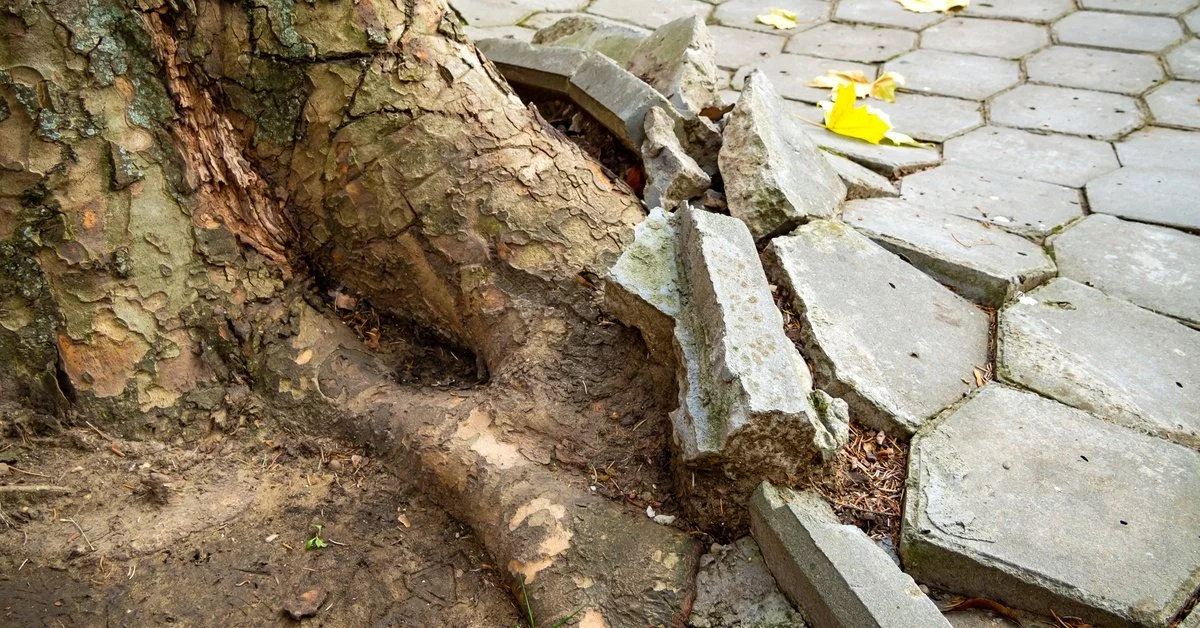
The same force that cracks a home’s foundation can also destroy your driveways, sidewalks, and patios. As tree roots grow and thicken just below the surface, they can lift and break apart concrete and asphalt.
This creates an unsightly appearance and poses a serious tripping hazard for you and your guests. The warning signs of tree root damage in these areas are often obvious, appearing as visible cracks or raised, uneven sections of pavement.
Disruptions to Your Landscaping
Aggressive tree roots can also wreak havoc on the rest of your yard. Surface roots can make mowing the lawn difficult and create an uneven, lumpy terrain. They also compete with surrounding grass, gardens, and other plants for water and nutrients, often stunting their growth or killing them entirely. What was once a lush, green lawn can quickly become patchy mess that’s difficult to maintain.
The key to preventing these issues is proactive management. When planting new trees, choose species with less invasive root systems and plant them a safe distance from your home, pipes, and paved surfaces. For existing trees, installing root barriers can redirect growth away from vulnerable areas.
Regular inspections by a professional arborist can help you identify potential home risks early and implement effective solutions before bad tree roots cause further damage. Taking these steps ensures you can enjoy the beauty of your trees without risking the integrity of your home.