
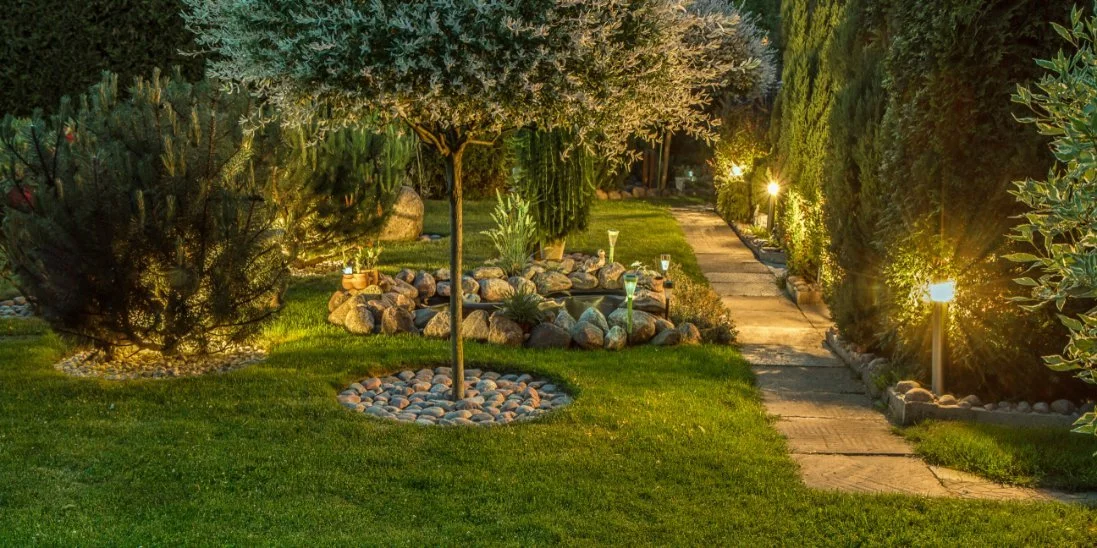
A backyard can feel completely different once the sun goes down. The garden beds soften into the background, pathways become more important, and a familiar patio can suddenly feel like a peaceful place to end a busy day. Thoughtful outdoor lighting helps families enjoy the spaces they already have for more hours without making the yard feel overly bright. The goal isn’t to illuminate every corner but to give the landscape enough light to feel welcoming and intentional. Some landscape design ideas shine after sunset and we’re discussing them below.
Start With the Places Your Family Uses Most
Before shopping for outdoor lights, think about how your household moves through the yard after dark. You may regularly walk from the driveway to a side entrance, take the dog into the backyard, or carry dinner from the kitchen to the patio. Those everyday routes deserve attention before purely decorative areas do. Lighting the spaces you actually use helps the whole yard work better for family life.
Walk around the property at dusk and notice where visibility disappears first. Pay attention to steps, gates, seating areas, and transitions between different surfaces. You don’t need a complicated lighting plan to spot the places where a little illumination would make evenings easier. This simple walkthrough also helps you avoid buying fixtures before you know where they belong.
Give Pathways a Gentle Glow
Path lighting can make a landscape feel polished while helping family members and guests navigate the property. The key is creating enough visibility without lining the walkway with lights so closely that it resembles an airport runway. Spacing fixtures thoughtfully creates a softer rhythm and allows nearby plants to remain part of the view. Warm, understated illumination often feels especially comfortable around residential landscapes.
You can also use pathway lights to guide people naturally toward the areas you want them to use. A softly illuminated route from the house to a patio makes the outdoor space feel more connected to the interior. The same idea works near garden gates or walkways leading toward a pool or detached structure. Lighting becomes part of the home’s organization because it quietly shows people where to go.
Make Patios Work After Dinner
For many busy families, the patio becomes most useful when the workday finally ends. Comfortable lighting can make it easier to enjoy a late meal, talk with friends, or sit outside after the children settle down. Instead of relying on one bright fixture, consider how several softer sources can support different activities. The space should feel inviting enough for conversation while still providing practical visibility.
Lighting can also define the patio as its own destination within the landscape. Fixtures near seating areas can create a sense of enclosure even when the patio opens directly onto the lawn. If you regularly entertain, think about where guests gather and which routes they use between the house and outdoor seating. A clear, comfortable layout reduces the need to rearrange lights every time people come over.
Use Solar Lighting Where It Makes Sense
Solar fixtures can offer families a convenient way to add illumination without running electrical wiring to every corner of the property. They work particularly well in locations that receive enough sunlight during the day to support the fixture’s charging needs. Product performance varies, so checking manufacturer specifications can help you match a fixture with the intended location. Shaded areas may require a different solution than sunny sections of the yard.
Larger properties need a little more planning than a small walkway or garden bed. When choosing solar lighting for large outdoor spaces, think about the purpose of each illuminated zone instead of trying to cover the entire property with identical fixtures. A long driveway may need a different approach from a patio, garden path, or decorative planting area. Breaking the property into manageable sections makes the project easier to plan and helps the finished landscape feel cohesive.
Keep the Lighting Plan Easy To Maintain
Outdoor design should make home life easier, not add another complicated job to an already packed week. Fixtures need occasional cleaning because dirt, leaves, pollen, and seasonal debris can reduce the amount of useful light they provide. Solar panels also need access to sunlight, so surrounding plants may require trimming as the landscape grows. A quick check every so often can help you catch small maintenance needs before they become frustrating.
When planning the landscape, make maintenance simple from the beginning with the following choices:
Keep fixtures accessible enough for routine cleaning.
Avoid placing solar panels where dense plants will quickly cover them.
Choose locations that don’t interfere with mowing or regular yard work.
Check outdoor fixtures periodically after storms or seasonal changes.
Reassess lighting as trees and shrubs mature.
Let Your Landscape Shift With the Seasons
Outdoor spaces change throughout the year, especially in Connecticut and New York, where seasonal shifts can dramatically alter the landscape. A fixture that perfectly highlights summer foliage may need a slight adjustment once leaves fall or plants go dormant. Snow can also reflect light differently and change how bright an area feels. Treating the lighting plan as flexible allows the property to look intentional in every season.
Small adjustments can keep the design working without turning seasonal maintenance into a major project. Reposition an adjustable fixture, clear vegetation from a solar panel, or reconsider which areas need illumination as family routines change. The landscape already evolves naturally, so the lighting can evolve with it. Flexibility makes the system easier to live with over time.
Create a Calmer End to the Day
Landscape design that truly shines after sunset makes a home feel more inviting and comforting. Pathways become easier to navigate, patios stay useful longer, and favorite landscape features remain visible after daylight fades. None of this requires turning the backyard into a brightly illuminated showpiece. A few intentional choices can create a space that feels organized, comfortable, and ready for evening life.
Start with the areas your family already uses and build outward only when the landscape calls for more. Choose fixtures according to their purpose, keep maintenance realistic, and allow some darkness to remain part of the design. The finished yard should support your routine rather than demand attention from it. When lighting works quietly in the background, the entire outdoor space can shine.