
Why All Terrain Cranes Are Essential for Modern Construction Sites
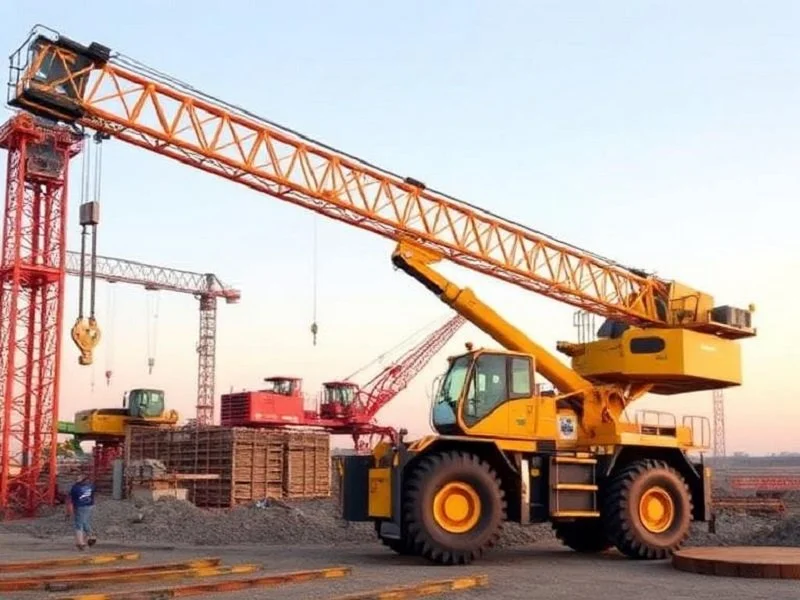
Have you ever wondered what makes a construction project run smoothly, even when the terrain looks impossible to navigate? Or perhaps you've asked yourself how massive steel beams get lifted into place on sites that seem barely accessible? The answer often lies in one remarkable piece of machinery: the all terrain crane.
These versatile workhorses have become the backbone of modern construction across Australia. From bustling city centres to remote mining sites, all terrain cranes are making the impossible possible. They combine the best features of various crane types into one powerful package, allowing construction teams to tackle challenges that would have been unthinkable just a few decades ago.
In this article, we'll explore exactly why all terrain cranes have become so vital to today's construction industry. You'll discover what sets them apart from other crane types, the incredible range of applications they're suited for, and how to choose the right one for your next project. Whether you're a project manager, a site supervisor, or simply curious about construction equipment, this guide will give you a clear understanding of why these machines are genuinely essential on modern construction sites.
What is an All Terrain Crane?
An all terrain crane is a mobile crane designed to operate on both public roads and rough, uneven ground. Think of it as the Swiss Army knife of the crane world. It combines the road-travelling capabilities of truck cranes with the off-road prowess of rough terrain cranes.
Key Features That Set All Terrain Cranes Apart
What makes these machines so special? First, they feature multiple axles—usually between two and nine—giving them exceptional stability and weight distribution. This design allows them to carry heavier loads while maintaining manoeuvrability.
They also come equipped with all-wheel steering and all-wheel drive systems. This means they can navigate tight spaces on construction sites and handle muddy, sandy, or rocky conditions without getting stuck. Plus, their adjustable suspension systems allow operators to level the crane on uneven ground quickly.
How Do All Terrain Cranes Differ from Mobile Cranes?
While all mobile cranes share some similarities, all terrain cranes stand out for their versatility. Standard truck-mounted cranes work brilliantly on paved surfaces but struggle off-road. Rough terrain cranes excel on challenging ground but can't legally travel on highways.
All terrain cranes bridge this gap perfectly. They can drive from one site to another on public roads, then roll straight onto unprepared ground and get to work. This dual capability saves significant time and eliminates the need for separate transport arrangements.
Why Are All Terrain Cranes So Popular on Construction Sites?
The popularity of these cranes isn't accidental. Construction professionals across Australia choose them for compelling practical reasons that directly impact project success.
Unmatched Versatility Across Job Sites
One crane, countless applications—that's the beauty of all terrain cranes. They perform equally well in urban environments with limited space and on sprawling rural sites. This flexibility means contractors don't need multiple crane types in their fleet.
Whether you're erecting structural steel, placing HVAC units on rooftops, or lifting prefabricated components, an all terrain crane can handle it. This adaptability makes them particularly valuable for companies working across diverse project types.
Superior Mobility on Challenging Ground Conditions
Australian construction sites aren't always conveniently flat and paved. Many projects involve uneven terrain, soft ground, or steep gradients. All terrain cranes thrive in these conditions.
Their powerful drive systems and specialised tyres grip surfaces that would defeat other crane types. Adjustable outriggers provide rock-solid stability even on slopes, ensuring safe lifting operations regardless of ground conditions.
Quick Setup and Reduced Downtime
Time is money on any construction site. All terrain cranes arrive ready to work with minimal setup requirements. Most can be fully operational within 15 to 30 minutes of arriving on site.
This quick deployment means more productive hours and faster project completion. When compared to crawler cranes that require significant assembly time, the efficiency gains become even more apparent.
What Are the Benefits of Using an All Terrain Crane?
Beyond versatility, these cranes deliver tangible benefits that justify their investment for construction companies of all sizes.
Cost-Effectiveness for Multi-Site Projects
For contractors managing multiple sites, all terrain cranes offer outstanding value. One crane can service several locations without needing expensive transport between jobs. This self-mobilisation capability significantly reduces logistics costs.
The reduced need for specialised transport trucks also means fewer permits, less coordination, and lower overall project expenses. For busy construction firms, these savings add up quickly over a year's worth of projects.
Enhanced Safety Features for Complex Lifts
Modern all terrain cranes come packed with safety technology. Load moment indicators prevent overloading, while anti-collision systems protect both the crane and surrounding structures. These features give operators confidence during complicated lifts.
Many models also include outrigger monitoring systems that alert operators to ground stability issues. This technology is particularly valuable on Australian sites where soil conditions can vary dramatically.
Impressive Lifting Capacities for Heavy Loads
Don't let their mobility fool you—these cranes pack serious lifting power. Modern all terrain cranes can handle loads ranging from 30 tonnes up to an incredible 1,200 tonnes for the largest models.
Telescopic booms extend to impressive heights, with some reaching over 100 metres. This combination of capacity and reach makes them suitable for high-rise construction and heavy industrial applications alike.
What Can All Terrain Cranes Be Used For?
The applications for all terrain cranes span nearly every sector of the construction industry. Their versatility makes them genuinely multi-purpose machines.
Commercial and Residential Construction
From apartment blocks to shopping centres, these cranes handle the heavy lifting that modern building projects demand. They're perfect for positioning structural elements, setting mechanical equipment, and installing facade panels.
On residential sites, they efficiently place roof trusses, modular bathroom pods, and prefabricated wall sections. Their compact footprint makes them especially useful on tight suburban building sites.
Infrastructure and Civil Engineering Projects
Bridge construction, road upgrades, and utility installation all benefit from all terrain crane capabilities. Their ability to work on unprepared ground makes them ideal for infrastructure projects in greenfield locations.
They're also brilliant for maintenance work on existing infrastructure, where access is often restricted and ground conditions are less than ideal.
Mining and Resource Industry Applications
Australia's mining sector relies heavily on all terrain cranes. These machines support equipment installation, maintenance activities, and construction of processing facilities across remote sites.
Their ability to travel independently to isolated locations reduces project costs significantly. When the nearest town might be hundreds of kilometres away, self-mobilisation becomes incredibly valuable.
Emergency Response and Disaster Recovery
When natural disasters strike, all terrain cranes are often among the first heavy equipment on scene. They clear debris, assist with rescue operations, and help rebuild damaged infrastructure.
Their ability to navigate damaged roads and unstable ground makes them essential for emergency response teams across Australia.
How Much Does It Cost to Hire an All Terrain Crane?
Understanding crane hire costs helps project managers budget accurately and choose the most cost-effective solution for their needs.
Factors That Influence Crane Hire Rates
Several variables affect hire prices. Crane capacity is the primary factor—larger cranes with greater lifting ability cost more. Hire duration also matters, with longer-term rentals typically offering better daily rates.
Location plays a role too. Remote sites may incur additional mobilisation fees. Operator requirements, insurance, and any specialised rigging equipment needed will also influence the final cost.
Hiring vs Purchasing: What Makes Sense for Your Project?
For occasional users, hiring makes clear financial sense. You avoid massive capital outlay, maintenance responsibilities, and storage costs. Hire companies also handle operator training and certification requirements.
However, companies with consistent, high-volume crane needs might find purchasing more economical over time. The decision depends on your specific usage patterns and financial situation.
How Do You Choose the Right All Terrain Crane for Your Project?
Selecting the appropriate crane requires careful consideration of several factors. Getting this decision right ensures safe, efficient operations.
Assessing Load Requirements and Reach
Start by determining your maximum lift weight and the height or distance required. Remember to factor in rigging equipment weight when calculating total load. Always choose a crane with capacity to spare—operating at maximum limits isn't wise practice.
Consider the number of lifts required too. If you're doing many lifts daily, efficiency features become more important than for occasional use.
Evaluating Site Conditions and Access
Examine your site thoroughly before selecting a crane. What's the ground condition like? Are there overhead obstacles? How much space is available for outrigger deployment?
Access routes matter as well. Measure any narrow passages or tight corners the crane must navigate to reach working positions.
Working with Experienced Crane Operators
Even the best crane is only as good as its operator. Insist on working with properly certified, experienced operators who understand both the equipment and your specific project requirements.
Good operators contribute significantly to project safety and efficiency. They can often suggest optimal crane positioning and lifting sequences that save time and reduce risk.
Common Challenges Solved by All Terrain Cranes
These machines regularly overcome obstacles that would stall projects using other equipment. Limited access? Their compact dimensions and steering capability handle tight spaces brilliantly. Variable ground conditions? No problem with their adjustable suspension and stabilisation systems.
Time pressure is another challenge they address effectively. Quick setup times and self-mobilisation mean projects stay on schedule even when crane requirements change unexpectedly.
The Future of All Terrain Cranes in Australian Construction
The future looks bright for all terrain cranes. Manufacturers continue developing cleaner, more efficient engines that meet tightening environmental standards. Electric and hybrid models are already entering the market.
Advanced telematics and remote monitoring capabilities are becoming standard features. These technologies improve maintenance scheduling, enhance safety oversight, and provide valuable operational data for project managers.
Making a Smart Choice for Your Next Project
All terrain cranes have earned their essential status on modern construction sites through proven performance, remarkable versatility, and genuine problem-solving capability. From remote mining operations to inner-city developments, they provide the lifting power and flexibility that today's projects demand.
When planning your next construction project, consider how an all terrain crane might streamline operations and reduce overall costs. Their ability to handle diverse conditions, quick setup times, and impressive lifting capacities make them smart choices for projects of all sizes. For businesses seeking reliable all terrain crane hire in Melbourne, these versatile machines offer an efficient solution for a wide range of construction and infrastructure projects.
So, whether you're managing a multi-storey commercial development or coordinating infrastructure upgrades across multiple sites, all terrain cranes deserve serious consideration. They're not just convenient—they're genuinely essential tools that help construction professionals deliver successful projects throughout Australia.