

A resource for those seeking information on organizing and transforming spaces.

Learn The Smart Way of How to Use a Washing Machine
Discover smarter ways to use a washing machine. Enhance your laundry routine with tips on loading, detergent usage, and machine care.
We partnered with a home improvement company for this post. The opinions in the post are honest. All reviews and opinions expressed in this post are based on our personal views. We are excited because we know you will love it.

How to Use a Washing Machine: Smarter Ways to Use Your Washing Machine - A Complete Guide
Using a washing machine wisely is crucial for ensuring guest satisfaction, as it impacts the cleanliness and freshness of their laundry. Proper techniques for how to use a washing machine can lead to better cleaning results and reduced energy consumption.
Switch to smarter ways by outsourcing to wash and fold laundry services, and they will maintain high service standards while being eco-friendly and cost-effective. Let's discover some of the automatic washing machine step-by-step guides.
How To Use a Washing Machine
The washing machine is generally classified into the top and front loads. Top-loaded possess an upper lid for loading clothes in and cleaning them, they are user-friendly, less costly and have a larger capacity. On the other hand, front-load machines tend to be more energy efficient, consume less water, and treat garments more gently.
The load capacity, energy efficiency, and how to operate a washing machine are what you should consider when choosing the machine that will serve your wash-and-fold needs best.
Read the Manual
You need to read the instruction manual to know how to use a washing machine and dryer and ensure it lasts a long time. Areas that require close attention include
Recommended load sizes: To avoid overfilling, which would affect cleaning efficiency,
Proper Detergent Usage: To reduce residual stains on clothes.
Maintenance Tips: Instruct you about frequent actions like filter cleaning or drum maintenance.
Loading the Washing Machine
Sort Laundry: Separate clothes by different colors, fabrics, and those that are dirty to prevent them from damage.
Use the Right Detergent: Use a detergent that is right for that specific load size and water hardness.
Don't Overfill
Don’t Overload: Fill it to around 75 percent, allowing enough room for garments to move easily.
Poor Cleaning Results: If there is too much laundry in the washing machine, it cannot spin freely and prevents water and detergents from circulating evenly and residues on clothes.
Potential Damage: Overloading makes the machine work harder, which can cause early damage, failure, or high maintenance costs.
Sort and Organize Properly
Sort By Color: Separate fabrics by color, like white and light colored, to keep them vibrant and bright.
Sort By Material Type: Delicate fabrics such as silk and lace should be washed separately. Heavy fabrics like towels or jeans can be run through a fast cycle,
Organize By Degree Of Soil: Stained or heavy soiled items must be washed separately as they can transfer dirt to other clothes.
Use the Fill Line as a Guide
Measure the washing machine’s fill line to prevent overloading. If this limit is not maintained, the clothes will be tightly packed, leading to ineffective washing and possible breakage. One should keep loads at or below this line to keep enough space for clothes’ movement. That's how to use a washing machine effectively.
Optimizing Washing Machine Performance
To know how to use a washing machine by optimizing its performance, here are some strategies:
Sort Laundry: It is important to sort clothes by colors, fabrics and soil levels before washing. This will enhance their cleaning properly without damaging others.
Select the Appropriate Cycle: Selecting a wash cycle according to the kind of fabric helps ensure thorough cleaning without damaging it.
Don’t Overload: When overloading your washing machine, clothes do not have enough space to move freely.
Use Cold Water: This will help save energy and keep colors bright by using cold water for most loads.
Regular Maintenance: Cleaning the machine’s drum, filters, and dispensers regularly enhances its effectiveness.
Prioritize Larger Items
Washing larger items such as bed linens and towels separately from smaller ones will help to enhance cleaning efficiency and improve machine performance. Washing them separately ensures an even distribution of water and soap, good agitation, and avoids overload that may strain the machine.
Regular Cleaning
Learning how to use a washing machine for regular cleaning is essential, keeping your clothes organized and wrinkle-free.
Wash the Drum: After washing, leave the door open so your drum can air out, then wipe it using a clean, dry cloth.
Clean the Detergent Dispenser: Use a small brush to remove any detergent or fabric softener residue and rinse thoroughly.
Clean the Filters: Remove the filters, rinse them under warm water, and use a brush to remove any trapped debris.
Conclusion
We have focused on the best tips to help someone understand how to use a washing machine, such as sorting them properly, never overloading them, and cleaning them regularly.
These rules can be observed using a fill line as a guide when loading and cleaning the dispensers and filters. These strategies will keep your laundry fresh and ensure guest satisfaction and reliable performance.

How Can Test Automation Tools Streamline Your Testing Process?
The rapidly evolving software development landscape has increased the demand for speed and reliability more than ever before. As projects grow in complexity, traditional manual testing becomes too slow, repetitive, and riddled with human error.
We partnered with a software company for this post. The opinions in the post are honest. All reviews and opinions expressed in this post are based on our personal views. We are excited because we know you will love it.

The rapidly evolving software development landscape has increased the demand for speed and reliability more than ever before. As projects grow in complexity, traditional manual testing becomes too slow, repetitive, and riddled with human error.
Test automation tools help perform such repetitive tasks, smoothly running large test cases. This not only helps teams detect issues earlier but also provides the impetus needed to ensure high-quality software delivery.
These tools automate the repetitive parts of the testing process, allowing large test cases to be executed efficiently and consistently. This not only speeds up the development process but also ensures higher quality software, helping teams deliver reliable products faster.
Key Features of Automation Tools

1. Efficiency Boost: Top test automation tools streamline the testing process by automating repetitive tasks, allowing faster and more consistent software testing.
2. Resource Optimization: Automation reduces the need for manual testing, freeing the team to focus on strategic tasks like exploratory testing, ultimately speeding up product delivery.
3. Consistency and Reliability: Automated tests eliminate human errors, providing consistent and reliable results, which are essential for early issue detection and maintaining software quality.
4. Tool Selection: Choosing the right automation tools involves ensuring compatibility with your current systems, scalability, and ease of maintenance, while adapting to evolving project needs.
5. Overcoming Challenges: Successfully implementing automation requires addressing challenges like test maintenance and real device testing, focusing on modular design and proper training to maximize ROI.
The Strategic Advantage of Test Automation
Optimizing Resources
Test automation tools are game-changers when it comes to resource management. By automating repetitive tasks, these tools can reduce manual testing efforts by an impressive 50-90%. This significant reduction allows your team to focus on more strategic tasks, such as:
Exploratory testing
User experience evaluation
Complex test scenario design
The time saved through automation translates directly into increased productivity and faster time-to-market for your products.
Consistency and Reliability
One of the most compelling benefits of automated testing is its unwavering consistency. Unlike human testers who may inadvertently introduce variations, automated tests perform exactly the same way every time they run. This consistency eliminates human errors and dramatically increases the reliability of test results.
This level of reliability ensures that your team can trust the test outcomes, making it easier to identify and address real issues quickly.
Selecting the Right Automation Tool
Choosing the right automation testing tools is crucial for maximizing the benefits of test automation. Let's explore the key factors to consider:
Framework Compatibility
Your chosen tool should integrate seamlessly with your existing technology stack and development processes. In fact, most teams prefer tools that work well with their current CI/CD(Continuous Integration/Continuous Delivery)pipelines. This compatibility ensures:
Smooth workflow integration
Reduced learning curve for your team
Improved overall efficiency
When evaluating tools, consider how well they align with your current frameworks and methodologies.
Scalability and Flexibility
As your projects grow and evolve, your automation tools need to keep pace. The global test automation market is projected to grow by 14.5% annually, highlighting the increasing demand for scalable solutions.
Look for tools that offer:
Support for multiple testing types (that is functional, performance, security)
Cross-browser and cross-platform testing capabilities
API testing support
Easy test script maintenance and updates
A flexible tool will adapt to your changing needs, providing long-term value for your organization.
Enhancing Test Coverage and Speed
Automation tools allow for parallel execution, where tests can run simultaneously across different environments. This significantly speeds up the process, covering more scenarios in less time.
Cross-browser and cross-platform testing becomes seamless with automation, as the same test scripts can be executed on various browsers and devices. This broadens the coverage while maintaining a quick execution pace.
Cross-browser testing ensures that a website or application works correctly on different web browsers, such as Chrome, Firefox, and Safari.
Cross-platform testing checks that it functions well across various operating systems (like Windows, macOS, Linux) and devices (like desktops, tablets, smartphones).
Regression testing is another area where automation shines. Automated tests ensure that new code changes do not disrupt existing functionality, allowing for fast and thorough testing every time a change is made.
By integrating with CI/CD pipelines, automated tests are triggered automatically with each code commit. This continuous testing approach ensures that all changes are rapidly tested, enhancing both speed and coverage without manual intervention.
Data-Driven Testing
Automated data-driven testing allows you to run thousands of test cases with varied data sets. This approach increases your test coverage, helping you to:
Identify edge cases and rare bugs
Validate system behavior under different scenarios
Ensure robust performance across a wide range of inputs
By leveraging data-driven testing, you significantly reduce the risk of overlooking critical issues.
Parallel and Continuous Testing
One of the most powerful features of modern automation testing tools is the ability to run tests in parallel. This capability can speed up your testing process by an impressive 60-80%.
Additionally, integrating automation into your CI/CD pipeline enables:
Continuous testing throughout the development cycle
Faster feedback loops for developers
Up to 30% faster delivery times
These improvements in speed and efficiency can give your team a significant competitive advantage.
Addressing Real-World Challenges
While test automation offers numerous benefits, it's essential to address some common challenges to ensure success.
Real Device Testing
In mobile app development, 60% of issues are discovered on real devices. This statistic underscores the importance of incorporating real device testing into your automation strategy.
Consider using automation testing tools that:
Support a wide range of real devices
Offer cloud-based device farms for broader coverage
Provide detailed performance metrics specific to different devices
By combining automated tests with real device testing, you'll catch more issues before they reach your users.
Maintenance and Debugging
Effective test maintenance is crucial for long-term success with automation. Well-designed test scripts can reduce maintenance efforts by up to 70%, saving your team valuable time and resources.
To streamline maintenance and debugging:
Implement modular test design
Use descriptive naming conventions
Leverage comprehensive logging features
Many modern automated testing tools offer built-in features to support these best practices, making it easier to keep your test suite efficient and effective.
Key Considerations for Implementation
Cost and ROI(Return on Investment)
While implementing test automation tools requires an initial investment, the long-term benefits often outweigh the costs. Consider the following when evaluating the ROI(Return on investment) of automation:
Reduced manual testing time
Faster release cycles
Improved product quality
Increased customer satisfaction
To maximize your ROI, carefully assess your team's needs and choose a tool that aligns with your long-term goals.
Comparison of Popular Test Automation Tools
To help you make an informed decision, here's a comparison of some popular test automation tools:
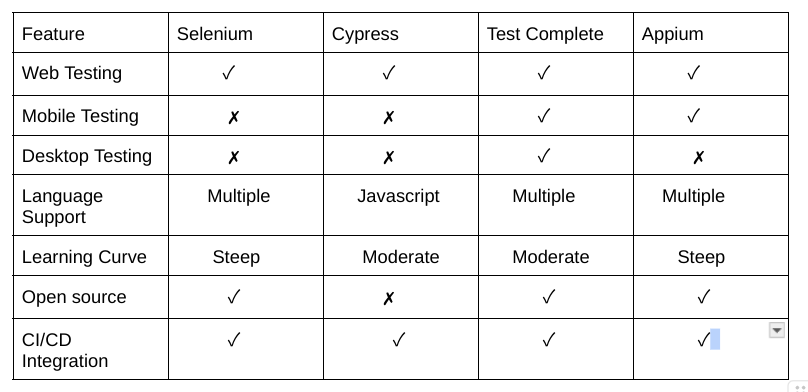
This comparison can serve as a starting point for your evaluation process. Remember to consider your specific needs and constraints when choosing a tool.
Conclusion
Test automation tools have the power to revolutionize your testing process, offering significant improvements in efficiency, reliability, and coverage. By carefully selecting and implementing the right tools, you can streamline your testing efforts and deliver higher-quality software faster than ever before.
As you embark on your automation journey, remember that success lies not just in the tools themselves, but in how effectively you integrate them into your development process. Invest in training, stay adaptable, and continuously refine your approach to maximize the benefits of test automation.
FAQs
1. What is automation testing?
Automation testing is a process whereby a software application is tested using specialized software tools, which execute pre-scripted tests on the application. The actual results are compared to the predicted outcomes in order to come up with improved efficiency and reliability during a test.
2. When should I consider implementing test automation?
Consider using test automation when you have stable features that need to be tested frequently, or on repetitive tasks which are time-consuming to be done manually, or if you want to run tests on multiple platforms or configurations consistently.
3. What kinds of testing can be automated?
You can automate a number of tests, like unit, integration, functional, regression, performance, and API testing. But some of the tests, such as exploratory or usability tests, are going to be best done manually.
4. How about selecting the right automation testing tools for my project?
Select automation test tools according to the requirements of your project, the existing technology stack, team skills, budget, and long-term goals. Keep in mind the supported platforms and programming languages; their ease of use; and if they integrate well into your Continuous Integration/Continuous Deployment pipeline.
5. What are the issues with implementing test automation?
Typical challenges are the high costs in setting up at first, the maintenance of test scripts, dynamism in managing elements of an application, test data handling, and assigning and providing the team with the right skillet in using the tools for automation.

10 Tips to Market Your Short-Term Rental Like a Pro
In recent years, the short-term rental industry has experienced exponential growth, driven by platforms that connect travelers seeking accommodation with homeowners looking to rent out their properties. If you are one of those owners seeking to maximize your short-term rental's potential and stand out from the competition, marketing plays a crucial role. In this post, we will share ten tips to help you market your short-term rental like a pro.
We partnered with a real estate company for this post. The opinions in the post are honest. All reviews and opinions expressed in this post are based on our personal views. We are excited because we know you will love it.

In recent years, the short-term rental industry has experienced exponential growth, driven by platforms that connect travelers seeking accommodation with homeowners looking to rent out their properties. If you are one of those owners seeking to maximize your short-term rental's potential and stand out from the competition, marketing plays a crucial role. In this post, we will share ten tips to help you market your short-term rental like a pro.
Know Your Target Audience
Understanding your target audience is the foundation of any successful marketing strategy. To get the answer to the question “how to market your short term rental,” you first need to identify what type of travelers are most likely to be interested in your property. Are you targeting families, solo travelers, or business professionals? By understanding their needs and preferences, you'll be able to tailor your marketing efforts toward attracting the right guests.
Optimize Your Property Listing
Your property listing is often a traveler's first impression of your short-term rental. Ensure it stands out from the rest with high-quality photos that showcase your property's best features. Craft a compelling description using language that appeals to your target audience. Highlight unique amenities or nearby attractions that set your property apart.
Leverage Social Media
Social media platforms provide an excellent opportunity to reach a wide audience and engage with potential guests on a more personal level. Create accounts on platforms such as Instagram and Facebook specifically to promote your short-term rental business. Share visually appealing photos of the property and local attractions while crafting engaging captions that resonate with potential guests.
Build an Email List
Email marketing allows you to nurture relationships with past guests while also targeting potential customers who have shown interest in your property before but haven't booked yet. Offer incentives such as exclusive discounts or local guidebooks in exchange for visitors' email addresses on your website.
Collaborate with Local Businesses
Forge partnerships with local businesses in your area; these collaborations can benefit both parties involved by cross-promoting services. Promote these partnerships by mentioning them in your marketing materials or offering coupons or discounts for guests to use at these establishments. This strategy not only provides added value to your guests but also extends your reach to their online followers and customers.
Utilize Online Review Platforms
Today's travelers heavily rely on reviews and ratings when making booking decisions. Encourage happy guests to leave reviews on online platforms such as TripAdvisor, Google Reviews, and Airbnb. Positive reviews can significantly impact potential guests' perceptions of your property, leading to increased bookings.
Showcase Your Guest Experience
When it comes to marketing your short-term rental, showcasing the guest experience is key. Show photos of happy guests enjoying their stay or leverage testimonials from previous visitors that highlight your property's unique aspects and excellent service.
Maintain a Responsive Website
A visually appealing and user-friendly website is crucial in promoting your short-term rental business. Provide clear information about amenities, pricing options, and availability in an easy-to-navigate layout. Also, make sure the website displays well on all devices, including smartphones and tablets, as more travelers are booking accommodation via mobile devices.
Advanced Booking Strategies
Offering advanced booking incentives encourages guests to book well in advance. Offer early-bird discounts or limited-time promotions for reservations made several months ahead. These strategies create a sense of urgency, motivating potential travelers not to miss out on discounted rates while helping you secure bookings earlier.
Monitor and Optimize Performance Metrics
Track key performance metrics such as occupancy rate, direct bookings, and revenue per available room. Monitor how different marketing campaigns perform over time. Use Google Analytics or other analytics tools to assess website traffic sources, pageviews, bounce rate, and customer behavior throughout the site. This way, you can identify which strategies are working effectively and make adjustments accordingly to maximize results.
Conclusion
By implementing these tips, you can elevate your short-term rental marketing efforts, increasing visibility, attracting the right target audience, and ultimately boosting your bookings. View marketing as an investment in maximizing returns for your property. Stand out from competitors and watch your guest numbers grow. Happy hosting!

Maximizing Storage: Innovative Kitchen Cabinet Solutions for Small Spaces
In today's world, where urban living often means smaller homes, maximizing kitchen storage has become essential. The kitchen is the heart of the home, but when space is limited, it can quickly feel cluttered and chaotic. However, with the right strategies and innovative solutions, even the smallest kitchens can be transformed into functional and organized spaces. This article explores some creative ideas to maximize storage in your kitchen, making the most of every inch of available space.

In today's world, where urban living often means smaller homes, maximizing kitchen storage has become essential. The kitchen is the heart of the home, but when space is limited, it can quickly feel cluttered and chaotic. However, with the right strategies and innovative solutions, even the smallest kitchens can be transformed into functional and organized spaces. This article explores some creative ideas to maximize storage in your kitchen, making the most of every inch of available space.
1. Pull-Out Cabinets for Enhanced Accessibility
One of the most effective ways to maximize storage in a small kitchen is to invest in pull-out cabinets. These cabinets slide out like drawers, allowing you to see and access everything stored inside easily. Unlike traditional cabinets, where items in the back are often forgotten, pull-out cabinets ensure that all your kitchen essentials are within reach. They can be customized to include shelves, baskets, or even specialized racks for spices, pots, and pans.
2. Vertical Storage: Utilizing Every Inch of Height
When floor space is limited, it’s crucial to think vertically. Tall cabinets that extend up to the ceiling can provide valuable storage for items that are not used daily. Consider installing cabinets with multiple shelves inside, allowing you to store everything from dry goods to appliances. For those hard-to-reach upper cabinets, a small step ladder can be stored neatly away in a nearby nook.
Another vertical storage solution is the use of pegboards or magnetic strips on walls. These can hold pots, pans, knives, and other frequently used items, freeing up valuable drawer and counter space.
3. Corner Cabinets: Making the Most of Every Nook
Corners in kitchens often become dead space, but with the right solutions, they can be transformed into useful storage areas. Lazy Susans or corner pull-out trays are excellent options for corner cabinets, allowing you to store and access items without having to dig through a cluttered corner.
Another option is to install diagonal cabinets that make full use of the corner space. These cabinets can be used to store larger items like mixing bowls, slow cookers, or even small appliances that would otherwise take up counter space.
4. Under-Cabinet Storage: Hidden Gems
The space under your cabinets is often underutilized, but it offers excellent storage potential. Under-cabinet pull-out drawers can be installed to hold items like cutting boards, baking sheets, or even small jars of spices. This storage solution is particularly useful for keeping your countertops clear while still having easy access to frequently used items.
You can also install hooks or magnetic strips under the cabinets to hang utensils, mugs, or kitchen tools. This not only saves space but also keeps your kitchen organized and visually appealing.
5. Drawer Dividers: Organized and Efficient
Drawers are a common storage solution in kitchens, but they can quickly become cluttered and disorganized. By using drawer dividers, you can maximize the efficiency of your drawer space. Dividers can be customized to fit your needs, whether you want to organize utensils, spices, or even small gadgets.
Consider using deep drawers with vertical dividers for items like baking sheets, cutting boards, or lids. This prevents them from stacking on top of each other and makes them easier to access.
6. Rolling Cabinets: Flexibility and Functionality
For those with extremely limited kitchen space, rolling cabinets offer flexibility and additional storage. These portable cabinets can be moved around as needed, providing extra counter space when preparing meals or storing items that don't fit in your regular cabinets.
Rolling cabinets can be used as an island, a bar cart, or even a small pantry. When not in use, they can be tucked away in a corner or even moved to another room, freeing up valuable kitchen space.
7. Open Shelving: Light and Airy Storage
While traditional cabinets offer closed storage, open shelving can create an airy and spacious feel in a small kitchen. Open shelves can be used to store frequently used items, such as dishes, glassware, or pantry staples, keeping them within easy reach.
To maximize the storage potential of open shelves, use baskets or bins to organize smaller items. This keeps the shelves looking tidy and prevents clutter from building up.
8. Customized Solutions: Tailoring Cabinets to Your Needs
One of the best ways to maximize storage in a small kitchen is to invest in customized cabinets. Tailored to your specific needs and space, these cabinets can include built-in features such as pull-out spice racks, hidden trash bins, or even a fold-out ironing board.
Custom cabinets can also be designed to fit awkward spaces, such as under the sink or around appliances, ensuring that no space is wasted. While custom cabinets may be more expensive than standard options, the increased functionality and storage potential can be well worth the investment.
9. Multi-Functional Furniture: Dual-Purpose Solutions
In a small kitchen, every piece of furniture should serve multiple purposes. For example, a kitchen island with built-in cabinets or drawers can provide additional storage while also serving as a prep space or dining area.
Another idea is to use a bench with storage underneath as seating for a small dining table. This not only provides a place to sit but also offers hidden storage for items like table linens, small appliances, or pantry goods.
10. A Fresh Look Without a Complete Overhaul
If you're looking to maximize storage while also updating the look of your kitchen, you might consider how to update old kitchen cabinets without replacing them. Simple changes like adding pull-out drawers, installing new hardware, or repainting cabinets can refresh the space while improving functionality. This approach allows you to enhance your storage solutions without the cost and effort of a complete kitchen renovation.
Conclusion
Maximizing storage in a small kitchen requires creativity and thoughtful planning. By incorporating innovative solutions like pull-out cabinets, vertical storage, and customized features, you can make the most of every inch of available space. Whether you're working with a small apartment kitchen or simply looking to declutter, these ideas can help you create a more functional and organized kitchen that suits your lifestyle. Remember, the key is to think outside the box and use every nook and cranny to your advantage.