

A resource for those seeking information on organizing and transforming spaces.

The Dreaded Attic
Attics can be a nightmare. Often things have been stored in your attic for over 30 years.

Attics can be a nightmare. Often things have been stored in your attic for over 30 years.
Boxes untouched and filled with multi-generational items. Attics serve as a catch all, a great example of what is “out of sight, out of mind.” We have experienced many instances when a house is listed on the market we get the phone call that it is finally time to get in the attic and bring down the items to sort, review, donate or sell.
Here are some tips for properly organizing your attic:
Items stored in the attic should not be temperature sensitive. For example, photographs, paintings, and musical instruments should not be exposed to extreme temperatures.
Your keepsakes such as college mementos, awards and trophies should be kept in clear plastic bins. Label the outside what the bin contains without writing directly on the bin. The same goes for children’s keepsake clothing and toys. Often our clients ask us about turning t-shirts into quilts. Here is a link should you be interested in a t-shirt quilt.
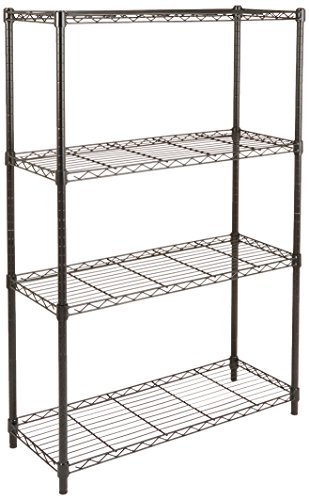
Try to get as much off the floor as possible. Inexpensive vertical shelving can be helpful. This way, you will be able to easily find what you are looking for and not rummage around the attic floor.
Holiday décor should also be stored in clear plastic bins. Plus plastic bags for oversized awkward items. Many households have large quantities of holiday items and gift wrap. Maybe store it in a separate area of the attic for ease of finding it when necessary.
Attics tend to be a “make it go away “ destination for numerous items such as old electronics, pet carriers, unused rugs, dated financial paperwork and other uncategorized items. Sometimes there are even boxes from previous moves which were never opened. Often we keep things with the intention that maybe someday they will come in handy. If you haven’t used something in many years it may be time to donate inexpensive, outdated and unused items.
Attics are a place where furniture can be stored away and forgotten. In fact, you may even want to bring it down but don’t want to hurt yourself (how did it fit up here in the first place?) If you think there is value to a piece of furniture there are people who can come appraise it for you. Certainly items can be repaired and sold, or donated to people who may have use for them.
However, if the attic is making you feel overwhelmed and you need help, feel free to contact us.

Guest Post - Tips for Cheap and Eco-Friendly Home Renovation
Tips for Cheap and Eco-Friendly Home Renovation
While in an ideal scenario you’d probably want to move to a bigger house, the economy is giving your two choices – remodelling and extending. So, you’ve set down the road of renovating your home to make it more interesting but also to better accommodate your current lifestyle and needs. Even so, while your and your family’s health should be your primary concern, staying on top of your budget is always welcome. Take note of these environmentally-friendly home renovation tips that won’t force you to take out a second mortgage.
Buy reclaimed materials
Reclaimed wood is not only eco-friendly, but also very appealing and increasingly popular in upscale renovation circles. It can be used with great success for countertops, flooring, even walls. It’s not a rare case to see it around the kitchen hood as well. Just think about the time, energy, and money you’d need to produce a similar product from scratch.
Choose locally sourced materials

Buying eco-friendly product is great, but if it has to be shipped from across the county, its greenness dwindles away. As a great alternative to buying reclaimed, purchase locally-sourced materials that require far less energy to get to your door. In addition, local professionals possess a vast knowledge of nearby communities, types of homes and even the local climate, all of which can be useful for your project.
Instead of demolishing – deconstruct
Before you go full sledgehammer and start tearing down walls and knocking down entire rooms, walk around your home with a notepad and see what can be salvaged and reused before it goes down. Not only is this an eco-friendly approach, but it saves money in the end. Although ‘if it ain’t broke, don’t fix it’ rule doesn’t always apply here, there’ll likely be a ton of material you can reuse, such as light fixtures, flooring, tile, bricks, cabinets, and moulding.
Insulate on the outside
For the façade insulation, choose a quality product such as expanded polystyrene (EPS) which is relatively inexpensive yet durable, lightweight, non-toxic and 100% recyclable. On top of it, it has fantastic thermal properties, so by applying only 100mm of the EPS to a solid wall takes down the u-value to 0.3 W/m2 or better. If you want to lower the cost even more, instead of purchasing yours, you can look into some of mobile aluminium scaffolding rental companies and rent a product that suits your project.
Upgrade to eco-friendly windows
Draughty windows are the plague of eco-friendly homes. If you don’t take the problem seriously, before you know it, your electricity bills on heating and cooling will definitely remind you that something isn’t right. While cellular PVC is a popular energy-efficient window material, it’s produced in a process that releases toxins into the atmosphere. Consider a few other green solutions such as a double and triple pane glass, sustainably-harvested wooden frames, and fibreglass frames made from sand, which is virtually an inexhaustible resource.
Use low-VOC paints

The favourable smell of a freshly-painted room actually comes from volatile organic compounds (VOCs), chemicals that evaporate from painted surfaces at ordinary room temperature. Their presence in interior paints comes from petroleum-based solvents used in their production. Instead of these solvents, low-VOC paints use water, and produce no harmful emissions once applied to the walls.
Increase natural light with skylights
Reduce the time you use lamps during the day by adding skylights and illuminating your homes’ interior naturally. While installing them in every room isn’t very cost-effective, place them strategically in the rooms you most commonly use during the day, such as the living room and the dining room/kitchen. The scaffold you hired for the façade insulation can be of great help for this project as well. Remember to fit your skylights with automated blinds to block the sunlight when needed.
Renovating your home doesn’t have to be expensive or complicated. And if you choose to take your project a step further and renovate your home in an eco-friendly manner, you won’t only be helping the environment, but also giving back to your community, while saving some money in the process.

Lucas Bergman is a real estate agent and renewable energy consultant with many hobbies and passions, but above all, he enjoys the most spending time with his wife – Mara. He also likes Lord of the Rings. He, actually, very much likes Lord of the Rings. He is a regular contributor at smoothdecorator.com.

Guest Post - 6 Effective Ways to Organize and Prepare for a Home Renovation
6 Effective Ways to Organize and Prepare for a Home Renovation
6 Effective Ways to Organize and Prepare for a Home Renovation
On paper, a home renovation seems like a pretty simple undertaking. You are aware of everything that needs to be done, know your home like the palm of your hand, and have a pretty decent timetable in mind, right? It is only when you roll up your sleeves and start the actual work that you see how terribly wrong you were about all three of these things. How can you, then, solve this problem, and prevent the next renovation from, once again, disrupting your family life?
The importance of good preparation
One of the main reasons why so many renovations break the budget or simply drag out way longer than you intended is because we often fail to pay attention to certain things such as permits, insurance, lack of available materials, and the sheer fact that the design takes some time. Each of them can spawn new problems and delays. So, if you want to have a seamless remodel, you better put some effort into preparation. Here are a couple of tips that will help you.
Make a rock-solid budget

The point of a good budget is to give you a clear insight into the necessary costs and prevent the excessive spending. The items this budget should cover are:
Available funds
The condition of your home
Size of the renovation area
Value of the required labor and materials
List of priorities
If you can, put all this in the form of a detailed spreadsheet for the sake of transparency, and include the column where you’ll be able to track the actual costs against the estimated ones. Also, don’t forget to put aside money for unforeseen expenses. Things like window coverings, light fixtures, and other small items will always escape your mind. Once you’re done, start the acquisitions as soon as possible.
Think of the schedule in advance
Now that you have your budget in place, you’ll need to make a detailed schedule that will be based around the renovations you listed as priorities but leave enough room for optional works if the remaining funds allow. It is very important to include contractors in this planning, see what you can do yourself, and leave room for unexpected delays. Also, do your best to schedule most of the works while your kids are at school so they have enough breathing room while they’re home.
Prepare the necessary paperwork in advance
This applies both to you and the contractors. As for the contractors, they will need to provide you with their license and liability insurance that will cover the workers’ compensation coverage in case of an accident. On the other hand, the contractors will find it much easier working for you if you have all the necessary permits, conduct a professional building insurance valuation and, in turn, pay the appropriate insurance premiums.
Create a work contract
This is the best way to have a good night’s sleep once things finally kick into motion. A work contract should cover the deadlines, scope of the projects, payment schedules, payment amounts, and, generally speaking, provide the sense of assurance both to you and the contractors. Therefore, don’t be surprised if you are asked to include some terms like preventing the children from accessing the site while the works are in progress. These regulations are in the best interest of your family.

Declutter your home
This is the crown jewel of all preparations, so do your best to pack as much of your belongings as you can into sealed and marked boxes and move them out of the way. Also, it is a good idea to remove mirrors and pictures from the neighboring walls, move the plants outside so they don’t end up damaged, and leave enough swing space for workers. While you are doing this, see that your family's routines are not impeded. Create the layout that will suit their daily workflow.
Have an honest talk with your children
Some kids find renovation works fascinating and love the change of pace in their lives. Others don’t handle the changes so well. Your job will be to sit with your family, present them with the changes that will temporarily affect their lives, and tell them what they can expect. If your kids are having difficulties with coming to terms with this, try showing them how your home will look after remodeling and include them in the decision-making process to make them feel more important.
Here you go, six important steps that will help your family handle the renovation in a much more seamless way. You will have to put a lot of effort into research and have a couple of long talks with the contractors, but all this hard work will eventually pay off. Remodeling rarely goes without troubles, but at least give yourself the privilege of choosing how and when you are going to address them.
About the author: Mike Johnston is a home improvement blogger, DIY enthusiast and sustainability buff from Sydney. He is a regular writer at Smooth Decorator and contributor on several interior design, real estate and eco blogs, always on the lookout for new ideas and the latest trends in these fields.
Say Goodbye to the Junk Drawer
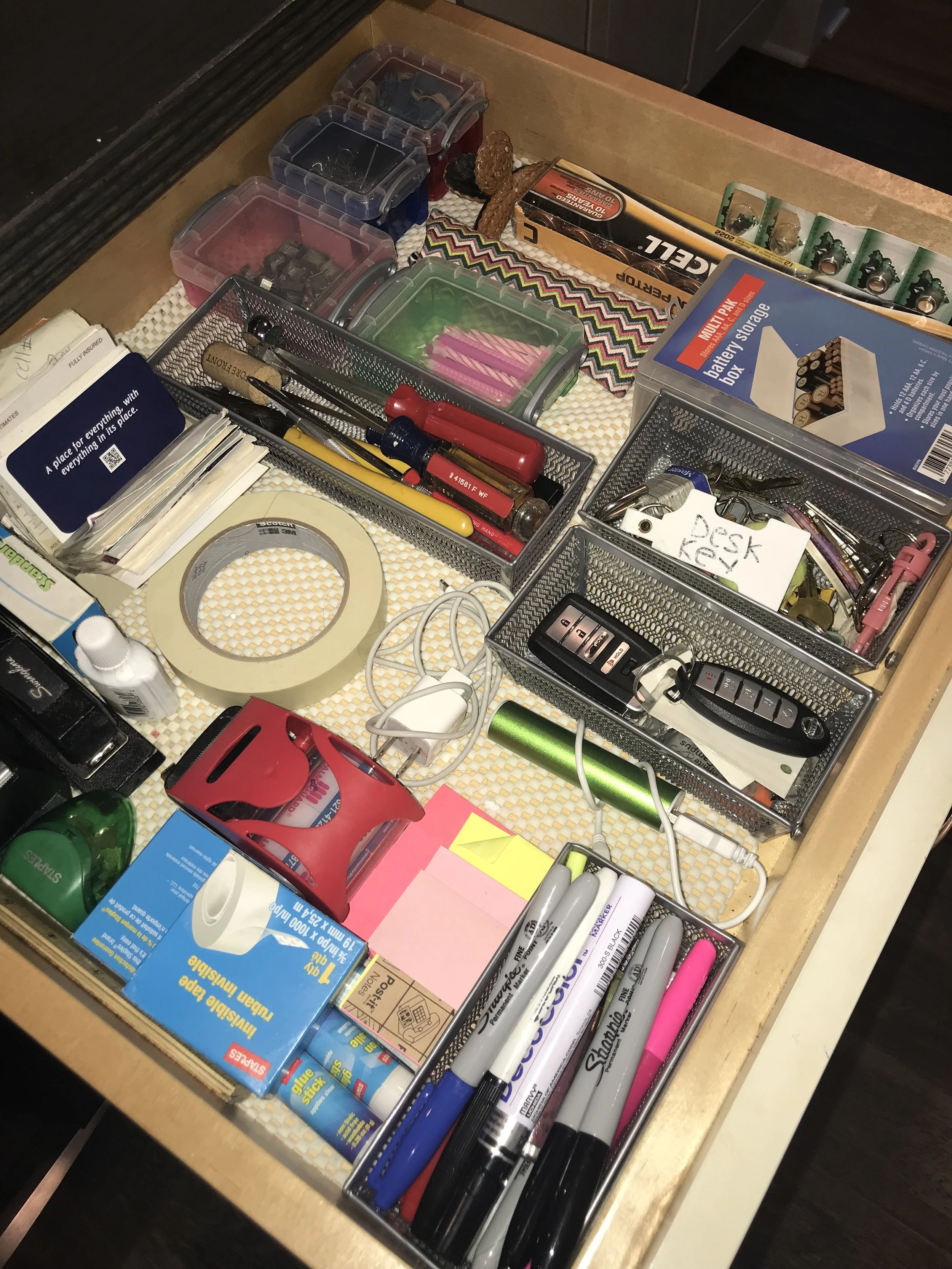
You need to replace 3 AAA batteries. You slowly open your “junk” drawer hoping everything does not fall out. Filled with pens, pencils, rubber bands, tape, batteries, birthday candles, business cards, buttons, take out menus, and extra keys to name a few, you rummage around pushing and pulling the items to hopefully find the batteries. You can’t find them and frustrated you shut the drawer. You are now on your way to the nearest convenience store to buy more AAA’s. You promise yourself that one day soon you will organize the drawer. Sound familiar?
You need to replace 3 AAA batteries. You slowly open your “junk” drawer hoping everything does not fall out. Filled with pens, pencils, rubber bands, tape, batteries, birthday candles, business cards, buttons, take out menus, and extra keys to name a few, you rummage around pushing and pulling the items to hopefully find the batteries. You can’t find them and frustrated you shut the drawer. You are now on your way to the nearest convenience store to buy more AAA’s. You promise yourself that one day soon you will organize the drawer. Sound familiar?
All homes need a drawer to put odds, ends and tools that do not quite have a home anywhere else based on how often we use them. Usually this type of drawer in found in the kitchen or office. But is this really junk? These items are useful and necessary. At House to Home Organizing we prefer calling it a utility drawer where you can easily find your daily necessities.
Here are some tips to organize and de-clutter these drawers:

Take everything out. Wipe drawer clean. Let go of things which have been never used and are easy to get again. For example, the soy packets from the Chinese restaurant that have been sitting there for 6 months. Recycle old and unused business cards and take out menus. (Most take out menus are online these days) Go through spare keys and make sure you label what door or lock they go to. Recycle the questionable keys. Do all the pens work? Do the pencils have erasers.
Sort and group like items. All rubber bands together, paper clips together, pens, pencils, tape, batteries, keys, birthday candles, etc. Make piles so you can see quantity. Keep a reasonable amount of each item. For example, if you have 10 rolls of tape maybe 8 can live in a backup area in your home. Quantity will determine the size of the containers you purchase.
Measure the width and height of the drawer. Decide what type of systems you will use to divide the drawer. Need ideas? Look online. You can buy small plastic baskets, mesh trays, wood organizers, clear Lucite trays, the options are endless.
Here are a few examples:
Once you have purchased the storage systems the fun begins! Arrange the items in their new containers. Now, when you open the drawer you can easily find what you are looking for. No more rummaging around and being frustrated!
Maintain your organization. Go through the drawer weekly. Up keep is crucial to prevent clutter from returning. Also, if there are any items in the utility drawer that you don’t use frequently it may be time to move them to a remote location.

