

A resource for those seeking information on organizing and transforming spaces.

Interview - STYLE ADORN
At House to Home Organizing a large percentage of our clientele are people who are moving. Moving can be stressful and before the move comes another potential stressor, putting the house on the market. We spoke with Tracy Marraccini & Kelly Lapadula of STYLE ADORN about how they can help during the home sale process.
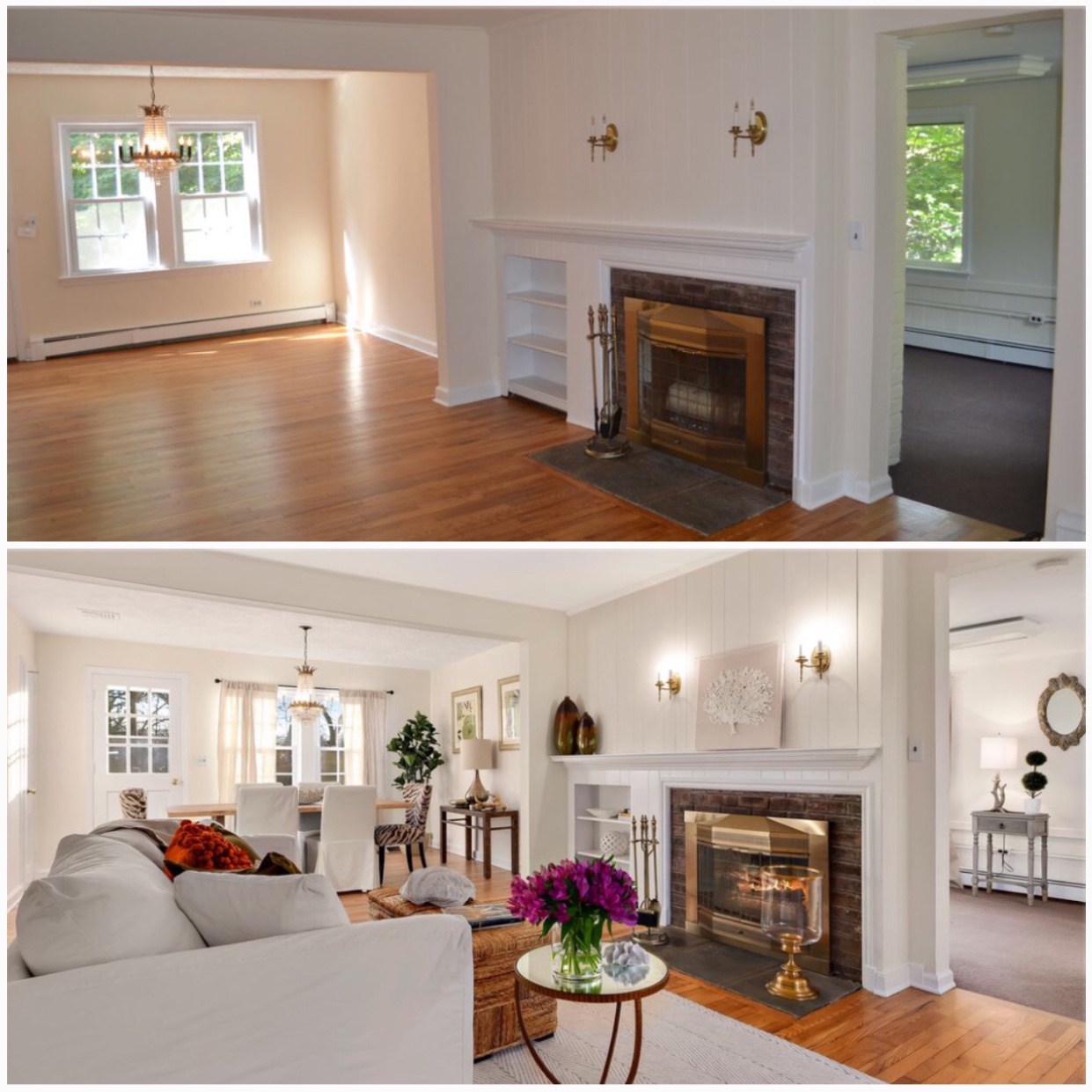
At House to Home Organizing a large percentage of our clientele are people who are moving. Moving can be stressful and before the move comes another potential stressor, putting the house on the market. We spoke with Tracy Marraccini & Kelly Lapadula of STYLE ADORN about how they can help during the home sale process.
For the busy person, what is STYLE ADORN?
In its essence, STYLE ADORN is a home staging/styling company dedicated to “adorning” or embellishing ones’ home in order to gain a competitive marketing edge in the home selling arena.
We believe that every home has a story to tell, a unique spirit within itself. Our customized design approach takes into account the special nuances of each home, as we strive to create inspiring, welcoming spaces.
In guiding sellers through the stressful process of preparing their home, we often share our philosophy which is “As you evolve, your home should too.” We have found that this idea gives home owners “permission” to let go and prepare for change, as they transition from one home to the next.
What is your origin story, how did you get started?

We met a few years ago at the start of both of our real estate careers. We had an instant connection as we both shared a passion for all of the aesthetics of home sales. As we each started to develop our individual careers as agents, we became increasing aware of the impact of how each home was presented. Separately, we were both getting involved with the staging process and were each becoming a resource for our fellow agents, helping them prepare their listings to hit the market.
While we continued to support each other’s real estate careers, our conversations soon became about how we could collectively fill the need to “showcase” homes to promote quicker sales. The timing felt right too, with both of us seeking opportunities to express our art and design backgrounds. We instinctively knew that our styles complemented on another, and we soon realized that our goals and sensitivities did as well. From these ideas, STYLE ADORN came into full bloom!
Why is staging a home important?

Today’s buyers are savvy and particular, making home staging more relevant than ever. When a buyer walks into a home, they are seeking an emotional connection. We are able to address the psychological component of home buying by creating a lifestyle element people can envision themselves “stepping into” and enjoying. In conjunction with this is idea, is the fact that today’s search engines are a driving force in real estate sales. As this is the case, we are very focused on how our staged homes are presented and marketed on-line. While conducting their on-line searches, buyers are making quick decisions as to which properties they will consider, further emphasizing the need to capture their attention.
For these reasons, home staging has become a critical component in promoting the sale of ones’ home.
How involved is the home owner in the process?
With regards to homeowner involvement, it really depends upon the particular situation. If a home is unoccupied, we generally go in without any restraints, and are able to create visually stimulating spaces.
When the homeowners are living in their home, we are sensitive to the fact that it can be intrusive to come in and rework their personal space. Most people love their home, value their belongings, and are essentially trusting us with what is likely their largest asset.
We believe that what sets us apart from our competition is that we are flexible and sensitive to each homeowners needs as they prepare to sell their home. With this in mind, we often will incorporate a homeowners valued pieces into our design plan. Allowing them to have input ultimately creates a comfort level with our clients, as well as a space that truly reflects the inherent features of what makes a home a “home!”
What have been some of your favorite projects?

We have been very fortunate in that we have had the opportunity to work in a variety of different style homes, all with unique challenges. For example, one home was new construction with an unconventional layout. Buyers were confused as to how to utilize the spaces, so we were tasked with helping to define the rooms by staging them. Once staged, that home went into contract within days.
Another project involved a mid-century home that hadn’t been updated at all. We were able to incorporate some of the homeowner’s pieces with our modern pieces to create a cool vibe.
But probably our favorite project was one where the homeowners were extremely cooperative and very accommodating, allowing for maximum creative freedom. They were open to all of our ideas and suggestions regarding new paint color and replacement light fixtures, which yielded a dramatic transformation.
Interview - Isabelle Dervaux, Family Photo Curator
If a photo is worth a thousand words what happens when you have thousands of photos? Most if not all of our clients ask us what to do with their photos. First, we want to get them all together and store them safely (not in a hot attic or wet garage) and then we can decide what “action” applies to the photos. For some simply keeping them safe is the next and final step but for some other ideas we spoke with Photo Organizer Isabelle Dervaux.

Photo Credit: Tamara Gillon
If a photo is worth a thousand words what happens when you have thousands of photos? Most if not all of our clients ask us what to do with their photos. First, we want to get them all together and store them safely (not in a hot attic or wet garage) and then we can decide what “action” applies to the photos. For some simply keeping them safe is the next and final step but for some other ideas we spoke with Photo Organizer Isabelle Dervaux.
What do you do for your clients?
I help families make sense of the tens of thousands of photos they accumulate over time and create systems that keep them organized. We now take more than 3–5,000 photos per year. Those photos pile up, and given enough time can cause a certain amount of what I call digital anxiety. So you could say I also relieve them of that anxiety while I help them make meaningful projects from the pictures they love.
How did you get started?
It actually started as I began organizing my own family photos when we moved from San Francisco to New York. It was difficult at first to find all of those pictures—scattered among boxes of print photos and digital photos on hard drives, old laptops, and even thumb drives—and once all the photos were in a single location, to not get overwhelmed by hundreds of scans or entire collections that had been duplicated by accident! But there were also moments of joy, like discovering the digital photos of a weekend camping when the kids were young that I thought were lost and now miraculously appeared.
I developed my own methods to get through all the road-blocks and when finished with several projects, felt a real sense of accomplishment as well as a weight lifted from my shoulders. I realized other people must be facing the same issues with their own family photos that I had faced and started working with others to help them organize and find joy in their own photo collections.
If someone is interested, what is the process?

First, we schedule a free 30-minute phone consultation. We have a conversation about what’s important: do they want to organize their digital collection to make photos easier to find? Are they looking to design family albums for their young children? Are they concerned about boxes of old family pictures gathering dust? Once we’ve determined the challenges they’re facing, we set priorities and goals and I recommend a strategy that suits their needs.
I like working side-by-side with my clients—I often work at their homes, so we can share a more detailed view of the family, who the relatives are and what events are most important. We work in manageable chunks, usually once a week over the course of a month, but occasionally for three or more months if we’re dealing with a larger print collection or bigger project.
When tackling a digital photo collection, we start by tracking down every device and storage system the pictures may be found on. Once we’ve gathered and moved the photos to one place, we find a strategy that best suits the client and start organizing and curating their collection with a concrete step-by-step action plan. I teach my clients just enough tech shortcuts and insights to give them the confidence and tools they need to continue organizing their photos, and empower them to make beautiful slideshows and albums on their own.
What makes you different?
Beyond organizing their pictures and sorting out years of photos in a systematic way, our work together also becomes an opportunity to teach my clients about photography and design. I come to this work through a long career as an illustrator, and I love to share the same principles with my clients that I taught in my illustration class at Parsons School of Design. When we find great photos in the course of our work, we analyze what makes them so good—the light, the emotion, the composition, for example—so they can then go on to recreate those same conditions again, on their own. When my clients learn how to recognize their best photos, they also learn how to take better photos, and that reduces their need to edit later on. So the benefits of what I teach my clients extend far beyond the actual time I spend with them.
What is the storytelling aspect of photo organizing?
I’m always on the lookout for engaging, strong images that will provoke conversations and foster deeper connections between family members and friends. Photos are a means of communication. I teach my clients to really look at and read their images rather than just viewing them as one-off snapshots. The way images are edited, grouped and sequenced has a big impact on a photo album. When making an album, you’re making it for yourself, but you’re also creating it for others to view. That means creating a story arc and giving context to the time period, the people in the photos, and information that will keep the viewer hooked—you want them to keep them interested and turning the pages without yawning!
Can you recall any projects that stood out or were especially exciting—or challenging?
I once helped a client find a year’s worth of photos she thought she had lost, including pictures of her daughter as a newborn through her first birthday. I was so happy to help a mom get her daughter’s first year back!
Going through photos can be especially difficult if you’ve recently lost a close family member or friend. I have helped soften the process for clients who want to honor the memory of those who are gone—together we work on finding the most expressive pictures, and create photo stories by which to remember their loved ones.
On a lighter note, I work with many families who travel all over the world. I have gone to virtually every continent through my work, and I love discovering new places as if I were there.

Make it Go Away
When potential clients call, we ask them about their space challenges and one of the most common answers is the big three: attic, basement and garage. We call these areas “Make it go away” rooms. The habit goes past out of sight out of mind to reveal a deeper issue with clutter and how we deal with stuff. When we have homes for items organizational systems make sense, however, for many household items when the don’t have a home we put them in the attic, basement or garage. You ever notice people don’t use “put it” that much but rather “throw it” when talking about those make it go away items.

When potential clients contact us, we ask them about their space challenges and one of the most common answers is one or all of the big three: attic, basement and garage. We call these areas “Make it go away” spaces. The habit goes past out of sight out of mind to reveal a deeper issue with clutter and how we deal with stuff. When we have homes for items, organizational systems make sense; however, for many household items when they don’t have a home they end up in the attic, basement or garage. You ever notice people don’t use “put it” that much, but rather “throw it” when talking about those make it go away items.
The Items in Question

Stuff we hide in the attic usually falls into two camps, those items we don’t know what do with in the first place and those items that don’t have an easy category. Think about your holiday decorations. That category is pretty straight forward. Items that don’t have an easily defined category usually have to do with the word “could.” Saving items for what if scenarios can lead to a clutter attic or basement. These items tend to be bulky like canoe oars or skis. Another challenge can be the “I feel I need to keep it” section. This is where that chair from your great uncle’s house comes in.
Solutions
Why does it matter if the attic or basement are clear, anyway? We not only want to use that storage space to keep items we don’t use often like keepsakes and seasonal items but one way or another you will move eventually and those heavy clutter zones make a stressful time that much more stressful. When it comes to excessive clutter most people get stuck even knowing where to start. The attic and basement require time, physical labor and a plan. A professional organizer not only provides you with special motivated time, experience, and a systematic approach we also bring the manual labor. Focus on why you are keeping the item in the first place. If the item isn’t expensive or can easily be obtained again maybe it is time for it to move on. Consider splitting a dumpster with a neighbor for a day of bulk removal helping each other lug that rusty antique creepy baby carriage down from the attic. Kicking the can down the road adds up in your valuable space if you are stuck indoors due to weather why not use that time to actually “make it go away”

Guest Post - Home Move: Making It an Enjoyable Experience
Moving is not an easy task but it doesn’t have to be a procession of misery. Every now and then we are faced with this activity, and its frequency is especially familiar to roaming millennials that tend to move from one apartment to the other. Anxiety will not only make the entire experience feel longer, it will also make you less efficient and, even worse, open the possibility for mismanagement and lost items. If the long and stress-inducing shadow of a big move looms over your head, here’s how the move can be reassessed, making it an enjoyable experience.
Home Move: Making It an Enjoyable Experience

Moving is not an easy task but it doesn’t have to be a procession of misery. Every now and then we are faced with this activity, and its frequency is especially familiar to roaming millennials that tend to move from one apartment to the other. Anxiety will not only make the entire experience feel longer, it will also make you less efficient and, even worse, open the possibility for mismanagement and lost items. If the long and stress-inducing shadow of a big move looms over your head, here’s how the move can be reassessed, making it an enjoyable experience.
Declutter before you begin
If you need to move, you just need to start packing, right? Well, it is not as simple as it sounds. Chances are, your temporary home is quite “lived in” and there are numerous items just lying around, and some have probably even turned into dangerous stumbling blocks. Before the big move, you need to declutter your home, and it can actually end up being a much longer and bigger task than you initially thought. Just start with the small things and start putting them into labeled cardboard boxes. Once you start packing things into a car or a van, these will go on top, so put them first in the area where they won’t stand in the way.
Jagged edges and sharp objects
Decluttering can last for several weeks, and in the meantime, you can think of ways to minimize the chances for injury during the move, as well as the integrity of bulkier items. You can use duct tape to “secure” these bulkier items to an extent and make the jagged edges safer. You can also purchase special types of Styrofoam coverings which can make matters even easier and safer. By properly covering and securing your bulky furniture, you are killing two birds with one stone – keeping yourself and indeed the furniture safe. You don’t need extra expenditure on your hands after the costly move.
Don’t be ashamed to look for help
If the entire project appears to be too overwhelming for you, don’t be ashamed to ask for help. Turn to your family members or friends to lend a hand and ask them if they can also put their vehicle to your service. Prioritize asking the help from someone who owns a minivan, because it will make the entire move much breezier. Still, there are solutions even if everybody’s too busy to help out. These removalists from Sydney's Eastern Suburbs, for example, offer an efficient move with no hidden charges and with astounding efficiency. Therefore, you are not exactly without options.
Don’t leave anything waiting the day before the move

All of your tasks related to moving, including the preparation of furniture and packing of smaller goods, should be done as late as the morning before the move. You need some time to clear your head before the main part of the job begins and, as the natural main organizer of the occasion, you need to be on your toes throughout the process in order to save precious time of everyone involved.
Check after you move
After all of the stuff has been moved to the new apartment or a house, go back to the old place and check it thoroughly before you hand in the keys. Look into the remaining nooks and crannies in search of possible missed items and – this is the extremely important part – check if all the remaining devices and appliances are turned off. The last thing you need is to pay excess bills or, even worse, the insurance of the household you have just left forever.
While uprooting your entire life and changing the backdrop of your daily activities can be an extremely stressful endeavor, especially if you are anxious by nature, it can also be a chance for a new beginning, the rite of passage to the exciting tomorrow and a new arrangement filled with opportunities. In the end, it is all about perspective – the point of view can turn a deplorable situation into something inspiring or at least something you are indifferent towards. The only truly important element that should be taken out of the equation is anxiety.
Lillian Connors can’t resist the urge to embark on a myriad of green living/home improvement projects and spread the word about them. She cherishes the notion that sustainable housing and gardening will not only make us far less dependent on others regarding the dwellings we inhabit, but also contribute to our planet being a better place to live on. You can check her out on Twitter.

