

A resource for those seeking information on organizing and transforming spaces.

A Landlord's Guide to Keeping Long-Term Tenants
When renting a property, many tenants consider it a short-term living situation only. “Younger independents” are classified as those between 18 and 24 years old, and a study confirmed that they rent a property for an average of 2.6 years. However, many move annually to coincide with the end of their year-long lease. There were similar findings for the 25 to 44 years old demographic of “flexible professionals,” but people aged 45 and older rent for about six years at a time or opt to purchase a property.
We partnered with a financial strategy company for this post. The opinions in the post are honest. All reviews and opinions expressed in this post are based on our personal views. We are excited because we know you will love it.

When renting a property, many tenants consider it a short-term living situation only. “Younger independents” are classified as those between 18 and 24 years old, and a study confirmed that they rent a property for an average of 2.6 years. However, many move annually to coincide with the end of their year-long lease. There were similar findings for the 25 to 44 years old demographic of “flexible professionals,” but people aged 45 and older rent for about six years at a time or opt to purchase a property.
Since the younger tenants are more inclined to leave their rental properties, they must be enticed to stay for a longer term. There are many amenities landlords can offer to keep tenants for longer periods of time. Read below to learn more about how to report unpaid rent to credit bureau and keeping long-term tenants!
Encourage Tenants to Sign a Longer Lease
Leases on rental properties are usually for set lengths of time, with common terms being one year. Landlords often use lengthier leases as a tactic to keep tenants in the same rental unit for the long term. Increasing the length of the lease from one year to two years or longer has many benefits for both the landlord and tenant.

Landlords lose a significant amount of money when their units sit vacant. The average turnover cost is about $1,750 per month between advertising costs, cleaning and maintenance, lost rent, and utilities. In addition to the lost source of income, landlords also lose valuable time and effort looking to fill their empty units. When tenants sign longer leases, they also have a consistent source of rental income while avoiding the concerns of a new and potentially problematic tenant.
Tenants also benefit from longer leases. The most obvious benefit is the relief and comfort of knowing you have a place to live for an extended period of time. Moving is a stressful and complicated process, so a long-term lease allows tenants to feel peace of mind as they prolong this anxiety. Additionally, a tenant with a strong credit score can negotiate more favorable terms on a longer lease.
Lease Renewal Bonuses
Offering lease renewal bonuses to entice tenants is another way to ensure they remain in their unit for a longer term. This creates a mutually beneficial relationship between the landlord and tenant. The landlord does not have to deal with finding a new tenant and the aforementioned turnover costs. Conversely, the tenant receives compensation of some sort and does not have to deal with the stress of moving for an extended time period. Landlords have a variety of options for lease renewal bonuses. They can range from covering a month’s rent or utilities to giving a free television or piece of furniture to the tenant.
Stay on Top of Maintenance
Landlords should also remain on top of maintenance requests. Tenants will remain happy and want to stay longer if their maintenance requests are resolved in a timely and professional manner. In fact, many tenants value this so much that it becomes a deciding factor when deciding to re-sign the lease. Not only does this keep tenants happy and more likely to stay longer, it saves landlords time and money! By remaining on top of maintenance, there are fewer repairs to be completed in the future turnover process. It also helps keep smaller issues from becoming larger and costlier repairs.
Upgrade the Unit’s Appliances
Upgrading the unit’s appliances will also encourage your tenant to remain there longer. By replacing outdated appliances with more efficient models, your tenant will notice an immediate increase in convenience. While there will be installation and initial upfront costs, these newer appliances will require fewer repairs. This not only saves you money in the long run, but time as well. Appliances to consider replacing include the washer, dryer, and various kitchen appliances such as the refrigerator, dishwasher, stove, oven, and microwave.
Landlords should also upgrade the unit’s HVAC system. Consider having a ductless mini split installed to replace any outdated central ducted HVAC systems. Ductless mini splits have a variety of benefits over other air conditioners such as window units and space heaters. Their most important quality is their efficiency. Other systems are wasteful and ineffective, but ductless mini splits operate at high levels of efficiency. Therefore, your unit’s energy bill will be significantly lower and your carbon footprint reduced.
The lack of ductwork also makes their installation process and regular maintenance much easier. Mini splits also double as air filters and dehumidifiers, which significantly increases the quality of air in your home or apartment. Ductless mini splits are available in single and multi-zone systems, which make them versatile and appealing for tenants. Single-zone systems consist of one outdoor unit connected to one indoor unit. This allows you to control the temperature in the room or “zone” where the indoor unit is located only.
Multi-zone systems consist of one outdoor unit connected to multiple indoor units, each located in a different room or floor. This allows you to control the temperature in one zone without impacting the others! A multi-zone system is a great way to entice a tenant into staying longer, especially if there are multiple renters with different temperature preferences.
Communicate with the Tenants

Openly communicating with your tenants is another great way to keep them for longer terms. If your tenant ever asks a question or has any comments, make sure to respond in a timely and professional manner. Landlords must be personable and friendly while staying within the boundaries of a professional relationship. By communicating openly with the tenant, you could also ask them what could encourage them to stay longer.
Granting any reasonable requests by the tenants will definitely entice them to stay, especially if they are changes to the unit. For example, allowing a tenant to alter any artwork, plant a garden, switch appliances, or customize the unit in some other way will make them happy and want to stay longer.
Since most renters are inclined to move out of and into new rental homes on a yearly basis, it’s important for landlords to try and keep their tenants beyond this time frame. Fortunately, there are many ways to do this!

4 Areas to Check on Your Property After a Storm
Even if you have a relatively new home that was designed to withstand storms, some damage could occur during high winds or heavy rainfall. That is why it is so important for you to inspect a few key places in your home immediately after any major storm.

Even if you have a relatively new home that was designed to withstand storms, some damage could occur during high winds or heavy rainfall. That is why it is so important for you to inspect a few key places in your home immediately after any major storm.
Roof
Following a storm of any type, you must immediately take a close look at your roof. While modern roofs are designed to be as sturdy as possible, the outer shingles and tiles can still become damaged whenever there are high winds, falling tree branches, or hail. As long as the damage isn’t extensive, a roof repair contractor should be able to replace most of the shingles or tiles within a day or two.
Attic
After you have taken a look at the outside of your roof, you should then head into the attic to see if there is any water damage. Water damage can quickly spiral out of control and destroy some of the most important building materials in your home. A few of the most common signs of water damage include moldy insulation, moldy wooden beams, a musty smell, sagging ceilings, and warped walls.
The Yard
Your home is probably going to be your primary concern following a storm, but your front and backyard need to be inspected as well. In most areas, yards must be angled so that rainwater will quickly drain away, but not all yards are properly graded. When water becomes trapped in a yard, it could kill off all of your plants and potentially even damage your sewage system. Standing water out in your yard is also going to increase your risk of mosquitoes and other unwanted pests.
Drainage System
Your sewage line can back up for many different reasons, and that includes heavy rainstorms. When the sewage line becomes clogged, it could eventually result in water flooding your home through all of your sinks and showers, and that type of damage is quickly going to spread. At the very least, you should spend a few minutes checking all of the sinks, toilets, and showers throughout your home to ensure that there isn’t any sewage water seeping back in.
If you notice any home damage following a storm, you must immediately contact your insurance provider to explore your options. Many homeowners only have a few days to report storm damage if they want to receive any type of compensation, so be sure to check for these signs as soon as the storm has settled.

How Organization Helps With Pest Control
Planning new ways to organize your home can be a challenging and time consuming process. Once you have your home organized, there’s nothing worse than having it ruined by a bug infestation. Here are some tips and tricks to keep your dream home neat, clean, and pest free.

Planning new ways to organize your home can be a challenging and time consuming process. Once you have your home organized, there’s nothing worse than having it ruined by a bug infestation. Here are some tips and tricks to keep your dream home neat, clean, and pest free.
In the Kitchen
Pests such as ants, cockroaches, and fruit flies love finding food left out in your kitchen and taking it as their own. To ensure a pest free kitchen, there are a couple simple tips you can try. Any open containers in your pantry such as cereal, sugar, and flour are like neon “open” signs to ants and roaches. A good rule of thumb is to transfer these items into sealed plastic containers. Not only will these containers keep bugs out, they also give a clean, uniform look to your pantry. Another good rule of thumb in the kitchen is to put all fruit in the refrigerator. Although a bowl of apples and bananas on your kitchen island is aesthetically pleasing, it will attract fruit flies, who can multiply and quickly infest your kitchen.
In the Family Room
Every home should have an area where the family can get together, relax, and play a board game or enjoy a movie. Nothing can ruin a relaxing evening quite like a spider. Thankfully, there are ways to organize your family room that will discourage spiders from moving in. Spiders typically live in dark, low traffic areas of your home. This can be behind bookshelves, in dark basements, or in ceiling corners. To avoid spiders, keep your family room clutter free. Some books and knick knacks on shelves are okay, as long as you can clean around them regularly. Another useful tip is to keep furniture towards the center of the room. If furniture is near walls it creates small, dark spaces for pests to hide.
In the Yard
Every dream home has a great yard. Whether your idea is a white picket fence, a lavish garden, or just a space for a backyard barbecue, there are some outdoor organization tips that will help keep your home pest free. First, avoid tall plants or bushes in your landscaping. Any tall plants that are touching the house provide a bridge for pests to get into your home. Second, Keep wood piles far away from your home. If you have a log pile for campfires, or a wood stove, keep it at least several feet away from your home. Termites and carpenter bees love dead decaying wood and can quickly move from a wood pile to your home if it is nearby.
Admit When the Problem is too Big
Sometimes, controlling pests can be overwhelming and feel like a never ending battle. That’s why Fox Pest Control created the Home Protection Plan. The HPP provides homeowners with a quarterly comprehensive pest control service with specific treatments done based on season. Let Fox Pest Control take care of the pests for you, so you can get back to planning that dream home.

Guest Post - How to paint a room on a budget within a day
Your walls feel a bit drab and ready for a new spice of life. This is something you should be able to take on. But while painting can be a relatively accessible and affordable project for a newbie, it takes time.
You need to come prepared and understand some tricks of the trade. This article will show you how to paint a room on a budget in a short time.

Your walls feel a bit drab and ready for a new spice of life. This is something you should be able to take on. But while painting can be a relatively accessible and affordable project for a newbie, it takes time.
You need to come prepared and understand some tricks of the trade. This article will show you how to paint a room on a budget in a short time.
Plan
To paint a room within budget and within time constraints, some planning is necessary. The first step in this process is to decide what color you would like the walls in your space to be.
Keep in mind that paint colors can drastically change the mood of a room. For example, blue creates a sense of calm and softness. Importantly, make sure that whatever colors are chosen for furniture will balance the wall colors.
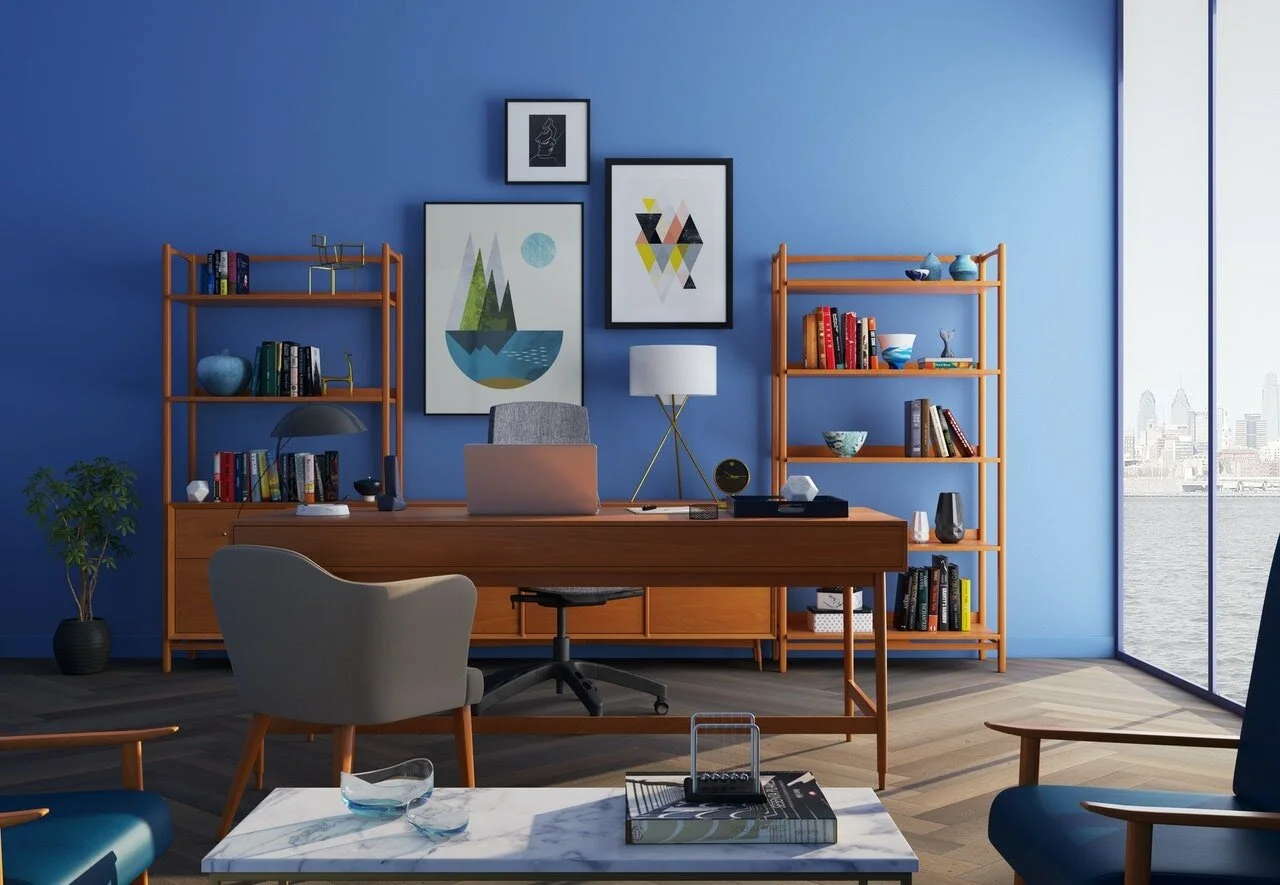
Use the 60-30-10 interior design equation when deciding on colors. You don't need to create overwhelm in your room by choosing a variety of colors. The 60% in the equation represents the dominant colors (ideally, the color of your wall).
30% represents the secondary color, used for accent walls, painted bookcases, wainscoting, or furniture such as the sofa. Art and accessories should make up the remaining 10% of the color scheme.
You should also plan for room prepping. As you paint, where do you plan to move furniture? Do you think they can be moved to the center and covered with drop cloths? Keep track of your tasks with a checklist.
Select the right color

When trying to evoke a specific mood, color can make all the difference: red might evoke feelings of warmth and love, whereas blue might promote relaxation. For example, if you are painting a bedroom and want it to be both relaxing and inspiring, the color palette below might work well.
Instead of going all out and painting a room and then having to redo the whole job, it always pays to play around with different shades before deciding. You can purchase color swatches or paint samples for your interior design project.
Once the paint dries, check how it looks during the day and at night. You may be able to get some new ideas and eliminate some colors that don't fit together.
Aside from the effect of the right color on the mood of your space, choosing the right color can significantly increase your home's value. Based on Zillow's research, powder blue and periwinkle blue bathrooms can boost the value of your home by $5,000 over average, whereas white or off-white bathrooms tend to sell for $4,000 less than average.
There is an increase of about $2,600 in the price of houses with blue kitchens compared to houses with yellow kitchens. The price of a home can increase by $1,800 when a brown living room is chosen. Finally, many buyers prefer the "greige" exterior (a mix of light grey and beige shades) over brown or taupe.
Gather painting materials
Here are the tools you'll need.
1. Paint. You can choose from high-gloss, eggshell and matte paint finishes. While high-gloss is easier to clean (suitable for bathrooms and high-traffic locations), they easily highlight imperfections. On the other hand, matte paint hides imperfections but is easily damaged. In most cases, eggshell finish is the best choice, as it balances the qualities of gloss and flat finishes.
Yulanda Harris, owner of Harris Interior design studio recommends choosing paint type based on the amount of natural light the room will receive. “The more light a wall gets, the faster the paint color will fade. You should use oil-based paint if you can't find one that's UV-resistant”. To see how much paint you'll need, use a paint calculator like this one provided by Benjamin Moore.
2. Paint roller. You want to use a 9-inch roller for general painting, a 14- or 18-inch roller for quickly coating large walls and ceilings, and a small foam roller on door panels and wainscoting
3. Paint roller extension pole. For walls up to 8 ft and low ceilings, a pole with a diameter of 2 — 4 ft is suitable. For ceilings, a pole 4-8ft long is a better choice, which allows for a greater reach over furniture. For tall walls, ceilings, and exterior painting, 6 ft to 12 ft is the ideal size
4. Paintbrushes. Although they cost a little more, you want to go for high quality paint brushes.
5. Sandpaper
6. Drop cloths
7. Paint tray
8. Rags
9. Putty knife
10. Painter's tape.
11. Primer
12. Paint can opener
13. Gloves
14. Nose mask
Prep the space
Of course you're ready to roll. But wait, painting is a delicate job. It’s essential to know the importance of prepping a space when learning how to paint a room. Neglecting a simple task such as wiping down walls before painting could make your efforts fruitless as dirt wouldn't allow paint to stick to the walls. Here are some steps to take to prepare your room for painting.
How to prep a room for painting
1. Choose the right time for painting. According to a Realtor.com article, "paint dries quickest at 70 degrees Fahrenheit, so if you have to paint when temperatures are less than ideal, it’s a good idea to set your thermostat… While higher temps can help paint dry, humidity can undo all that work and actually slow down the process".
2. Remove furniture from the room altogether, if you can. If you don't have enough space to keep large furniture in, shift these to the center.
3. Ensure to use a nose mask when painting. Also, you want to opt for low VOC (volatile organic compound) paints or even zero VOC paints as the scent of regular VOC paint is very toxic. If not, you should consider vacating your house for a week after painting.
Cleaning walls with ammonia-based cleaners is not recommended if you use non-VOC paint. In addition, you shouldn't clean the walls for 30 days after application.
4. Put on safety goggles and old clothes in case of paint splatter. Use drop cloths to protect floors.
5. Using a towel or a vacuum cleaner, dust and clean the walls. Before painting a bathroom or kitchen, wash the walls with a solution containing 3 tablespoons of laundry detergent in a gallon of water.
6. Smooth imperfect areas on walls with sandpaper, using an electric sander or a piece of sandpaper stapled to a sanding block. Fill nail holes in walls with spackling or caulk and let them dry before you proceed.
7. Use painter's tape to protect outlets, wall trims and light switches from paint drips.
Prime the wall
When you prime a wall, the paint adheres to the primer and this creates a smoother finish than applying paint directly. In addition, you only have to repaint twice once you have applied a primer. A water-based latex primer should be applied to new drywall. If the wall has water or smoke damage, or if it has paneling, use an oil-based primer.
Mix the paint
Each can of paint includes a stirrer because paint ingredients separate. Stir the paint before you start painting. And stir continuously as you work. This ensures that the finish has a uniform appearance.
Start rolling
While using rollers helps you cover more area with paint, you will still need to use a brush. Paint about an inch from corners, ceilings and baseboards with a high-quality brush. A roller can't reach these areas.
How to paint a wall with a roller

1. The first step in painting a wall with a roller is to use the long, thin end of it on all four corners and at least an inch into each side from your desired paint line. This will help prevent that dreaded "bald spot" between two coats.
2. Next roll out horizontally across the entire surface- make sure you overlap as much as possible when doing this so there are no gaps or bare spots left behind by not getting enough coverage during one pass (which would only get worse if you don't do another coat).
After covering everything once, go over any areas where there might be significant problems like bumps or crevices for example using smaller motions to fill them in even more thoroughly than before.
DIYnetwork recommends using a "W" pattern; "start in the corner of a wall and roll on a 3' by 3' "W"; then fill it in without lifting the roller. Repeat until the section is finished. This helps hide seams and any places where the roller has been lifted and put back on the wall again".
3. Usually after four to six hours of your first coat of paint drying, you can recoat. It's a good idea to wait at least three hours before recoating water-based paint or primer. In the case of oil-based paints and primers, waiting 24 hours is best.
However, oil paints do not dry. Instead they harden due to oxidation. Ideally, this happens in two weeks and sometimes it takes months. So you don't need to wait too long to apply a fresh coat of paint.
You now know how to paint a room like a pro. Big ups to you. Next, ensure to clean up - don't leave paint cans open or brushes in water; clean your tools with soap and hot water immediately after use; dispose of old paint properly (i.e., do not pour it down the drain).
Make sure your paint is stored at the optimum temperature range of 55 to 90 degrees. If you're storing leftover paint, close the lid firmly (use a hammer to be sure it's sealed), and then flip the can upside down.
How much does it cost to paint a 12 by 12 room?
The US uses about 1.57 billion gallons of paint per year, based on data from the EPA. This means a lot of painting projects go on each year. Based on data from Homeadvisor, Painting a room measuring 10 by 12 feet can cost between $200 and $800. But as with any home improvement cost, you should be prepared to spend a bit more than you budgeted for.
AUTHOR BIO
Agnes A Gaddis is a writer for Inman News, Influencive and the TSAHC (Texas State Affordable Housing Corporation). She has over 7 years experience writing for the real estate industry. Connect with her on Twitter @Alanagaddis

