

A resource for those seeking information on organizing and transforming spaces.

Ways To Create Separation in an Open Floor Plan
Does your open floor plan feel a little too open? Here's how you can create separation between your spaces while still maintaining a cohesive design.
Often called a "great room," open floor plans are gaining popularity in contemporary home designs. They offer a spacious, airy feel and allow for natural light to flow throughout a space. But with this open concept comes the challenge of creating separation and defining different areas within the same space. Here are some ways you can create separation in an open floor plan.
Use Rugs To Define Spaces
Rugs are a simple yet effective way to establish different areas within your open floor plan. By placing a rug under your living room furniture, you instantly signal that this is the seating area. Meanwhile, placing another rug beneath the dining table can define the dining space. Choose rugs that complement each other to maintain a cohesive look while still creating distinct zones.
Incorporate Furniture Strategically
Furniture arrangement can do wonders for creating separation. Positioning a sofa with its back to the dining area signals where one space ends and another begins. You can also use bookshelves or consoles as low partitions. This helps maintain the open feel while subtly dividing the space into functional areas.
Use Curtains or Screens
You can hang curtains from the ceiling to create temporary walls that provide privacy when you need it. Choose light, airy fabrics to keep the space feeling open even when you draw the curtains. You can also use screens and room dividers to break up your space for a more flexible option. You can easily move or fold these away when you want to open up the area again.
Utilize Different Lighting
Lighting can effectively define separate areas within an open floor plan. Use pendant lights over the dining table to create a focal point and differentiate it from the living area, which might have floor or table lamps. You can also direct track lighting to highlight specific zones and enhance the visual distinction between spaces.
Add Greenery for Natural Separation
Plants are a fantastic way to create separation while adding a touch of nature to your home. Tall plants like fiddle leaf figs or snake plants can act as natural dividers. Grouping smaller plants on shelves or plant stands can also help define different areas without closing off the space entirely.
There are many creative ways to create separation in an open floor plan. Use these ideas as inspiration and find the perfect balance between an open, airy feel and functional, defined spaces. You can mix and match different methods to find what works best for your home and lifestyle. With a bit of design savvy, you can transform your open floor plan into a perfectly balanced and beautiful living space.

What You Should Do if You Find Vermiculite in Your House
When you buy an older home, you never know what’s lurking in the walls or attic. Here’s what you should do if you find vermiculite in your house.
Finding something unfamiliar in your home can be unsettling, especially when it comes to materials like vermiculite. If you’ve stumbled upon this mineral in your attic or walls, you might wonder what it is and if it’s dangerous. This blog post will show you what you should do if you find vermiculite in your house.
What Is Vermiculite?
Vermiculite is a naturally occurring mineral that expands when heated. Due to its fire-resistant and insulating properties, the construction industry started using it as attic insulation. The material looks like small, lightweight, shiny flakes, often silver or gold in color.
History of Vermiculite Use
Vermiculite’s unique properties made it popular in the construction industry from the 1920s to the 1990s. It would become an efficient and inexpensive insulation option when combined with other materials. Unfortunately, some sources of vermiculite, particularly those from the Libby mine in Montana, were contaminated with asbestos, a hazardous substance.
How To Identify Vermiculite
Check your attic or walls for the tell-tale flaky, lightweight material to determine if you have vermiculite insulation. If you suspect you have vermiculite, it is crucial to avoid disturbing it. Disturbance can release harmful fibers into the air, posing health risks.
Health and Environmental Risks
The primary concern with vermiculite is its potential asbestos contamination. Inhaling asbestos fibers can lead to severe health issues such as lung cancer, asbestosis, and mesothelioma. Given these lasting effects, it’s vital to handle vermiculite with caution.
The Importance of Proper Handling and Removal
If you suspect your vermiculite contains asbestos, do not attempt to remove it yourself. Improper handling can increase your exposure to harmful fibers. Instead, seek professional help to test and manage the material safely.
Safe Management of Vermiculite
First, avoid touching or disturbing the vermiculite. Contact a professional asbestos inspector who can safely test the material. They will take samples and provide a definitive answer regarding the presence of asbestos.
Professional Testing
Professional testing involves collecting small vermiculite samples and sending them to a specialized laboratory. The lab will analyze the samples to detect any asbestos fibers. This process is essential for determining the next steps in managing the material.
Removal or Containment
If the vermiculite contains asbestos, you have two primary options: removal or containment. Removal involves hiring a licensed asbestos abatement contractor to remove the material safely. Containment requires sealing the vermiculite to prevent any fibers from becoming airborne. Your choice will depend on factors like the extent of contamination, costs, and personal preference.
Local Regulations and Laws
Different regions have varying regulations regarding asbestos and vermiculite. Familiarize yourself with local laws to ensure compliance. This compliance might include mandatory testing, specific disposal methods, and hiring certified professionals for removal.
Potential Costs
Testing and removing vermiculite can be costly. Professional testing might cost a few hundred dollars, while removal can run into thousands, depending on the extent of the contamination. It’s wise to budget for these expenses and consider them an investment in your home’s safety.
Discovering vermiculite in your home can be alarming, but you can manage it safely with the right steps. Remember the lasting effects of vermiculite contamination and prioritize professional help for testing and removal. Your health and peace of mind are worth the effort. Consider contacting local environmental health departments or trusted asbestos abatement professionals for more information and resources. Stay safe and informed!

Learn The Smart Way of How to Use a Washing Machine
Discover smarter ways to use a washing machine. Enhance your laundry routine with tips on loading, detergent usage, and machine care.
We partnered with a home improvement company for this post. The opinions in the post are honest. All reviews and opinions expressed in this post are based on our personal views. We are excited because we know you will love it.

How to Use a Washing Machine: Smarter Ways to Use Your Washing Machine - A Complete Guide
Using a washing machine wisely is crucial for ensuring guest satisfaction, as it impacts the cleanliness and freshness of their laundry. Proper techniques for how to use a washing machine can lead to better cleaning results and reduced energy consumption.
Switch to smarter ways by outsourcing to wash and fold laundry services, and they will maintain high service standards while being eco-friendly and cost-effective. Let's discover some of the automatic washing machine step-by-step guides.
How To Use a Washing Machine
The washing machine is generally classified into the top and front loads. Top-loaded possess an upper lid for loading clothes in and cleaning them, they are user-friendly, less costly and have a larger capacity. On the other hand, front-load machines tend to be more energy efficient, consume less water, and treat garments more gently.
The load capacity, energy efficiency, and how to operate a washing machine are what you should consider when choosing the machine that will serve your wash-and-fold needs best.
Read the Manual
You need to read the instruction manual to know how to use a washing machine and dryer and ensure it lasts a long time. Areas that require close attention include
Recommended load sizes: To avoid overfilling, which would affect cleaning efficiency,
Proper Detergent Usage: To reduce residual stains on clothes.
Maintenance Tips: Instruct you about frequent actions like filter cleaning or drum maintenance.
Loading the Washing Machine
Sort Laundry: Separate clothes by different colors, fabrics, and those that are dirty to prevent them from damage.
Use the Right Detergent: Use a detergent that is right for that specific load size and water hardness.
Don't Overfill
Don’t Overload: Fill it to around 75 percent, allowing enough room for garments to move easily.
Poor Cleaning Results: If there is too much laundry in the washing machine, it cannot spin freely and prevents water and detergents from circulating evenly and residues on clothes.
Potential Damage: Overloading makes the machine work harder, which can cause early damage, failure, or high maintenance costs.
Sort and Organize Properly
Sort By Color: Separate fabrics by color, like white and light colored, to keep them vibrant and bright.
Sort By Material Type: Delicate fabrics such as silk and lace should be washed separately. Heavy fabrics like towels or jeans can be run through a fast cycle,
Organize By Degree Of Soil: Stained or heavy soiled items must be washed separately as they can transfer dirt to other clothes.
Use the Fill Line as a Guide
Measure the washing machine’s fill line to prevent overloading. If this limit is not maintained, the clothes will be tightly packed, leading to ineffective washing and possible breakage. One should keep loads at or below this line to keep enough space for clothes’ movement. That's how to use a washing machine effectively.
Optimizing Washing Machine Performance
To know how to use a washing machine by optimizing its performance, here are some strategies:
Sort Laundry: It is important to sort clothes by colors, fabrics and soil levels before washing. This will enhance their cleaning properly without damaging others.
Select the Appropriate Cycle: Selecting a wash cycle according to the kind of fabric helps ensure thorough cleaning without damaging it.
Don’t Overload: When overloading your washing machine, clothes do not have enough space to move freely.
Use Cold Water: This will help save energy and keep colors bright by using cold water for most loads.
Regular Maintenance: Cleaning the machine’s drum, filters, and dispensers regularly enhances its effectiveness.
Prioritize Larger Items
Washing larger items such as bed linens and towels separately from smaller ones will help to enhance cleaning efficiency and improve machine performance. Washing them separately ensures an even distribution of water and soap, good agitation, and avoids overload that may strain the machine.
Regular Cleaning
Learning how to use a washing machine for regular cleaning is essential, keeping your clothes organized and wrinkle-free.
Wash the Drum: After washing, leave the door open so your drum can air out, then wipe it using a clean, dry cloth.
Clean the Detergent Dispenser: Use a small brush to remove any detergent or fabric softener residue and rinse thoroughly.
Clean the Filters: Remove the filters, rinse them under warm water, and use a brush to remove any trapped debris.
Conclusion
We have focused on the best tips to help someone understand how to use a washing machine, such as sorting them properly, never overloading them, and cleaning them regularly.
These rules can be observed using a fill line as a guide when loading and cleaning the dispensers and filters. These strategies will keep your laundry fresh and ensure guest satisfaction and reliable performance.

How Can Test Automation Tools Streamline Your Testing Process?
The rapidly evolving software development landscape has increased the demand for speed and reliability more than ever before. As projects grow in complexity, traditional manual testing becomes too slow, repetitive, and riddled with human error.
We partnered with a software company for this post. The opinions in the post are honest. All reviews and opinions expressed in this post are based on our personal views. We are excited because we know you will love it.

The rapidly evolving software development landscape has increased the demand for speed and reliability more than ever before. As projects grow in complexity, traditional manual testing becomes too slow, repetitive, and riddled with human error.
Test automation tools help perform such repetitive tasks, smoothly running large test cases. This not only helps teams detect issues earlier but also provides the impetus needed to ensure high-quality software delivery.
These tools automate the repetitive parts of the testing process, allowing large test cases to be executed efficiently and consistently. This not only speeds up the development process but also ensures higher quality software, helping teams deliver reliable products faster.
Key Features of Automation Tools

1. Efficiency Boost: Top test automation tools streamline the testing process by automating repetitive tasks, allowing faster and more consistent software testing.
2. Resource Optimization: Automation reduces the need for manual testing, freeing the team to focus on strategic tasks like exploratory testing, ultimately speeding up product delivery.
3. Consistency and Reliability: Automated tests eliminate human errors, providing consistent and reliable results, which are essential for early issue detection and maintaining software quality.
4. Tool Selection: Choosing the right automation tools involves ensuring compatibility with your current systems, scalability, and ease of maintenance, while adapting to evolving project needs.
5. Overcoming Challenges: Successfully implementing automation requires addressing challenges like test maintenance and real device testing, focusing on modular design and proper training to maximize ROI.
The Strategic Advantage of Test Automation
Optimizing Resources
Test automation tools are game-changers when it comes to resource management. By automating repetitive tasks, these tools can reduce manual testing efforts by an impressive 50-90%. This significant reduction allows your team to focus on more strategic tasks, such as:
Exploratory testing
User experience evaluation
Complex test scenario design
The time saved through automation translates directly into increased productivity and faster time-to-market for your products.
Consistency and Reliability
One of the most compelling benefits of automated testing is its unwavering consistency. Unlike human testers who may inadvertently introduce variations, automated tests perform exactly the same way every time they run. This consistency eliminates human errors and dramatically increases the reliability of test results.
This level of reliability ensures that your team can trust the test outcomes, making it easier to identify and address real issues quickly.
Selecting the Right Automation Tool
Choosing the right automation testing tools is crucial for maximizing the benefits of test automation. Let's explore the key factors to consider:
Framework Compatibility
Your chosen tool should integrate seamlessly with your existing technology stack and development processes. In fact, most teams prefer tools that work well with their current CI/CD(Continuous Integration/Continuous Delivery)pipelines. This compatibility ensures:
Smooth workflow integration
Reduced learning curve for your team
Improved overall efficiency
When evaluating tools, consider how well they align with your current frameworks and methodologies.
Scalability and Flexibility
As your projects grow and evolve, your automation tools need to keep pace. The global test automation market is projected to grow by 14.5% annually, highlighting the increasing demand for scalable solutions.
Look for tools that offer:
Support for multiple testing types (that is functional, performance, security)
Cross-browser and cross-platform testing capabilities
API testing support
Easy test script maintenance and updates
A flexible tool will adapt to your changing needs, providing long-term value for your organization.
Enhancing Test Coverage and Speed
Automation tools allow for parallel execution, where tests can run simultaneously across different environments. This significantly speeds up the process, covering more scenarios in less time.
Cross-browser and cross-platform testing becomes seamless with automation, as the same test scripts can be executed on various browsers and devices. This broadens the coverage while maintaining a quick execution pace.
Cross-browser testing ensures that a website or application works correctly on different web browsers, such as Chrome, Firefox, and Safari.
Cross-platform testing checks that it functions well across various operating systems (like Windows, macOS, Linux) and devices (like desktops, tablets, smartphones).
Regression testing is another area where automation shines. Automated tests ensure that new code changes do not disrupt existing functionality, allowing for fast and thorough testing every time a change is made.
By integrating with CI/CD pipelines, automated tests are triggered automatically with each code commit. This continuous testing approach ensures that all changes are rapidly tested, enhancing both speed and coverage without manual intervention.
Data-Driven Testing
Automated data-driven testing allows you to run thousands of test cases with varied data sets. This approach increases your test coverage, helping you to:
Identify edge cases and rare bugs
Validate system behavior under different scenarios
Ensure robust performance across a wide range of inputs
By leveraging data-driven testing, you significantly reduce the risk of overlooking critical issues.
Parallel and Continuous Testing
One of the most powerful features of modern automation testing tools is the ability to run tests in parallel. This capability can speed up your testing process by an impressive 60-80%.
Additionally, integrating automation into your CI/CD pipeline enables:
Continuous testing throughout the development cycle
Faster feedback loops for developers
Up to 30% faster delivery times
These improvements in speed and efficiency can give your team a significant competitive advantage.
Addressing Real-World Challenges
While test automation offers numerous benefits, it's essential to address some common challenges to ensure success.
Real Device Testing
In mobile app development, 60% of issues are discovered on real devices. This statistic underscores the importance of incorporating real device testing into your automation strategy.
Consider using automation testing tools that:
Support a wide range of real devices
Offer cloud-based device farms for broader coverage
Provide detailed performance metrics specific to different devices
By combining automated tests with real device testing, you'll catch more issues before they reach your users.
Maintenance and Debugging
Effective test maintenance is crucial for long-term success with automation. Well-designed test scripts can reduce maintenance efforts by up to 70%, saving your team valuable time and resources.
To streamline maintenance and debugging:
Implement modular test design
Use descriptive naming conventions
Leverage comprehensive logging features
Many modern automated testing tools offer built-in features to support these best practices, making it easier to keep your test suite efficient and effective.
Key Considerations for Implementation
Cost and ROI(Return on Investment)
While implementing test automation tools requires an initial investment, the long-term benefits often outweigh the costs. Consider the following when evaluating the ROI(Return on investment) of automation:
Reduced manual testing time
Faster release cycles
Improved product quality
Increased customer satisfaction
To maximize your ROI, carefully assess your team's needs and choose a tool that aligns with your long-term goals.
Comparison of Popular Test Automation Tools
To help you make an informed decision, here's a comparison of some popular test automation tools:
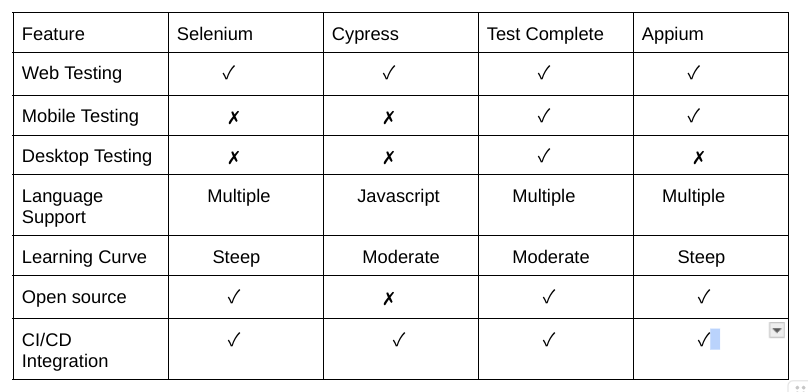
This comparison can serve as a starting point for your evaluation process. Remember to consider your specific needs and constraints when choosing a tool.
Conclusion
Test automation tools have the power to revolutionize your testing process, offering significant improvements in efficiency, reliability, and coverage. By carefully selecting and implementing the right tools, you can streamline your testing efforts and deliver higher-quality software faster than ever before.
As you embark on your automation journey, remember that success lies not just in the tools themselves, but in how effectively you integrate them into your development process. Invest in training, stay adaptable, and continuously refine your approach to maximize the benefits of test automation.
FAQs
1. What is automation testing?
Automation testing is a process whereby a software application is tested using specialized software tools, which execute pre-scripted tests on the application. The actual results are compared to the predicted outcomes in order to come up with improved efficiency and reliability during a test.
2. When should I consider implementing test automation?
Consider using test automation when you have stable features that need to be tested frequently, or on repetitive tasks which are time-consuming to be done manually, or if you want to run tests on multiple platforms or configurations consistently.
3. What kinds of testing can be automated?
You can automate a number of tests, like unit, integration, functional, regression, performance, and API testing. But some of the tests, such as exploratory or usability tests, are going to be best done manually.
4. How about selecting the right automation testing tools for my project?
Select automation test tools according to the requirements of your project, the existing technology stack, team skills, budget, and long-term goals. Keep in mind the supported platforms and programming languages; their ease of use; and if they integrate well into your Continuous Integration/Continuous Deployment pipeline.
5. What are the issues with implementing test automation?
Typical challenges are the high costs in setting up at first, the maintenance of test scripts, dynamism in managing elements of an application, test data handling, and assigning and providing the team with the right skillet in using the tools for automation.

