

A resource for those seeking information on organizing and transforming spaces.

The Benefits of Hiring Professional Quality Cleaning Services
Keeping your home or office clean is important, but it's not always easy to find the time to do it well. Whether you're busy with school, work, or family, cleaning can feel like a chore that never ends. That's where professional quality cleaning services come in.
We partnered with a cleaning company. for this post. The opinions in the post are honest. All reviews and opinions expressed in this post are based on our personal views. We are excited because we know you will love it.

Keeping your home or office clean is important, but it's not always easy to find the time to do it well. Whether you're busy with school, work, or family, cleaning can feel like a chore that never ends. That's where professional quality cleaning services come in.
Hiring professionals to handle your cleaning can make your life a lot easier and leave your space looking its best. Let's take a look at some of the top benefits of hiring professional cleaners.
Cleaner and Healthier Environment
A major benefit of hiring professional cleaners is a healthier, cleaner environment. Professionals use special products and techniques to get rid of dirt, germs, and allergens that can build up in your home or office. A regular cleaning may miss dust and bacteria in hidden spots.
A professional service can reach those places. This helps reduce the risk of allergies, colds, and other health issues, making your space a safer place to live or work.
Saves You Time and Energy
Cleaning takes a lot of time and energy, especially if you want to do it right. When you hire professionals, you free up time for yourself to do other things.
Instead of spending your weekend scrubbing floors or dusting furniture, you can relax, spend time with family and friends, or focus on school or work. The cleaning professionals handle the tough jobs, so you don't have to worry about it.
Expertise and Experience
Professional cleaners have the experience and knowledge to clean your space thoroughly and efficiently. They know which products to use on different surfaces and how to get rid of stubborn stains or grime. Because they do this for a living, they are also very fast and skilled at what they do.
While you might spend hours trying to clean your home, Detail Cleaning Services can get it done in a fraction of the time and with much better results. Their expertise helps ensure that your space looks its best after every visit.
High-Quality Cleaning Supplies
Another great benefit is that they use high-quality cleaning supplies that you might not have at home. These products are often more effective at removing dirt and stains, and they can be safer for the environment. Some cleaning services even offer eco-friendly options, which means they use products that are better for the planet and safer for your family or pets.
Why Quality Cleaning Services are Worth It
Hiring professional quality cleaning services offers many benefits. From saving you time and energy to creating a cleaner, healthier environment, professionals can take the stress out of keeping your space tidy. With their expertise, high-quality supplies, and customized cleaning plans, you can trust that your home or office will look its best after every visit.
Plus, the long-term savings and peace of mind make it a worthwhile investment. So, if you want a clean and comfortable space without all the work, professional cleaning services are the way to go!
For more on this topic, feel free to visit the rest of our blog!
5 DIY Projects for Creating a Healthier Home Environment
With the right DIY projects, creating a healthier home environment is possible without hiring a pro! Here are some simple tasks to cross off your to-do list.
Creating a healthier home environment can be challenging, especially for working parents and homeowners juggling multiple responsibilities. But with a few simple DIY projects, you can significantly improve your living space without hiring professionals. From changing your air filters to decluttering, these projects will help you create a healthier and more welcoming home.
Change Your Air Filters
One of the easiest ways to keep your home healthy is by changing your HVAC air filters regularly. Over time, these filters collect dust, pollen, and other allergens that can compromise indoor air quality. Experts recommend changing air filters monthly to keep your system running efficiently while promoting cleaner air. Not only will this simple task improve the air you breathe, but it can also extend the life of your HVAC system, saving you money in the long run.
Test for Radon
Radon is a colorless, odorless gas that can pose serious health risks if it accumulates in your home. Fortunately, testing for radon is a straightforward DIY project. You can purchase a radon test kit online or from your local hardware store. Simply follow the instructions, and send the test to a lab for analysis. Identifying radon levels in your home is crucial for your family’s safety, as prolonged exposure can lead to lung problems. If your results show high levels, you may need to consider further mitigation measures.
Declutter Your Home
A cluttered home not only makes cleaning more difficult but can also contribute to stress. By decluttering, you make it easier to dust and vacuum, reducing the allergens in your home. Start by tackling one room at a time, deciding what to keep, donate, or dispose of. Having fewer items makes cleaning more manageable and creates a calmer, more organized environment.
Deep Clean the Carpeting
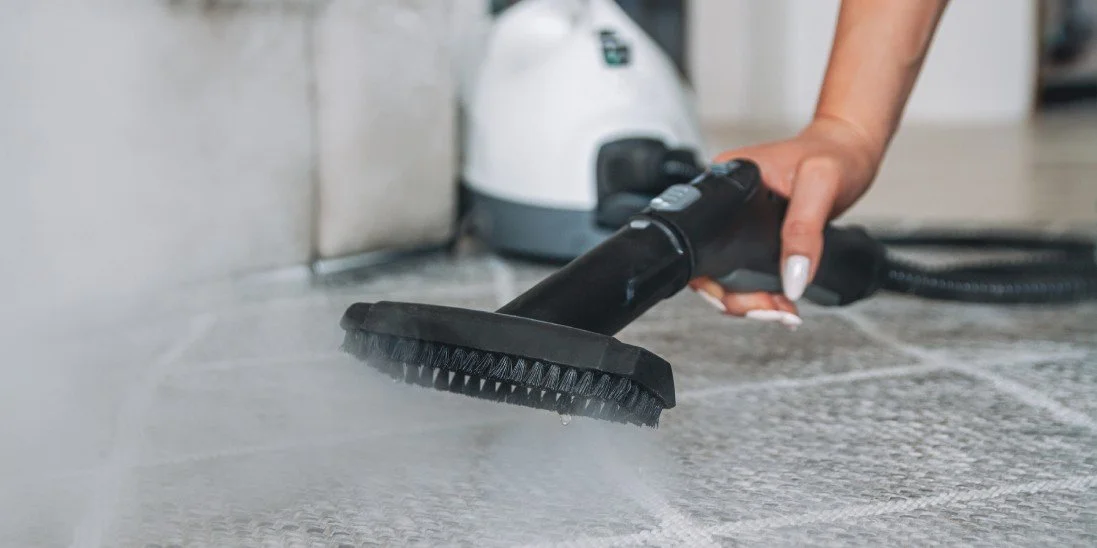
Even if you vacuum regularly, carpets can trap dirt, dust, and allergens deep within their fibers. Schedule a day to deep clean your carpets using a rented carpet cleaner. Removing these hidden particles can improve indoor air quality and extend the life of your carpeting. Plus, freshly cleaned carpets can make your entire home feel refreshed and revitalized.
Replace Moldy Caulk
Mold can often be found lurking in caulk around your bathtub, shower, or windows. While bleach might seem like a quick fix, it often only masks the problem. The best solution is to replace the moldy caulk with new material. Carefully remove the old caulk using a utility knife, clean the area thoroughly, and apply a fresh seal. This project improves the appearance of your bathroom or windows and prevents mold spores from affecting your family’s health.
These five DIY projects for creating a healthier home environment are practical and effective ways to enhance your living space. Whether you’re changing air filters or replacing moldy caulk, each project contributes to a healthier, more comfortable home for you and your family. Ready to make a change? Start one of these projects today, and experience the benefits of a healthier home environment.

Designing Tomorrow: The Intersection of Furniture, Technology, and Human Experience
Separating architecture from furniture is nearly impossible. The way Le Corbusier showcases contemporary cars in his project photos highlights how the items that adorn a living space reflect the wealth and lifestyle of its inhabitants. Since the dawn of settled life, we have seen the emergence of basic furniture designs that reflect our evolving needs and aesthetics. At an archaeological site dating back to 3,100 to 2,500 BCE, an intriguing assortment of stone furniture was unearthed, including cabinets, beds, stone shelves, and seating options. From the earliest instances, furniture has served as a medium for expressing concepts, from the opulent and lavish pieces of Ancient Egypt, designed to showcase the empire's power and affluence, to the streamlined and practical designs of the Bauhaus, aimed at reinstating rationality in society. Exploring the progression of furniture design is essential for grasping the nuances of architectural styles.
We partnered with a design company. for this post. The opinions in the post are honest. All reviews and opinions expressed in this post are based on our personal views. We are excited because we know you will love it.

Separating architecture from furniture is nearly impossible. The way Le Corbusier showcases contemporary cars in his project photos highlights how the items that adorn a living space reflect the wealth and lifestyle of its inhabitants. Since the dawn of settled life, we have seen the emergence of basic furniture designs that reflect our evolving needs and aesthetics. At an archaeological site dating back to 3,100 to 2,500 BCE, an intriguing assortment of stone furniture was unearthed, including cabinets, beds, stone shelves, and seating options. From the earliest instances, furniture has served as a medium for expressing concepts, from the opulent and lavish pieces of Ancient Egypt, designed to showcase the empire's power and affluence, to the streamlined and practical designs of the Bauhaus, aimed at reinstating rationality in society. Exploring the progression of furniture design is essential for grasping the nuances of architectural styles.
In today's fast-paced world, the rapid evolution of technology and the internet has transformed the landscape, making it increasingly challenging to keep up and fully embrace these changes. The evolution of furniture is evident in its design, production, and sales approaches. Here, we explore various ways in which technology has influenced this realm:
Three-dimensional printing
3D printing has become far more prevalent than we often realize. These machines, now available at more budget-friendly prices, typically operate by layering and adhering tiny particles of various materials like plastic, ceramics, glass, metal, and even concrete. This process falls under a category of manufacturing known as additive manufacturing. It involves transforming three-dimensional designs created on a computer—whether through CAD drawings or 3D models—into tangible objects. This technique utilizes precisely the right amount of material, allowing for the creation of shapes that would be beyond the capabilities of traditional manufacturing methods.
The application of this technology spans from industrial design to the creation of replicas of archaeological artifacts, with exciting research in progress for the production of artificial human organs and tissues, limb prostheses, and beyond. Printed connections and junctions for shelves or benches are only one example of the many options available when it comes to furniture. Other options include the creation of full pieces of furniture.
The Nóize chair, designed by Guto Requena, showcases a fascinating application of 3D printing technology in furniture design. Inspired by a classic of Brazilian design, the Girafa chair crafted by Lina Bo Bardi, Marcelo Ferraz, and Marcelo Suzuki, the Nóize chair's three-dimensional model emerges from a unique blend of the Girafa design and an audio collage of urban sounds gathered from Santa Ifigênia Street in downtown São Paulo. A digital file was subsequently dispatched to a 3D printing machine located in Belgium. This example illustrates how a furniture piece can be created anywhere globally with just a digital file, making it a practical choice for those in remote areas.
The concept of BITS & PARTS chairs revolves around the innovative idea that they are available for free download and can be printed right in the comfort of your own home. Every piece is designed to fit seamlessly, allowing even the tiniest 3D printers to create them, and they assemble effortlessly like a charming puzzle to create a stylish chair. The goal of this product is to make furniture manufacturing more accessible and inclusive for everyone.
Among various innovative 3D printing projects, one that stands out is Zero Waste Lab, a fascinating research initiative where Greek citizens can creatively convert plastic waste into stylish urban furniture. This waste, which is highly polluting and nearly indestructible, is transformed into raw material for innovative furniture, all with the goal of reimagining public spaces in the vibrant city of Thessaloniki, Greece.
While the idea of 3D printing on an industrial scale may currently appear impractical, we might be on the brink of a transformation. However, it may be incredibly beneficial for decorating remote locations and even extraterrestrial environments, as demonstrated in NASA's simulations for constructing habitats on Mars. At present, the development of prototypes, the crafting of unique furniture, and the production of both parameterized and organic shapes have all become a tangible reality thanks to 3D printing.
Augmented Reality
From Instagram filters to engaging interactive games, augmented reality has transitioned from a futuristic concept to an integral part of our everyday experiences. With our cell phones always at hand, equipped with advanced cameras and sensors, technology enables us to seamlessly blend virtual elements into our real-world surroundings. When it comes to furniture, augmented reality apps primarily help users visualize their desired pieces within a real space, enhancing their understanding of scale, color, and the overall aesthetic of the environment as it will appear in the future.
That's why numerous brands are pouring resources into enhancing the visualization of their offerings, elevating these experiences even further. Morpholio, for instance, enables users to seamlessly integrate some of the most iconic furniture pieces into their own spaces with just a few clicks. The iconic IKEA has launched an innovative app that allows users to visualize its furniture in their own spaces, whether it's restaurant furniture or home furnishings.
Alongside visualization, there are also augmented reality tools available to enhance the user experience. Designer Adam Pickard is creating an innovative application that leverages augmented reality to help users assemble the brand's furniture, potentially saving them from a few tears and a bit of sweat in the process.
Connected devices and smart technology
The concept of the Internet of Things (IoT) involves the seamless digital connection of everyday items to the internet and to each other, creating a network of smart devices that enhance our daily lives. Devices like appliances, vehicles, and public equipment, all enhanced with sensors and network connectivity, gather and share data seamlessly. This enables these items to be managed remotely through smartphones or computers, and additionally, allows them to function as Internet Access Providers. Now, we may ponder. What purpose do I have for internet-connected furniture? Yet, there will undoubtedly come a moment when we ponder. How did we ever manage without it?
Beyond its fundamental purpose, furniture equipped with internet capabilities can enhance our comfort, streamline repetitive tasks, keep us on track with our commitments, and even contribute to our well-being. Imagine arriving home to a perfectly cooled space, all thanks to your phone syncing with the air conditioner. By the time you walk through the door, the ambiance is just right. Imagine having the ability to manage your lighting from afar, ensuring the perfect ambiance wherever you are. Picture effortlessly watering your plants with precision, providing them with just the right amount of hydration and soil acidity they crave. The possibilities are endless! Refrigerators have the capability to automatically place an order when they detect the absence of essential food items, requiring only the user's approval before the delivery arrives. This feature can be especially beneficial for seniors living independently or individuals with physical challenges.
However, the possibilities of the Internet of Things extend even beyond that. Research has emerged surrounding internet-connected toilets equipped with sensors and artificial intelligence. These innovative designs can identify early signs of disease and assist individuals in managing chronic conditions such as diabetes. The possibilities are truly limitless, and the Internet of Things has the potential to influence every aspect of our lives, from the everyday functions of a room to the broader distribution of infrastructures across entire states. This innovative technology allows for enhanced safety measures and efficient resource management.
AI
As we settle into the cozy embrace of our couch and open Netflix, the app's smart algorithms are already at play, curating a selection of films and series tailored to our tastes. When we're curious about the quickest route to a destination, a mapping app employs various functions to provide us with a suitable response, which can even adapt as we travel. The concept of artificial intelligence refers to a machine or system's capacity to reason, uncover meaning, generalize, or learn from past experiences.
In the realm of furniture design, the application of AI shines through the innovative concept of generative design, a topic we explored in depth in a prior article. The computer is capable of generating countless iterations, adhering to the parameters and guidelines set by the user, to find the most suitable solutions. Kartell's A.I. is recognized as the pioneering market chair designed using artificial intelligence. Created by the talented architect Philippe Starck in collaboration with Autodesk, this innovative approach to design led to the development of a chair that is not only strong and stable but also visually appealing, all while minimizing material usage. Stark noted that the process resembled a dialogue, specifically between the parameters set in the program and those that were meticulously assessed.
Although some might view these swift transformations as a daunting prospect where machines dominate, the role of humanity is crucial in establishing parameters, setting goals, and guiding technologies in the right direction. Is it possible for a machine to truly grasp the diverse needs and desires of a user? How is it possible for a computer to grasp ideas such as ergonomics or the texture of wood fibers? Absolutely, the future lies in the collaboration between technology and humanity, enhancing decision-making, optimizing resource use, and ultimately improving the quality of life for everyone.

8 Common Problems With Old Houses And How to Properly Address Them
It can be a delightful experience to own an ancient home that is rich with history and character. But these houses frequently have their share of issues that can be costly, time-consuming, and difficult to fix. Maintaining the integrity of your house and making sure it stays a comfortable place to live requires an understanding of frequent problems and knowing how to solve them. Here are some typical issues with older homes and workable fixes to help you keep your cherished home in good condition.
It can be a delightful experience to own an ancient home that is rich with history and character. But these houses frequently have their share of issues that can be costly, time-consuming, and difficult to fix. Maintaining the integrity of your house and making sure it stays a comfortable place to live requires an understanding of frequent problems and knowing how to solve them. Here are some typical issues with older homes and workable fixes to help you keep your cherished home in good condition.
Structural Issues
Structural issues are among the biggest issues with older homes. Homes may move or settle over time, resulting in uneven flooring, wall fissures, or even weakened foundations. It is imperative that you take immediate action to rectify any structural damage you observe. You can evaluate the issue and suggest the required repairs with the assistance of a certified structural engineer. Simple modifications could be enough in certain situations, but more involved work might be necessary in others to guarantee the stability of your house.
Outdated Electrical Systems
Older homes frequently have antiquated electrical systems that might not adhere to contemporary safety regulations. A fire threat could arise from frayed or overloaded wiring. It could be time to have an electrician assess your system if you frequently lose power or see flickering lights. Rewiring and upgrading your electrical panel can greatly improve usefulness and safety. In addition to protecting your house, investing in contemporary electrical systems will meet the expectations of modern technologies.
Plumbing Problems
Older homes frequently experience plumbing problems because pipes can rust, leak, or become clogged over time. It is often more cost-effective to reline a pipe than to dig up the entire system for repairs. It's critical to take quick care of any slow drains, poor water pressure, or wet areas on walls. In order to ensure dependable plumbing, it can be helpful to have a qualified plumber examine your system and suggest the best course of action.
Insufficient Insulation
Lack of proper insulation of houses, especially those that were built earlier, results in drafts, high energy bills, unlived comfort during extreme weathers. Insufficient insulation may lead to high levels of heat loss during the winter and high levels of heat gains during the summers. Insulate your crawl spaces, walls as well as attic to solve this. Fiberglass, cellulose or spray foam are commonly used, effective insulation that causes considerable energy gain. Over time, this can reduce the energy expenditure other than enhancing comfort.
Old Windows and Doors
Drafts and inefficient use of energy can be caused by outdated windows and doors. They could also be devoid of appropriate security features. It could be time to replace your windows if they are single-pane or exhibit wear. Even though it can be expensive to replace every window, starting with the ones that are the most troublesome can help. Weatherstripping and caulking can help seal gaps and enhance insulation without breaking the bank for those on a tight budget.
Roof Wear and Tear
A home's roof is one of its most important parts, and older roofs frequently exhibit wear and tear. If you see leaks, drooping patches, or missing shingles, your roof may need maintenance. Frequent inspections are essential for identifying possible problems early. The extent of the damage will determine whether you require modest repairs or a full roof replacement. In addition to providing weather protection, a new roof increases the exterior appeal and value of your house.
Pest Infestations
Such structures may require treatment every few years because they are vulnerable to termites, rodents as well as other unwanted guests. These infestations can be very dangerous if not responded to immediately /If not tackled properly these infestations may lead to adverse effects. Invasions are easy to recognize during checks done frequently. It is advisable to call for a pest control practitioner once there is any sign of insects in the house including droppings or weak wooden beams. They are able to assess the problem and apply several effective measures on how not to let pests into your house.
Outdated Heating and Cooling Systems

Most of the heating and cooling systems in many homes are old and may not be working as efficiently as they should. These systems may affect your home by causing unequal temperatures and high costs of your energy bill. It is perhaps possible to replace your heating or cooling system with a newer, more energy efficient model if it is more than ten to fifteen years old. This means that you are able to spend less than you would have spent on energy and at the same time be a lot more comfortable when you incorporate modern systems for heating and cooling.
Although owning an older home has certain difficulties, the experience can be made more pleasurable by being aware of typical issues and knowing how to resolve them. Being proactive with maintenance and repairs is essential to maintaining the character and value of your house, whether it is due to structural problems or antiquated systems. With the correct strategy, you can transform your old home into a lovely, useful, and cozy area that you will treasure for many years to come.

