
Every season brings a new collection of household essentials that somehow takes over the house. Winter coats crowd the closets, summer toys fill the garage, and holiday decorations seem to multiply overnight.
Between work schedules, school activities, and everyday responsibilities, keeping everything organized can feel like another full-time job. Fortunately, a few practical changes can make it easier to organize seasonal home gear.
A well-organized home doesn't require expensive storage systems or hours of sorting every weekend—the secret lies in creating simple routines that work with your family's busy schedule. When everything has a designated place, seasonal transitions become less stressful.
Start With a Seasonal Inventory
Before buying storage containers or rearranging closets, take a quick inventory of your seasonal belongings. Walk through your home and identify items that you only use during certain months. Pay special attention to crowded closets and overflowing garage shelves. This process helps you see how much space your seasonal gear actually takes up.
Sort belongings into groups according to when your family uses them. Winter coats belong together, while beach supplies and pool accessories can share another storage area. Take this opportunity to remove broken items or clothing your children have outgrown. Clearing unnecessary belongings now prevents you from wasting valuable storage space later.
Create Designated Storage Zones
One of the easiest ways to organize seasonal home gear is to give each category a permanent storage location. Rather than scattering holiday decorations throughout the house, choose one area that accommodates everything.
Apply the same approach to outdoor equipment and seasonal clothing. This simple system eliminates the frustration of searching multiple rooms for one missing item.
Consider how frequently your family needs access to different belongings. Store everyday essentials near convenient entrances and reserve higher shelves for occasional items. For example, keep winter boots near the mudroom during colder months. Move them into long-term storage once warmer weather arrives, so your family can use that space more efficiently.
Choose Storage Containers That Make Sense
Storage containers can make a significant difference in how easily your family manages seasonal belongings. However, purchasing dozens of matching bins won't automatically solve clutter problems. Clear plastic bins work particularly well because they allow you to identify contents without opening every lid.
Label each container with a simple description that everyone in your household can recognize. Instead of writing something vague like "winter stuff," use labels such as "kids' winter gloves" or "Christmas tree ornaments." Specific descriptions save time when you need something quickly.
A few practical container choices can simplify seasonal organization:
Clear bins: Keep smaller seasonal accessories visible and easy to locate.
Vacuum storage bags: Reduce the space that bulky winter clothing occupies.
Divided ornament boxes: Protect delicate holiday decorations between celebrations.
Stackable containers: Make better use of limited closet or garage space.
Weather-resistant bins: Help protect outdoor equipment from moisture and dust.
Make Better Use of Vertical Space
Limited storage space often creates unnecessary frustration, especially in homes with growing families. Fortunately, you can create additional room without expanding your closets or garage.
Wall-mounted shelves provide convenient storage for seasonal supplies while keeping the floor clear. Adjustable shelving also allows you to accommodate larger containers as your family's needs change.
Consider installing hooks for lightweight equipment that otherwise crowds the floor. Garden tools and recreational accessories can occupy wall space instead of competing with larger belongings. Always secure shelving properly and make sure children cannot pull unstable equipment onto themselves.
Keep Entryways Ready for Seasonal Changes
Your home's entryway often becomes the unofficial headquarters for seasonal clutter. Backpacks pile up beside winter boots, while jackets compete for limited hook space. Creating a simple entryway organization system can prevent this daily chaos. Give each family member a designated spot for frequently used belongings so mornings run more smoothly.
Change your entryway setup whenever the weather shifts. During winter, provide extra room for heavy coats and waterproof footwear. In summer, replace those bulky items with lightweight jackets or outdoor accessories. This small adjustment keeps the space functional without requiring a complete organizational overhaul every few months.
Organize Outdoor Gear in a Shed
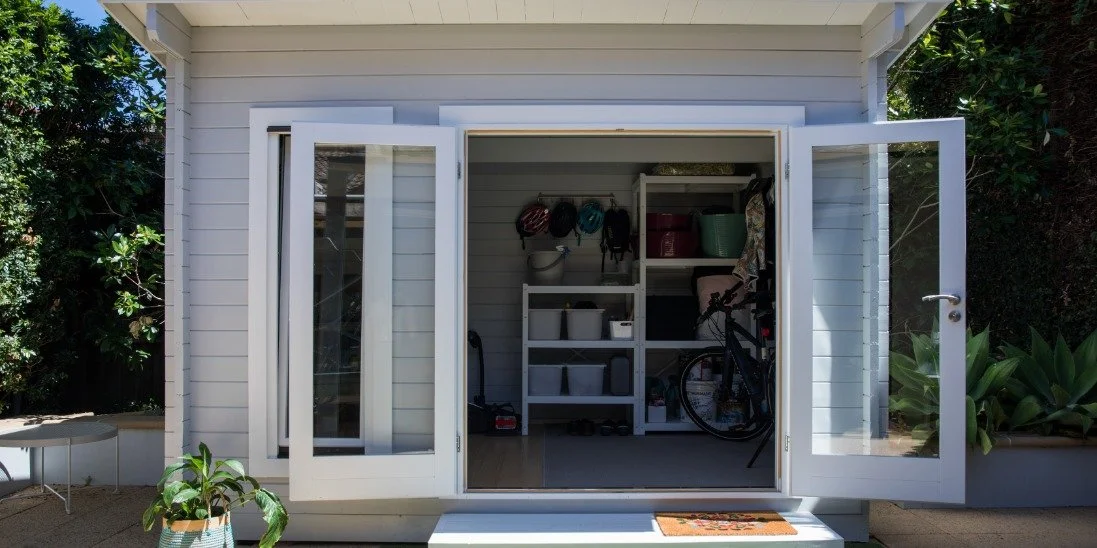
Outdoor equipment often requires more storage space than indoor closets can provide. Lawn equipment and seasonal recreational gear can quickly overwhelm a garage, especially when your family owns multiple bicycles. A backyard shed offers a practical solution by providing a dedicated place for larger items.
The shed itself also deserves attention because its materials influence long-term maintenance. Homeowners comparing exterior options may find useful guidance in the topic metal siding vs. wood: why your shed deserves better. Metal siding generally requires less routine upkeep than traditional wood siding, although proper installation still matters.
Inside the shed, arrange belongings by seasonal use and overall size. Position frequently used equipment near the entrance and move off-season items toward the back. Leave enough walking space so no one has to climb over equipment to retrieve a gardening tool.
Establish a Seasonal Rotation Routine
Seasonal organization works best when you follow a predictable schedule. Rather than waiting until closets overflow, choose a few weekends throughout the year to rotate belongings. Early spring provides an opportunity to pack away winter accessories and prepare outdoor equipment. Fall offers another convenient time to organize colder-weather essentials before temperatures drop.
Keep each seasonal transition manageable by focusing on one storage area at a time. You might tackle bedroom closets on Saturday and organize the garage the following weekend. This approach prevents household organization from consuming an entire day off. Short sessions also make it easier to maintain progress when your schedule suddenly changes.
Encourage the Whole Family To Participate
Maintaining an organized home shouldn't fall entirely on one person's shoulders. Even younger children can help return seasonal belongings to their proper locations. Give everyone simple responsibilities that match their abilities and daily routines. When family members understand where things belong, they can help prevent clutter from returning.
Make organization easier by creating systems that require minimal effort. Place storage baskets where children naturally leave their belongings instead of expecting them to follow complicated rules.
Encourage older children to sort seasonal clothing before each weather transition. These small habits build independence while reducing the amount of household cleanup you handle alone.
Make Seasonal Organization Work for Your Family
Organizing seasonal home gear doesn't require a picture-perfect house or an elaborate storage system. A few designated spaces and consistent routines can make everyday life noticeably easier.
Focus on solutions that accommodate your family's habits rather than creating additional work. The best organization system should simplify your responsibilities, not add another exhausting task to your schedule.
Start with one crowded closet or neglected storage corner and build from there. As your family develops better habits, seasonal transitions will become easier to manage. You'll spend fewer mornings hunting for missing gloves and less time rearranging overflowing shelves. Most importantly, you'll create a home that supports your busy lifestyle throughout every season.