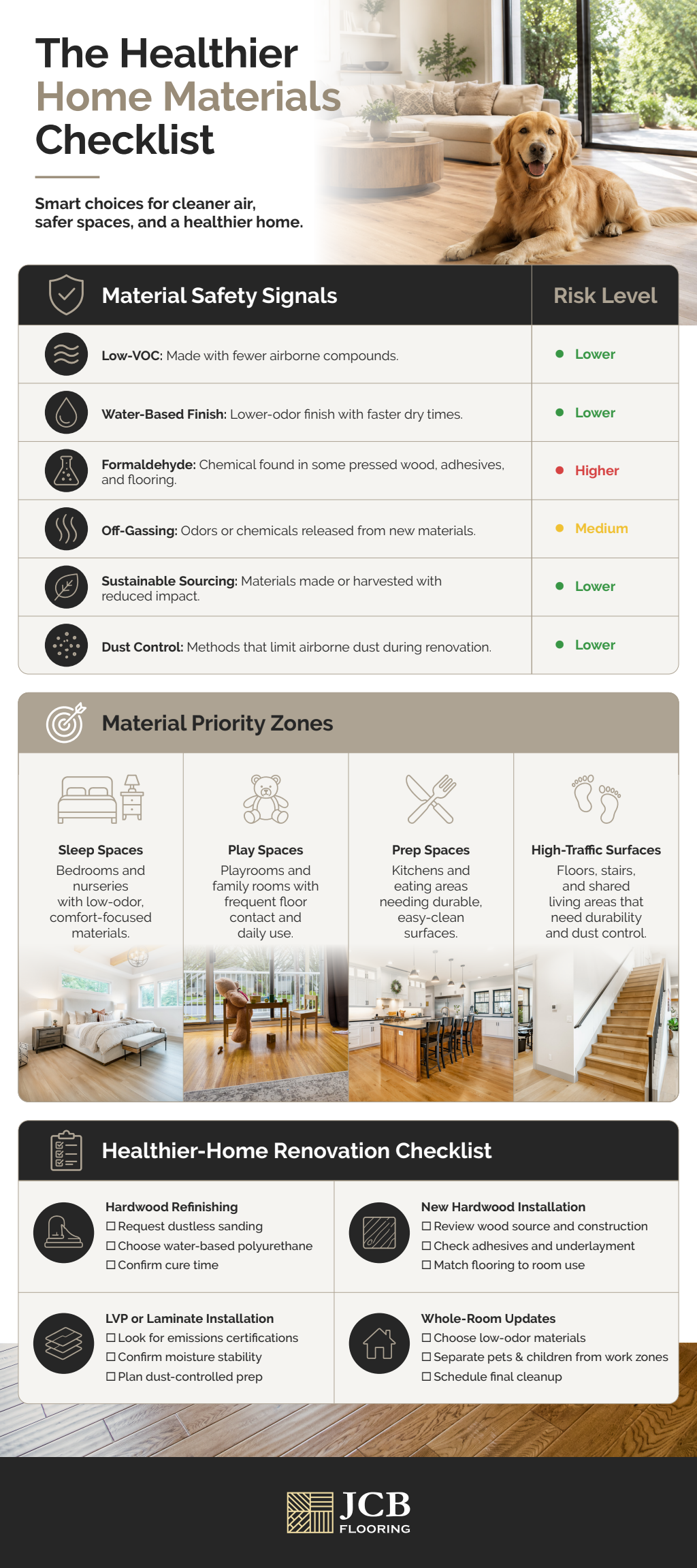
The Healthier Home Materials Checklist

The materials used throughout a home can influence indoor air quality, comfort, durability, and ongoing maintenance needs. Whether building, renovating, or making gradual improvements, selecting appropriate materials supports a healthier living environment while reducing future repair costs.
Choose Low Emission Products
Paints, adhesives, sealants, and composite wood products may release volatile organic compounds, commonly known as VOCs. These emissions can affect indoor air quality, particularly during and immediately after installation.
Many manufacturers now offer low-VOC or zero-VOC alternatives that reduce indoor emissions while maintaining performance. Checking product labels and certifications allows homeowners to compare options before making purchasing decisions.
Prioritize Durable Surfaces
Durable materials often require fewer replacements, reducing long-term costs and construction waste. Countertops, cabinetry, flooring, and wall finishes should be selected based on expected household use rather than appearance alone.
Materials that resist moisture, scratches, and everyday wear typically perform better over time, especially in kitchens, bathrooms, and entryways where surfaces experience frequent use. Choosing products that are easy to clean also supports healthier indoor conditions by reducing the buildup of dust and allergens.
Evaluate Flooring Options
Flooring plays an important role in both comfort and maintenance. Hard surface materials can be easier to keep free of dust and pet dander, while carpeting may require more frequent cleaning to maintain indoor air quality.
Homeowners considering updates may benefit from consulting experienced flooring services to compare materials based on durability, maintenance requirements, moisture resistance, and suitability for different rooms. Professional guidance can also help ensure proper installation, which contributes to long-term performance.
Think Beyond Initial Costs
The least expensive material is not always the best long-term value. Maintenance requirements, expected lifespan, energy efficiency, and replacement frequency should all be considered before making purchasing decisions.
Reviewing manufacturer warranties and product testing information provides additional insight into long-term performance. Investing in quality materials often reduces future maintenance while improving the overall comfort and durability of the home.
Creating a healthier home begins with informed material selection. Low-emission products, durable finishes, practical flooring, and thoughtful long-term planning all contribute to improved indoor comfort and easier maintenance. Making careful choices during home improvement projects helps create living spaces that support both everyday well-being and lasting value. Look over the infographic below to learn more.