

A resource for those seeking information on organizing and transforming spaces.

How to Avoid Hidden Costs and Surprises During a Major Remodel
Almost every homeowner considering a major remodel carries the same quiet worry in the back of their mind: what if the final bill looks nothing like the estimate? That fear is not unfounded. Remodeling projects have a well-earned reputation for spiraling past their original budgets, and in most cases, the reason has less to do with bad luck than with decisions that were never finalized before the work began.

Almost every homeowner considering a major remodel carries the same quiet worry in the back of their mind: what if the final bill looks nothing like the estimate? That fear is not unfounded. Remodeling projects have a well-earned reputation for spiraling past their original budgets, and in most cases, the reason has less to do with bad luck than with decisions that were never finalized before the work began.
Understanding Where Overruns Begin
Budget overruns rarely appear out of nowhere. They tend to grow out of small, unresolved questions left dangling at the start of a project, questions about which tile to use, whether a wall is load-bearing, or what fixtures will actually fit the space once demolition reveals what is really behind the drywall. Each of those open questions becomes a decision made under pressure, often after work has already started and the clock is running on labor and equipment.
That pressure changes how decisions get made. A homeowner asked to choose a countertop material mid-project, with a crew waiting and a deadline looming, is far more likely to accept whatever is readily available rather than the option that best fits their budget or vision. Multiply that scenario across dozens of smaller decisions throughout a full home remodel, and it becomes easy to see how costs drift upward without anyone intending for that to happen.
Finalizing Decisions Before Demolition
The most effective safeguard against this kind of drift is remarkably simple in concept, even if it takes real discipline to follow: settle every major decision before a single wall comes down. That means selecting finishes, confirming structural changes, and locking in layout decisions well ahead of demolition day, rather than treating those choices as something to sort out once the project is already underway.
This upfront approach also surfaces problems while they are still cheap to solve. Identifying a long-lead material that needs to be ordered months in advance, or discovering a structural constraint that changes the layout, costs far less to address on paper than it does once framing has already been altered to accommodate the original plan. Thorough planning does not just protect a budget. It protects the timeline as well, since delays caused by last-minute material changes or design reversals tend to cascade through every trade scheduled after them.
Pre-construction planning also gives homeowners something less tangible but equally valuable: the chance to make decisions with a clear head. Reviewing finish samples and floor plans in a calm setting, months before the work begins, produces better choices than reacting to whatever is available once the project is already disrupting daily life.
Avoiding Costly Change Orders
Change orders exist for legitimate reasons, and no amount of planning eliminates every unknown once walls are opened. But there is a meaningful difference between the occasional necessary adjustment and a project built almost entirely around decisions made on the fly. The latter tends to carry a steep price, since altering plans mid-construction often means undoing completed work, reordering materials, or paying for expedited shipping to keep a crew from sitting idle.
A well-planned project treats change orders as the exception rather than the norm. When the vast majority of decisions were finalized before demolition, contractors can price the work accurately from the outset, and homeowners are far less likely to face the kind of budget surprises that erode trust in a project midway through.
Partnering With a Trusted Builder
Thorough planning depends heavily on working with a team that treats it as a genuine priority rather than a formality on the way to swinging hammers. Firms with a design-build approach, such as Nip Tuck Remodeling LLC, bring design and construction together under one process, allowing structural questions, material selections, and scheduling to be worked out collaboratively before a project ever breaks ground.
That kind of integrated planning tends to produce a smoother experience overall, not just a more predictable budget. Homeowners who invest the time upfront, working closely with an experienced team to finalize every material and layout decision in advance, generally find that their remodel proceeds with far fewer surprises than one built around decisions made in the moment.
A major remodel will always involve some degree of uncertainty. But the biggest financial surprises are rarely inevitable. They are, more often than not, the direct result of decisions left unmade until the worst possible time to make them.

The Digital Tools Powering Modern Field Services
In today’s fast-paced market, field service teams face rising customer demands and tighter margins. Manual processes and paper forms no longer support the speed and accuracy needed to stay competitive. By integrating robust CRM softwarewith digital field service solutions, companies can bridge the gap by transforming scheduling, communication, and customer data management into seamless workflows.

In today’s fast-paced market, field service teams face rising customer demands and tighter margins. Manual processes and paper forms no longer support the speed and accuracy needed to stay competitive. By integrating robust CRM software with digital field service solutions, companies can bridge the gap by transforming scheduling, communication, and customer data management into seamless workflows.
In this article, you’ll learn how to leverage field service solutions to:
• Automate scheduling and dispatch to reduce drive time and boost first-time fix rates
• Empower customers with self-service portals and proactive alerts
• Track inventory and assets in real time, avoiding return trips
• Equip technicians with mobile apps for offline access and instant reporting
• Streamline billing and accelerate cash flow with automated invoicing
• Leverage analytics to monitor key performance metrics and drive continuous improvement
• Adopt specialized solutions for landscaping and pest control
• Prepare for emerging technologies such as AR, AI, and IoT
Next, we explore digital transformation in field service, evaluate key field service solutions, and review the core technologies driving this shift.
Understanding Digital Transformation in Field Service
Digital transformation in field service means replacing manual and paper-based workflows with integrated field service solutions or field service management software. This shift automates tasks such as scheduling, dispatching, and real-time tracking. It also enables streamlined customer communications through automated reminders and portals.
What Is Digital Transformation?
Digital transformation uses technology to connect back-office systems, mobile workforce tools, and customer data. Integrations between field service management (FSM) solutions, CRM systems, and ERP systems maintain consistent information and minimize data errors.
Key Benefits
Efficiency Gains
Automated scheduling and real-time monitoring can improve technician utilization by up to 50% and cut service delays by 30%.
Competitive Advantage
Data analytics and AI help optimize routes and resource allocation, lowering operational costs and boosting profitability.
Scalability
Scalable field service solutions enable businesses to add technicians, expand service areas, and incorporate new features without disrupting their workflows.
Customer Satisfaction
Self-service portals and live status updates build trust and improve transparency. Automated appointment reminders reduce no-shows and keep schedules on track.
Core Digital Tools Powering Field Service Operations
Modern field service providers rely on a suite of field service solutions and digital tools to streamline operations, boost productivity, and improve customer satisfaction.
Customer Self-Service Portals
• Schedule or reschedule appointments online
• View service history and invoices
• Track technician arrival windows
A well-designed portal reduces inbound calls and empowers customers to get instant updates. Integration with backend systems ensures that information stays accurate across all channels.
Intelligent Scheduling & Dispatch
• Route optimization based on traffic and skills
• Automated assignment rules tied to certifications or regions
• Real-time updates when jobs change
These features drive higher first-time fix rates and minimize drive time. Dispatchers gain visibility into technician status through intuitive dashboards.
Real-Time Inventory Management
• Automatic stock level alerts
• Integrated parts catalog with mobile lookup
• Synchronization between warehouse and vehicle inventory
By tracking parts in real time, companies reduce overstock and ensure technicians arrive prepared.
Mobile Workforce Empowerment
• Access job details, customer history, and manuals offline
• In-app time tracking and digital signature capture
• Photo and video uploads for issue verification
Mobile tools knit together office and field teams. Technicians stay informed and can report status instantly.
Automated Billing & Invoicing
• Auto-generation of invoices upon job completion
• Digital payment links embedded in notifications
• Integration with accounting or ERP systems
This streamlines revenue recognition and cuts error-prone data entry.
Customer Communication Tools
• SMS and email alerts for appointment reminders
• Two-way messaging to confirm details
• In-app chat or chatbot support
Consistent, timely updates keep customers informed and free up staff time.
Performance Analytics
• Technician utilization and first-time fix rates
• Average job durations and travel times
• Customer satisfaction scores and feedback trends
By monitoring key performance indicators, managers can identify training needs, refine processes, and optimize resource allocation.
Integrating Specialized Software for Landscaping and Pest Control
Specialized field service solutions and business software for landscaping and pest control address needs in plant design, chemical management, and regulatory compliance. By combining design, scheduling, and mobile dispatch, these tools improve accuracy, client communication, and ROI. Additionally, modern landscape software enables teams to generate digital designs, overlay GIS data, and collaborate with clients in real time.
Key Features of Landscaping Software
• Plant Database & Site Design
– Access plant libraries with filters for growth habits, water use, and climate
– Integrate GIS data to overlay designs on real-world topography and soil maps
– Import hand sketches via digital tools to refine conceptual layouts
• Visual Rendering & Analysis
– Generate photorealistic previews with Twinmotion, Lumion, or D5 Render
– Use AutoTURN integration to test vehicle paths for safe, code-compliant plans
– Leverage motion-sensor measurements for exact site dimensions, ensuring safety standards for both equipment and clothing used in the field
Key Features of Pest Control Software
• Automated appointment scheduling with customer reminders
• Chemical inventory tracking and batch labeling for safety and compliance
• Treatment plan templates and history logs for each client
• Route optimization to maximize technician time and fuel efficiency
• Offline mobile access to service records and payment processing
Comparing with General Field Service Solutions
Specialized software delivers industry-specific modules beyond core FSM features. Landscaping tools blend CAD design and plant data, while pest control platforms focus on chemical workflows and regulatory reporting. This focus can cut revisions, speed job costing, and raise first-time fix rates compared to general field service solutions.
Choosing the Right Field Service Provider
• Modular architecture lets teams pick needed features like CRM, scheduling, or reporting
• Mobile app support with offline access ensures uninterrupted work
• Scalability to add users and modules without disrupting operations
• Responsive vendor support and training streamlines onboarding and reduces downtime
• Integration APIs link to existing ERP or accounting systems for data consistency
By selecting a specialized platform, landscaping and pest control businesses can tackle sector challenges, streamline workflows, and boost profitability.
Emerging Technologies Shaping the Future of Field Service
New technologies extend core FSM capabilities to drive faster resolutions and greener operations. From live remote guidance to predictive diagnostics, these tools help teams adapt and innovate. By integrating energy-efficient asset management and low-emission routing, field service providers play a critical role in the maintenance and optimization of sustainable homes for environmentally conscious clients
AR/VR Remote Assistance
Augmented reality overlays diagrams and step-by-step instructions in a technician’s view. Remote experts guide on-site staff via AR annotations, cutting travel for specialists. Virtual reality simulations train teams for complex repairs before dispatch. Integration with field service platforms ensures documentation sync.
AI-Driven Image Recognition
Machine learning analyzes photos to spot equipment faults, turf diseases, or pest infestations. Fast on-device inference speeds diagnoses and suggests fixes. Mobile app integration streamlines inspection reports and automates recordkeeping. Insights feed proactive maintenance workflows.
IoT-Powered Predictive Maintenance
Sensors on mowers, sprayers, and other assets record metrics such as temperature and vibration. Analytics detect anomalies and issue maintenance alerts before failures occur. Predictive care reduces downtime and extends equipment life. Remote dashboards offer full asset visibility.
Sustainability & Carbon Tracking
Route optimization calculates low-emission paths that balance time and fuel efficiency. Carbon-tracking modules log fleet emissions and manage offset credits. Monitoring emissions trends drives continuous improvement. These features support sustainability targets and appeal to eco-conscious clients.
Best Practices for Implementing Field Service Software
Rolling out field service software requires strategic planning and stakeholder buy-in. By following proven practices in team leadership, KPI measurement, staff training, and vendor selection, you can unlock efficiency gains and boost customer satisfaction.
Assigning Digital Champions
• Advocate for the new platform across teams
• Bridge communication between IT and field staff
• Gather feedback for continuous improvement
Measuring KPIs & Analytics
Manual processes cost small businesses $600 billion annually and consume nearly 5% of administrative time. Tracking the right metrics shows the impact of automation.
• First-time fix rate, boosted by real-time communication and live inventory
• Technician utilization and drive-time reduction
• Customer satisfaction via automated notifications and e-signature rates Use dashboards to monitor these indicators and refine workflows.
Training & Workforce Empowerment
Leading vendors deliver professional services, gold-level support, regional training, and webinars to keep teams up to date. Offer structured training that includes:
• Hands-on mobile app exercises
• Role-specific workflows for landscaping and pest control tasks, including outdoor safety essentials like hydration, protective gear, and mineral sunscreen
• Ongoing support through help desks and user forums
Partnering with Field Service Providers
Choose a vendor that unifies scheduling, dispatching, inventory, and customer portals in a single workflow. Look for:
• Integration APIs that connect to ERP or accounting systems
• Professional services and gold-level support options
• Proven expertise in landscaping and pest control
By partnering with trusted field service providers, you reduce manual errors, save time, and align the solution with your operational needs.
Conclusion
Modern field service teams face higher customer expectations and tighter budgets. By adopting digital field service solutions, from intelligent scheduling and mobile apps to specialized landscaping and pest control software, you can streamline workflows, cut costs, and boost first-time fix rates.
Emerging technologies like AR guidance, AI image recognition, and IoT-based predictive maintenance will further sharpen your competitive edge. Implementing these solutions requires clear goals, strong leadership, and ongoing training.
Key takeaways:
• Automate scheduling and dispatch with field service solutions to reduce drive time and improve utilization
• Empower customers with self-service portals and proactive alerts
• Track inventory and assets in real time to avoid return trips
• Equip technicians with mobile access, offline support, and instant reporting
• Accelerate cash flow through automated billing and invoicing
• Leverage analytics to monitor KPIs and drive continuous improvement
• Adopt specialized modules for landscaping and pest control
• Prepare for AR, AI, IoT, and sustainability features to stay ahead
Step into the future of field service solutions and transform every customer interaction into a success story.
Ellie Williams
Ellie Williams studied at Miami State University and majored in Marketing with a minor in creative writing. She enjoys doing freelance writing on general business, wellness, and lifestyle tips. During her free time, she enjoys catching up with friends and family or attending local events.
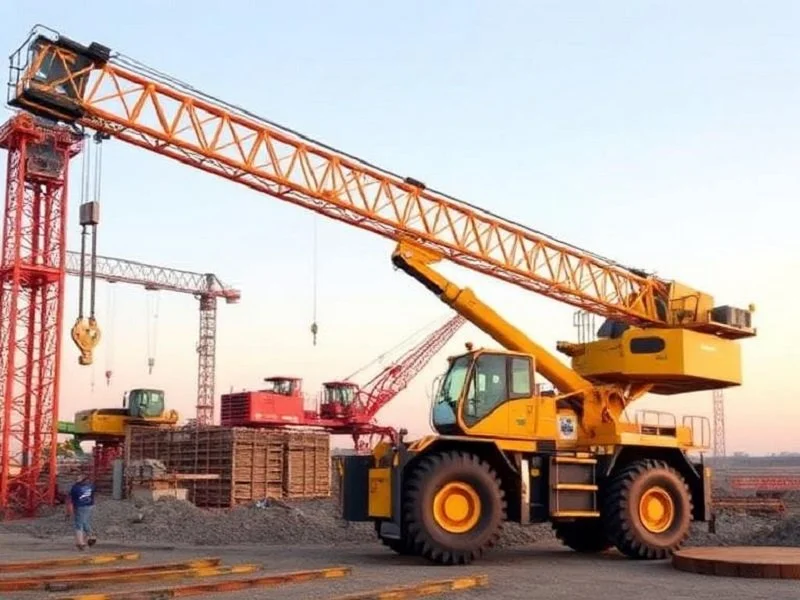
Why All Terrain Cranes Are Essential for Modern Construction Sites
Have you ever wondered what makes a construction project run smoothly, even when the terrain looks impossible to navigate? Or perhaps you've asked yourself how massive steel beams get lifted into place on sites that seem barely accessible? The answer often lies in one remarkable piece of machinery: the all terrain crane.
Have you ever wondered what makes a construction project run smoothly, even when the terrain looks impossible to navigate? Or perhaps you've asked yourself how massive steel beams get lifted into place on sites that seem barely accessible? The answer often lies in one remarkable piece of machinery: the all terrain crane.
These versatile workhorses have become the backbone of modern construction across Australia. From bustling city centres to remote mining sites, all terrain cranes are making the impossible possible. They combine the best features of various crane types into one powerful package, allowing construction teams to tackle challenges that would have been unthinkable just a few decades ago.
In this article, we'll explore exactly why all terrain cranes have become so vital to today's construction industry. You'll discover what sets them apart from other crane types, the incredible range of applications they're suited for, and how to choose the right one for your next project. Whether you're a project manager, a site supervisor, or simply curious about construction equipment, this guide will give you a clear understanding of why these machines are genuinely essential on modern construction sites.
What is an All Terrain Crane?
An all terrain crane is a mobile crane designed to operate on both public roads and rough, uneven ground. Think of it as the Swiss Army knife of the crane world. It combines the road-travelling capabilities of truck cranes with the off-road prowess of rough terrain cranes.
Key Features That Set All Terrain Cranes Apart
What makes these machines so special? First, they feature multiple axles—usually between two and nine—giving them exceptional stability and weight distribution. This design allows them to carry heavier loads while maintaining manoeuvrability.
They also come equipped with all-wheel steering and all-wheel drive systems. This means they can navigate tight spaces on construction sites and handle muddy, sandy, or rocky conditions without getting stuck. Plus, their adjustable suspension systems allow operators to level the crane on uneven ground quickly.
How Do All Terrain Cranes Differ from Mobile Cranes?
While all mobile cranes share some similarities, all terrain cranes stand out for their versatility. Standard truck-mounted cranes work brilliantly on paved surfaces but struggle off-road. Rough terrain cranes excel on challenging ground but can't legally travel on highways.
All terrain cranes bridge this gap perfectly. They can drive from one site to another on public roads, then roll straight onto unprepared ground and get to work. This dual capability saves significant time and eliminates the need for separate transport arrangements.
Why Are All Terrain Cranes So Popular on Construction Sites?
The popularity of these cranes isn't accidental. Construction professionals across Australia choose them for compelling practical reasons that directly impact project success.
Unmatched Versatility Across Job Sites
One crane, countless applications—that's the beauty of all terrain cranes. They perform equally well in urban environments with limited space and on sprawling rural sites. This flexibility means contractors don't need multiple crane types in their fleet.
Whether you're erecting structural steel, placing HVAC units on rooftops, or lifting prefabricated components, an all terrain crane can handle it. This adaptability makes them particularly valuable for companies working across diverse project types.
Superior Mobility on Challenging Ground Conditions
Australian construction sites aren't always conveniently flat and paved. Many projects involve uneven terrain, soft ground, or steep gradients. All terrain cranes thrive in these conditions.
Their powerful drive systems and specialised tyres grip surfaces that would defeat other crane types. Adjustable outriggers provide rock-solid stability even on slopes, ensuring safe lifting operations regardless of ground conditions.
Quick Setup and Reduced Downtime
Time is money on any construction site. All terrain cranes arrive ready to work with minimal setup requirements. Most can be fully operational within 15 to 30 minutes of arriving on site.
This quick deployment means more productive hours and faster project completion. When compared to crawler cranes that require significant assembly time, the efficiency gains become even more apparent.
What Are the Benefits of Using an All Terrain Crane?
Beyond versatility, these cranes deliver tangible benefits that justify their investment for construction companies of all sizes.
Cost-Effectiveness for Multi-Site Projects
For contractors managing multiple sites, all terrain cranes offer outstanding value. One crane can service several locations without needing expensive transport between jobs. This self-mobilisation capability significantly reduces logistics costs.
The reduced need for specialised transport trucks also means fewer permits, less coordination, and lower overall project expenses. For busy construction firms, these savings add up quickly over a year's worth of projects.
Enhanced Safety Features for Complex Lifts
Modern all terrain cranes come packed with safety technology. Load moment indicators prevent overloading, while anti-collision systems protect both the crane and surrounding structures. These features give operators confidence during complicated lifts.
Many models also include outrigger monitoring systems that alert operators to ground stability issues. This technology is particularly valuable on Australian sites where soil conditions can vary dramatically.
Impressive Lifting Capacities for Heavy Loads
Don't let their mobility fool you—these cranes pack serious lifting power. Modern all terrain cranes can handle loads ranging from 30 tonnes up to an incredible 1,200 tonnes for the largest models.
Telescopic booms extend to impressive heights, with some reaching over 100 metres. This combination of capacity and reach makes them suitable for high-rise construction and heavy industrial applications alike.
What Can All Terrain Cranes Be Used For?
The applications for all terrain cranes span nearly every sector of the construction industry. Their versatility makes them genuinely multi-purpose machines.
Commercial and Residential Construction
From apartment blocks to shopping centres, these cranes handle the heavy lifting that modern building projects demand. They're perfect for positioning structural elements, setting mechanical equipment, and installing facade panels.
On residential sites, they efficiently place roof trusses, modular bathroom pods, and prefabricated wall sections. Their compact footprint makes them especially useful on tight suburban building sites.
Infrastructure and Civil Engineering Projects
Bridge construction, road upgrades, and utility installation all benefit from all terrain crane capabilities. Their ability to work on unprepared ground makes them ideal for infrastructure projects in greenfield locations.
They're also brilliant for maintenance work on existing infrastructure, where access is often restricted and ground conditions are less than ideal.
Mining and Resource Industry Applications
Australia's mining sector relies heavily on all terrain cranes. These machines support equipment installation, maintenance activities, and construction of processing facilities across remote sites.
Their ability to travel independently to isolated locations reduces project costs significantly. When the nearest town might be hundreds of kilometres away, self-mobilisation becomes incredibly valuable.
Emergency Response and Disaster Recovery
When natural disasters strike, all terrain cranes are often among the first heavy equipment on scene. They clear debris, assist with rescue operations, and help rebuild damaged infrastructure.
Their ability to navigate damaged roads and unstable ground makes them essential for emergency response teams across Australia.
How Much Does It Cost to Hire an All Terrain Crane?
Understanding crane hire costs helps project managers budget accurately and choose the most cost-effective solution for their needs.
Factors That Influence Crane Hire Rates
Several variables affect hire prices. Crane capacity is the primary factor—larger cranes with greater lifting ability cost more. Hire duration also matters, with longer-term rentals typically offering better daily rates.
Location plays a role too. Remote sites may incur additional mobilisation fees. Operator requirements, insurance, and any specialised rigging equipment needed will also influence the final cost.
Hiring vs Purchasing: What Makes Sense for Your Project?
For occasional users, hiring makes clear financial sense. You avoid massive capital outlay, maintenance responsibilities, and storage costs. Hire companies also handle operator training and certification requirements.
However, companies with consistent, high-volume crane needs might find purchasing more economical over time. The decision depends on your specific usage patterns and financial situation.
How Do You Choose the Right All Terrain Crane for Your Project?
Selecting the appropriate crane requires careful consideration of several factors. Getting this decision right ensures safe, efficient operations.
Assessing Load Requirements and Reach
Start by determining your maximum lift weight and the height or distance required. Remember to factor in rigging equipment weight when calculating total load. Always choose a crane with capacity to spare—operating at maximum limits isn't wise practice.
Consider the number of lifts required too. If you're doing many lifts daily, efficiency features become more important than for occasional use.
Evaluating Site Conditions and Access
Examine your site thoroughly before selecting a crane. What's the ground condition like? Are there overhead obstacles? How much space is available for outrigger deployment?
Access routes matter as well. Measure any narrow passages or tight corners the crane must navigate to reach working positions.
Working with Experienced Crane Operators
Even the best crane is only as good as its operator. Insist on working with properly certified, experienced operators who understand both the equipment and your specific project requirements.
Good operators contribute significantly to project safety and efficiency. They can often suggest optimal crane positioning and lifting sequences that save time and reduce risk.
Common Challenges Solved by All Terrain Cranes
These machines regularly overcome obstacles that would stall projects using other equipment. Limited access? Their compact dimensions and steering capability handle tight spaces brilliantly. Variable ground conditions? No problem with their adjustable suspension and stabilisation systems.
Time pressure is another challenge they address effectively. Quick setup times and self-mobilisation mean projects stay on schedule even when crane requirements change unexpectedly.
The Future of All Terrain Cranes in Australian Construction
The future looks bright for all terrain cranes. Manufacturers continue developing cleaner, more efficient engines that meet tightening environmental standards. Electric and hybrid models are already entering the market.
Advanced telematics and remote monitoring capabilities are becoming standard features. These technologies improve maintenance scheduling, enhance safety oversight, and provide valuable operational data for project managers.
Making a Smart Choice for Your Next Project
All terrain cranes have earned their essential status on modern construction sites through proven performance, remarkable versatility, and genuine problem-solving capability. From remote mining operations to inner-city developments, they provide the lifting power and flexibility that today's projects demand.
When planning your next construction project, consider how an all terrain crane might streamline operations and reduce overall costs. Their ability to handle diverse conditions, quick setup times, and impressive lifting capacities make them smart choices for projects of all sizes. For businesses seeking reliable all terrain crane hire in Melbourne, these versatile machines offer an efficient solution for a wide range of construction and infrastructure projects.
So, whether you're managing a multi-storey commercial development or coordinating infrastructure upgrades across multiple sites, all terrain cranes deserve serious consideration. They're not just convenient—they're genuinely essential tools that help construction professionals deliver successful projects throughout Australia.

The Most Valuable Home Improvements for Increasing Resale Value
Not every dollar you put into your home comes back when you sell it. Understanding which improvements actually move the needle on resale value is where smart homeownership starts.
We partnered with a construction company for this post. The opinions in the post are honest. All reviews and opinions expressed in this post are based on our personal views. We are excited because we know you will love it.
Not every dollar you put into your home comes back when you sell it. Understanding which improvements actually move the needle on resale value is where smart homeownership starts.
What's Actually Controlling Your Home's Resale Value
A lot of things affect how much a buyer will pay for your home. Location matters. Market timing matters. But the condition and features of the property itself? That's the one variable you actually control.
Some improvements are purely emotional. They make you love your home more, but buyers won't pay extra for them. Others directly translate to higher offers, faster sales, and more competitive positioning in your market.
The improvements that consistently deliver the best return are the ones that address what buyers notice first, what inspectors flag most often, and what lenders require before they'll approve a mortgage.
That last category matters more than most homeowners realize. If your home has deferred maintenance that causes a deal to fall apart during inspection, no amount of cosmetic upgrades will save it.
Why Not All Renovations Are Created Equal
This is something I walk through with almost every homeowner who's preparing to sell. The instinct is to renovate the things you've always wanted to fix: the master bath, the finished basement, the dream kitchen. And sometimes those are exactly the right calls. But sometimes they're not.
A full kitchen remodel in a $250,000 neighborhood does not produce the same return as a full kitchen remodel in a $700,000 neighborhood. The surrounding market sets a ceiling on what buyers will pay, and you can't renovate your way past it.
The renovations that consistently produce strong returns share a few traits: they appeal to the broadest pool of buyers, they address functional needs rather than personal taste, and they're priced appropriately relative to the home's overall value.
The longer your home sits on the market because buyers keep passing, the more you lose. Carrying costs add up, negotiating leverage shrinks, and the final sale price often suffers. Improvements that help you sell faster are just as valuable as improvements that help you sell for more.
What Buyers Notice Before They Ever Walk Through the Door
The first impression your home makes happens from the street. Curb appeal isn't a cliché. It's a real factor in whether buyers even schedule a showing, and it colors everything they think about the home before they step inside.
The good news is that curb appeal improvements are often among the least expensive with the highest return.
Fresh exterior paint or siding repair consistently ranks as one of the top ROI projects. A home that looks tired from the outside creates doubt before the buyer has seen a single room.
Landscaping and lawn condition matter more than most sellers expect. You don't need elaborate plantings. You need clean edges, healthy grass, trimmed shrubs, and a front entrance that feels welcoming rather than neglected.
The front door is worth paying attention to. Replacing or repainting a front door, adding new hardware, and updating exterior lighting are low-cost, high-visibility improvements that signal the home has been cared for.
These aren't glamorous projects. But they are the ones that get buyers in the door, which is the prerequisite for everything else.
The Renovations That Reliably Return the Most Value
Kitchen Updates
The kitchen remains the room buyers care most about. But the word "update" is doing a lot of work here. A full gut renovation rarely pays for itself. A targeted refresh often does.
Replacing outdated cabinet hardware, installing new countertops, updating lighting fixtures, and adding a modern backsplash can transform the feel of a kitchen for a fraction of the cost of a full remodel. If the cabinets are structurally sound, painting or refacing them rather than replacing them is often the smarter financial move.
Stainless appliances and stone or quartz countertops have become baseline expectations in many markets. If yours are lagging well behind, it's worth addressing.
Bathroom Improvements
Updated bathrooms rank alongside kitchens in buyer priorities. Again, the goal isn't a luxury spa renovation. It's removing the things that make buyers wince.
Dated tile, old fixtures, poor lighting, and visible mildew or water damage are the red flags to address. A bathroom that looks clean, bright, and functional will outperform a technically superior bathroom that shows signs of neglect.
If you have only one bathroom, adding a second, even a modest half bath, can meaningfully expand your buyer pool and command a higher sale price.
Flooring
Few things date a home faster than worn carpet or scratched hardwood. In most markets, hardwood floors (or quality engineered hardwood) are a strong selling feature, particularly on the main level of the home. Carpet in bedrooms is generally acceptable; carpet in living areas and kitchens is not.
Replacing flooring before listing is one of those improvements that rarely hurts and frequently helps. It's also one buyers can see and feel immediately. There's no uncertainty about condition the way there might be with a roof or HVAC.
Mechanical Systems: HVAC, Roof, and Windows
Here's the category that catches sellers off guard. Buyers, along with their inspectors and lenders, pay close attention to the age and condition of the major mechanical systems. A home with a 25-year-old roof, an aging HVAC system, and drafty windows is a harder sell, even if the kitchen was just renovated.
You don't necessarily need to replace everything. But you do need to know the condition of these systems, disclose appropriately, and price or credit accordingly. Replacing a failing HVAC system before listing can prevent a deal from collapsing. A new roof is one of the highest-return projects in terms of preventing buyer objections, even if it doesn't always add dollar-for-dollar value on paper.
Finished Basement or Additional Living Space
In markets where square footage is at a premium, a finished basement or converted bonus room can add meaningful value. The key is ensuring the space is properly permitted, insulated, and finished to a standard that feels livable and not like an afterthought.
Unfinished basements that are clean, dry, and well-maintained are far better than unfinished basements that look like they've been ignored for twenty years. Even without a full finish, addressing moisture, improving lighting, and cleaning up the space sends a message to buyers.
The Mistake That Costs Sellers the Most
The most expensive renovation decision is usually the one made too late or based on personal preference rather than market data.
Sellers who renovate their taste into a home, adding bold wallpaper, very specific tile choices, or room layouts that don't match how most buyers live, can actually make the home harder to sell. Neutralizing a highly personalized space is often more work for buyers than starting with a blank slate.
The second most common mistake is skipping the low-cost, high-visibility improvements in favor of expensive projects that most buyers won't even notice. Fresh paint in a neutral, consistent color is one of the highest-return investments a seller can make. It costs relatively little, it photographs well, and it removes one of the most common reasons buyers pass on a showing.
If you're not sure where to focus, here's a useful exercise: walk through your home as if you're seeing it for the first time. Better yet, ask a friend or real estate agent you trust to do the same and tell you honestly what they notice.
What to Check Before You List
If you're within twelve months of selling, there are a few fundamentals worth reviewing before you decide on any major improvement projects.
Start with a pre-listing inspection. Knowing what a buyer's inspector is going to find puts you in a position to address it on your timeline and your terms, rather than scrambling during the negotiation period or watching a deal fall apart.
Check the condition of your roof and HVAC. These are the items most likely to trigger repair requests or price reductions. If they're near the end of their useful life, factor that into your planning.
Look at comparable sales in your neighborhood. What are homes selling for? What features do the highest-selling homes have? This tells you where the ceiling is and helps you prioritize the improvements most likely to get you to the top of that range.
When Should You Hire a Professional?
Some improvements are genuinely DIY-friendly. Paint, landscaping, hardware replacement, and light fixture updates are within reach for most homeowners and can be done without professional help.
Others are not. Electrical, plumbing, roofing, and structural work should be permitted and professionally executed by a local contractor such as Payne Family Construction. Unpermitted work can come back to haunt a sale. Buyers and their lenders will want documentation, and work done without permits can complicate or derail a closing.
For large projects, get multiple quotes. For projects that affect the home's systems or structure, prioritize quality over cost. The goal isn't to spend as little as possible on the renovation. It's to maximize what comes back at closing.
The best home improvements aren't always the most dramatic ones. They're the ones that meet buyers where they are, remove obstacles to a purchase decision, and position your home competitively in your market.