

A resource for those seeking information on organizing and transforming spaces.

The Eight-Week Countdown: Planning a London Move That Doesn't Fall Apart
Parking suspensions, lift bookings, completion chains and packing order — a week-by-week plan for moving house in London without the day falling apart
We partnered with a home improvement company. for this post. The opinions in the post are honest. All reviews and opinions expressed in this post are based on our personal views. We are excited because we know you will love it.
Moving house is stressful anywhere. Moving house in London is a logistics exercise wearing the costume of a domestic milestone.

The furniture is the same as anywhere else. Everything around it isn't. The streets are narrower, the parking is controlled to within an inch of its life, the staircases were built for households that owned considerably less, the lifts belong to a building manager with a booking sheet, and the completion chain that has to release your keys is spread across half the South East. A move that takes a morning in a market town can eat a day and a half in Zone 2 if nobody thought about where the van was going to stand.
The good news is that almost every London-specific problem is solvable in advance. Here's how the eight weeks before a move should actually run.
Eight weeks out: get quotes that are worth the paper
Start with surveys rather than prices. Any firm quoting a firm number off the back of a phone call and a postcode is guessing, and guesses get revised upwards on the day — usually while your possessions are already on the pavement.
A proper survey, whether in person or by video walkthrough, establishes the volume of your belongings, the access at both ends, whether anything needs dismantling, and whether specialist items — a piano, a large appliance, a full-height wardrobe that was assembled in the room — need particular handling. That's the difference between a quote and an estimate.
While you're comparing, check the substance behind the sales patter. Is the firm a member of a recognised trade body such as the British Association of Removers? What do its goods-in-transit and public liability policies actually cover, and to what limit per item? Are the crew employed, or subcontracted on the day? Companies offering professional home removals London households can rely on will answer all of that without hesitating, in writing. Vagueness about insurance is the single most useful red flag in the industry.
Get three quotes. Discard the cheapest if it can't explain why it's cheapest.
Six weeks out: measure things, and get rid of things
Two jobs, both boring, both worth hours later.
The first is decluttering. You're paying by volume, and London storage costs make hoarding expensive twice over. Charity shops, marketplace listings and a booked council bulky-waste collection will between them remove a surprising amount.
The second is measuring. Get the dimensions of every large item, and of every doorway, stairwell turn and lift car at the property you're moving into. Period conversions are the classic trap — a sofa that walked into a Victorian ground floor won't necessarily make a tight half-landing turn on the second. If something clearly won't go, you have six weeks to sell it, replace it, or arrange for it to come in through a window, which is a real service that needs booking and costs money.
Four weeks out: the London admin
This is the stage that separates smooth moves from chaotic ones, and it's the one most people skip.
Parking. If your street is controlled — most of inner London is — the removal van cannot simply arrive and stop outside. You'll usually need a suspended parking bay or a dispensation from the borough. Every council runs its own scheme, its own fee and its own notice period; several want at least five working days and some ask for considerably more, particularly in high-demand areas. Apply for both ends of the move, and apply early. A van forced to park eighty metres away doesn't just slow the job down — many firms charge a long-carry fee for it.
Lifts and loading bays. If either property is a flat in a managed block, contact the building manager now. Many require the lift to be booked, protective blankets fitted, moves restricted to weekday working hours, and proof of the removal firm's public liability insurance before they'll allow access at all. Blocks with a single service lift can be booked out weeks ahead on busy weekends.
Vehicle access and compliance. Large vehicles entering London are subject to emissions and safety schemes, and a reputable firm will have that covered as standard — but ask. Flag any low bridge, width restriction, gated mews, red route or bollarded street at either address, because the crew's route planning depends on knowing.
Two weeks out: pack like someone who has to unpack
Pack by room, not by category, and label every box on the side rather than the top — boxes get stacked, and a label on the lid is invisible in a loaded van.
Write the destination room on the label rather than the origin room. “Kitchen” is far more useful to a crew member holding the box at the far end than “under the stairs”.
Build an essentials box that travels with you in the car, not in the van: kettle, mugs, tea, phone chargers, toilet roll, hand soap, a towel each, medication, basic tools, scissors, and clean bedding for every bed. Someone always underestimates how late the last box gets unloaded.
Book professional packing if you're moving with small children, working full-time until the day before, or moving a household with a lot of fragile items. It is faster than you expect, and it is usually the difference between a firm's insurance covering breakages and not.
Finally: run down the freezer, book meter readings, redirect your post, and tell the council, your GP, your insurer, your bank and the DVLA that you're moving.
Moving week: understand the chain
If you're buying and selling, your move day is governed by completion, and completion is governed by money moving between solicitors along a chain of transactions. Keys are rarely released before late morning and sometimes not until mid-afternoon.
Plan for that rather than hoping around it. Ask your removal firm how they handle a delayed completion, whether the load can wait on the vehicle, and what it costs if it does. Confirm the crew size and arrival window in writing the week before. Make sure one named person at each end has a working phone and the authority to make decisions, and give the crew that number.
The day itself
A good crew arrives early, walks both properties before touching anything, protects floors and doorframes, dismantles what needs dismantling, wraps upholstery and mattresses, loads to a plan rather than to whatever fits, and keeps a running inventory.
Your job is to stay reachable, keep the kettle going, and make the destination decisions quickly — which room, which wall, upstairs or down. Experienced home removals London teams will keep the whole operation moving if you let them work; the single biggest cause of delay on the day is a household still deciding what goes where while the van is being emptied.
Before the crew leaves, walk the old property room by room — including the loft, the garden shed and the cupboard under the stairs. Check the inventory. Note any damage while everyone is still standing there, in writing, with photographs. Claims raised weeks later are far harder to resolve.
And then stop
Unpack the essentials box, make the beds, and leave the rest. You've just run a logistics operation across one of the most congested cities in Europe. The boxes will still be there tomorrow.
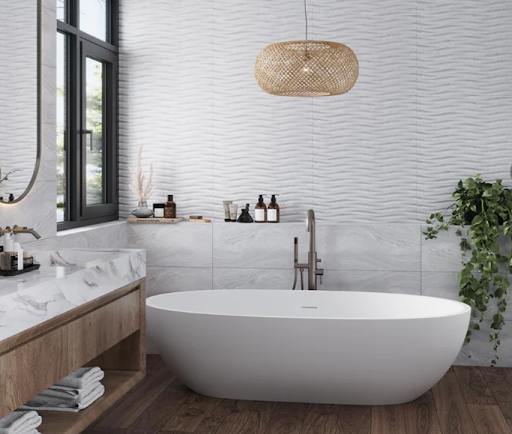
Natural Look Tiles: For Organic and Earthy Bathroom Floors
A comfortable, restorative, and calm bathroom can help you disconnect from the hustle and bustle of daily life and relax and recuperate. A simple and efficient way to make your bathroom feel inviting and appealing is through organic materials and designs. Wood, stone, marble, fiber, etc., can help you bring a lot of texture, warmth, and visual depth to your bathroom and connect it to Mother Nature.
We partnered with a home design company. for this post. The opinions in the post are honest. All reviews and opinions expressed in this post are based on our personal views. We are excited because we know you will love it.
A comfortable, restorative, and calm bathroom can help you disconnect from the hustle and bustle of daily life and relax and recuperate. A simple and efficient way to make your bathroom feel inviting and appealing is through organic materials and designs. Wood, stone, marble, fiber, etc., can help you bring a lot of texture, warmth, and visual depth to your bathroom and connect it to Mother Nature.
While natural materials can be used in bathrooms, some of them, especially wood, can be difficult to maintain. In such cases, using natural-look tiles is the best way to introduce nature’s beauty to your bathroom in a more practical and durable manner. These tiles combine the elegance of natural materials with the strength and practical benefits of tiling materials, making them the perfect tiling choice for any bathroom flooring.
With the help of modern manufacturing techniques, tiles are now able to mimic the fine details of natural materials such as veining, patterns, and surface variation with a high level of precision. This helps homeowners and designers alike to create a natural aesthetic without the hassle and constraints of the actual materials. Unlike actual materials, natural-look tiles can be used across bathroom floors where the real deal would be a strict no-no.
Defining Natural Look Tiles
Natural look tiles are designed to mimic the look of various natural materials such as stone, wood, marble, fabric, and concrete. These tiles not only try to achieve visual similarity, but also try to simulate the finish and surface of the real material. They are typically made using durable materials such as porcelain and ceramic, which provide them with structural reliability and aesthetic appeal.
Compared to actual natural materials, natural look tiles have many benefits. These include:
● Better moisture resistance compared to natural wood or porous stone.
● Easier cleaning and lower maintenance requirements.
● Improved durability for long-term use.
● Easy installation.
● Wider design flexibility across different bathroom styles.
This makes them suitable for bathroom floors where durability is just as important as appearance. Instead of limiting material choices based on environment, natural look tiles expand what is possible across different areas of the home. Here are the top five types of natural-looking tiles that are popular today.
1. Wood Look Tile: For Warmth and Wonder
As the name suggests, wood look tiles simulate the wooden grain and tonal shifts of real hardwood while discarding its many limitations. Available in various formats such as planks, large-format tiles, mosaic, and more, these tiles help create a natural and wooden feel in any space.
Unlike real wood, wood-like tiles are highly stable and do not contract or expand with changes in moisture or temperature. This makes them highly reliable for bathroom flooring where water exposure is unavoidable. Larger plank formats can also visually elongate smaller bathrooms, making the space appear more open and continuous. They work especially well in contemporary, Scandinavian, farmhouse, and Japandi-inspired interiors.
2. Concrete Look Tile: Simple Yet Bold
Concrete-look tiles are known for their understated elegance and a clean look that goes well with modern design styles. While real concrete is sturdy, it is susceptible to cracking and requires sealing. Concrete-look tiles provide a good alternative to real concrete as they are low on maintenance and high on aesthetics.
Instead of strong patterns, concrete-look tiles feature various soft tonal shifts that add depth and dimension to the surface. They serve as a great foundation on which you can add various design elements.
When you are on the lookout for tiles designed for wet-area flooring, concrete-look tiles provide exceptional traction for better footing. They are highly suitable not just for bathrooms but also for shower floors and other high-moisture zones. Concrete-look tiles create an uncluttered, calm look on bathroom floors, and their neutral colors go well with simple fixtures.
3. Stone Look Tiles: Where Tile Meets Substance
Stone-look tiles recreate the appearance of natural materials such as slate, limestone, and travertine, bringing organic texture and visual variation in a more durable and predictable tile format.
While natural stone often varies significantly in color, thickness, and finish, stone-look tiles offer a more controlled and refined interpretation of these characteristics. This allows for easier installation, greater consistency, and a more uniform overall appearance without losing the natural charm of real stone.
Perfect for all kinds of wet spaces, stone-look tiles not only add a natural beauty to your floors (and walls) but also provide traction to keep you safe. They are highly recommended in homes with pets, children, and the elderly.
4. Marble Look Tiles: Elegance with Ease
The natural veining and contrast found in natural marble are often recreated to perfection in marble-look tiles. By mimicking the beauty of marble patterns, the tiles create a more predictable design result.
These tiles are available in a range of styles, from subtle white marble effects to bold, dramatic veining. On bathroom floors, they help brighten the room and create a more refined, upscale atmosphere.
Because they do not require sealing and are less prone to staining, they are easier to maintain than natural marble. This makes them a practical choice for spaces that see regular use. Large-format marble look tiles can make smaller bathrooms feel more expansive, while mosaic versions work well in shower floors where additional grip is beneficial.
5. Fabric Look Tile: Fancy and Fabulous
Fabric look tiles bring a soft visual texture that looks just like textile or woven surfaces. Fabric tiles, given their textural and material differences, focus on creating a tactile and layered effect.
These tiles work particularly well in bathrooms designed around calm, muted palettes. Their understated surface patterns add depth without overwhelming the bath space, making them suitable for minimalist and contemporary interiors.
Their purpose is to add depth without introducing strong patterns, making them useful in spa-like bathrooms where subtlety is important.
Conclusion
Natural look tiles make it possible to create bathroom floors that feel warm, grounded, and visually connected to nature without compromising on durability or practicality.
When used thoughtfully, they can create bathrooms that feel cohesive, calming, and highly functional. Their value lies not only in how closely they replicate natural materials, but also in how well they withstand the demands of everyday use.

Signs Your Home’s Insulation May Need an Upgrade
Your home may need an upgrade with its insulation capabilities but if you miss the warning signs and red flags, you won’t know when or how to act.
A comfortable home makes busy family life easier, especially when everyone moves between work, school, meals, homework, and bedtime routines. Insulation plays an important role in maintaining that comfort because it keeps outdoor temperatures from affecting indoor spaces as quickly. Older, damaged, or insufficient insulation can make certain rooms uncomfortable and force heating or cooling systems to work harder.
Moreover, learning the common red flags of insulation trouble can help you decide when your home deserves a closer look. Below, we go into greater detail about the various signs your home’s insulation may need an upgrade.
Some Rooms Never Feel Comfortable
One room that always feels warmer or colder than the rest of the house can point to an insulation problem. Bedrooms above garages, finished attics, additions, and rooms along exterior walls may show temperature differences more clearly than central spaces. Poor insulation allows heat to move more easily between indoor and outdoor areas, which can make family comfort inconsistent. Before constantly adjusting the thermostat, pay attention to whether the same rooms cause problems throughout each season.
You can make a simple comparison by walking through the house while the heating or cooling system runs normally. Notice whether certain spaces feel dramatically different even though doors remain open and air can circulate freely. Windows, ductwork, and direct sunlight can also affect room temperatures, so insulation doesn’t always deserve the blame. However, consistent hot or cold spots provide a good reason to investigate the home's thermal barrier.
Energy Bills Keep Creeping Higher
Higher utility bills can signal that your heating and cooling equipment works harder than necessary. When insulation cannot slow heat movement effectively, your HVAC system may run longer to maintain the temperature your family prefers. Compare bills from similar seasons rather than comparing a mild spring month with the middle of winter. A noticeable increase without a major change in household habits can justify checking your insulation and other efficiency concerns.
Start with a little household detective work before assuming you need a major renovation. Look for changes in utility rates, thermostat settings, weather conditions, and appliance use that might explain the difference. If these factors don’t account for the increase, consider asking a qualified professional to evaluate insulation and possible air leaks. Finding the source can help you make a focused improvement instead of spending money on random energy-saving fixes.
Walls and Ceilings Feel Unusually Cold or Hot
Interior surfaces can offer clues about how well your home separates living spaces from outdoor temperatures. Exterior walls that feel noticeably cold during winter or unusually warm during summer may lack enough insulation for local conditions. Ceilings below an attic can show similar temperature differences when insulation has settled, shifted, or never provided adequate coverage. You don’t need special equipment to notice a surface that consistently feels different from nearby interior areas.
Avoid judging the entire home from one wall because sunlight, plumbing, vents, and room layouts can affect surface temperatures. Instead, look for patterns across several rooms and compare exterior surfaces with interior walls. Repeated differences can help you identify areas that deserve professional attention. This approach keeps the process manageable when you already have a packed family schedule.
Drafts Keep Showing Up Around the House
Drafts often make a home feel chilly even when the thermostat shows a comfortable temperature. Air can enter through gaps around windows, doors, attic openings, electrical penetrations, and other small spaces in the home's exterior shell. Insulation and air sealing work together, so fixing one issue without considering the other may leave comfort problems behind. A home energy assessment can identify where unwanted air movement occurs.
You might notice several clues during everyday routines, such as:
Cold air seems to move near exterior walls during winter.
Rooms near the attic or garage feel harder to keep comfortable.
Floors feel noticeably cold in particular parts of the house.
Indoor temperatures change quickly after the HVAC system stops running.
Certain family spaces need portable heaters or fans more often than others.
Furthermore, these signs don’t automatically prove that insulation needs replacement. They simply give you useful information about where the home's comfort problems appear most often. Write down recurring issues for a week or two instead of relying on what you remember during a busy day. A short record can make a future inspection more focused and productive.
Your HVAC System Seems To Run Constantly
Heating and cooling systems naturally cycle throughout the day, especially during very hot or cold weather. However, unusually long or frequent cycles can suggest that conditioned air escapes too quickly or outdoor heat enters too easily. Weak insulation can contribute to this problem because the house struggles to hold the temperature that the HVAC system creates. Frequent operation can also add unnecessary wear to equipment over time.
Several other issues can cause long HVAC cycles, including dirty filters, aging equipment, duct problems, and incorrect thermostat settings. Check simple maintenance items first and follow the manufacturer's recommendations for your system. If the equipment appears healthy but comfort problems continue, insulation may deserve a closer inspection. Looking at the home as one connected system can help you avoid treating symptoms instead of causes.
Older Insulation May No Longer Meet Your Needs
Older homes often contain insulation that reflects building practices from a different era. Previous owners may also have renovated certain areas while leaving attics, walls, crawl spaces, or additions with inconsistent coverage. Insulation can settle or sustain damage over time, and renovations can create new gaps that affect overall performance. An inspection can reveal whether the existing material still suits the home's current layout and your family's comfort needs.
You may encounter several insulation materials while researching an upgrade, which can make the subject feel more complicated than it needs to. Learning the science behind how spray foam insulation works can explain why some products insulate surfaces and reduce air movement through small gaps. Spray foam expands after application, allowing it to fill spaces that might otherwise allow unwanted airflow. A qualified installer can explain whether that option or another insulation type makes sense for a particular part of your home.
You don’t need to become an insulation expert to recognize the signs something is wrong and you may need to upgrade. Watch for uncomfortable rooms, rising energy use, frequent HVAC operation, drafts, attic concerns, and quick indoor temperature changes. Gather a few observations, rule out simple causes, and bring in a qualified professional when the pattern points toward a larger problem. Addressing insulation concerns at the right time can help your family enjoy a more comfortable and manageable home throughout the year.

How Clutter Can Hide Your Home’s Best Features
Don’t let clutter keep your home from feeling cozy and welcoming. Use this guide to begin addressing the common problem areas in your home.
Your home may have beautiful architectural details, generous rooms, and cozy family spaces, yet everyday clutter can quietly pull attention away from them. Busy working moms often manage schedules, school papers, laundry, groceries, and countless household items, so belongings naturally collect in convenient spots. Unfortunately, crowded surfaces and overfilled rooms can make a home feel smaller and less welcoming than it really is. Let’s explore how clutter can hide your home’s best features and a few ways to regain control over your space.
Clutter Changes How You See a Room
Clutter competes for attention because your eyes have more objects to process whenever you enter a room. A beautiful fireplace may disappear behind baskets, toys, decorations, or furniture that slowly gathered around it. Kitchen countertops can look smaller when appliances, mail, lunch supplies, and reusable bottles cover every available section. Clearing unnecessary items gives your eyes somewhere to rest and allows the room’s strongest features to become the focus again.
You don’t need an empty or perfectly styled house to achieve this effect. Instead, decide what deserves attention in each room and reduce the objects that compete with that feature. You might highlight a sunny window in the living room, attractive cabinets in the kitchen, or a comfortable reading corner in a bedroom. This simple organizing strategy helps your home feel intentional without making family spaces feel stiff or unrealistic.
Too Much Stuff Can Make Rooms Feel Smaller
A room often feels cramped when belongings cover the floor, furniture, and other visible surfaces. Extra furniture can create the same problem, especially when a family keeps pieces that no longer serve a clear purpose. Removing a few unnecessary objects can improve walking paths and reveal how much usable space the room actually provides. Better flow also makes mornings, cleanup sessions, and busy evenings easier for everyone in the household.
Start with the areas your family uses most instead of trying to organize the entire house during one exhausting weekend. A focused approach gives you visible progress and makes the project easier to fit around work and family responsibilities. Choose one problem area, finish it, and then move to the next space when your schedule allows. Small organizing sessions can create surprisingly noticeable changes when you tackle the places that collect clutter fastest.
Clear Surfaces Highlight Beautiful Details
Countertops, tables, shelves, and dressers naturally attract objects because they provide convenient landing spots. Over time, those items can cover attractive materials, interesting finishes, or decorative details that originally gave the room personality. Clear most of the surface and leave a few useful or meaningful pieces rather than filling every open section. Your favorite objects will stand out more when they don’t compete with piles of unrelated belongings.
Working moms can make this process easier by giving common items simple homes near the places where family members use them. School papers might go into a designated file, while keys and daily essentials can stay in a small entryway container. A basket can hold toys that children frequently use in the living room without allowing them to spread across the entire space. Easy systems encourage family participation because everyone knows where things belong.
Organization Can Reveal a Home’s Selling Points
Home organization becomes especially useful when you want visitors or potential buyers to notice what makes your property appealing. In fact, organization can increase your home’s value before selling by helping buyers clearly see available space, storage, architectural features, and practical room layouts. Even when you have no immediate plans to move, organizing with that mindset can help you appreciate features that clutter previously covered. You may rediscover generous closets, wide countertops, built-in shelving, or flexible corners that your family can use more effectively.
Pay particular attention to storage areas because packed closets can make available storage look limited. Remove items your family no longer uses, then arrange what remains so that shelves and floors remain partly visible. This approach shows the actual dimensions of the space and makes finding everyday belongings much easier. You gain a more functional home now while also protecting its visual appeal for the future.
Create Simple Systems for Busy Family Life
An organization system only works when your household can realistically maintain it. Complicated categories and picture-perfect storage arrangements may look impressive at first, but they can create more work during a hectic week. Choose broad categories, accessible containers, and convenient storage locations that match your family’s normal routines. The goal should involve reducing stress rather than creating another household standard that requires constant attention.
A few practical habits can prevent everyday belongings from hiding your home’s best features, such as:
Give frequently used items a clear and convenient home.
Keep a basket nearby for belongings that need to return to another room.
Sort incoming mail and school papers before they reach kitchen counters.
Ask family members to spend a few minutes resetting shared spaces each evening.
Donate or discard items when storage areas start becoming difficult to manage.
Make Your Favorite Features the Focus
Once you reduce clutter, decide which details you want each room to showcase. You might arrange seating toward a fireplace, clear decorations away from beautiful built-in shelves, or remove extra items from an attractive kitchen island. This approach gives every space a natural focal point and helps your home feel calmer without requiring expensive renovations. It also encourages you to decorate around features you already love rather than constantly adding more objects.
Remember that a family home should still look and function like a place where real people live. Children need accessible toys, parents need convenient work areas, and everyone needs storage that supports busy routines. Thoughtful decluttering simply creates enough breathing room for those necessities to coexist with the home’s strongest features. When organization supports your family’s habits, keeping rooms comfortable becomes much more manageable.
Clutter often builds gradually, which makes it easy to overlook just how much it changes the appearance and function of your home’s features. Clearing unnecessary belongings can reveal valuable storage, beautiful finishes, better room proportions, and family spaces that feel much easier to enjoy. Start with one visible area, create a simple system, and continue at a pace that works around your responsibilities. With practical home organization and regular decluttering, you can help your home’s best features shine while creating a calmer space for everyday family life.