
How Smart Organization at Home Cuts Energy Waste and Daily Stress
We partnered with a home improvement company for this post. The opinions in the post are honest. All reviews and opinions expressed in this post are based on our personal views. We are excited because we know you will love it.
Introduction

Smart organization at home is a systems-based approach to arranging, storing, and maintaining what you own so your space consumes less energy, and your mind carries less cognitive weight.
When an organization breaks down, inefficiencies quietly multiply. Lights stay on longer because items are hard to find, HVAC vents get blocked by storage, and appliances run longer than needed when routines are interrupted.
The result is not just clutter; it is friction, and friction becomes cost.
In the U.S., household energy expenses make up a meaningful share of annual spending, and even small efficiency gains can add up over the year.
At the same time, research consistently links cluttered environments with higher stress levels, reduced focus, and decision fatigue.
This guide explains how home organization affects energy use, why clutter increases daily stress, what smart organization really means, and how to design a system that saves energy while making everyday life calmer.
How Is Home Organization Connected to Energy Waste?
Home organization is connected to energy waste because clutter and poor placement force your home's systems and your habits to work inefficiently.
When you cannot easily access what you need, you compensate by leaving lights on, leaving appliances running, or keeping areas heated and cooled longer than necessary.
These behaviors are not mistakes; they are predictable outcomes of poor layout.
Clutter increases time-on-task.
Longer tasks mean devices stay powered longer, from kitchen appliances to home office equipment.
Blocked vents, crowded radiators, and overfilled utility areas further reduce efficiency by restricting airflow, forcing HVAC systems to run harder to maintain comfort.
Why Does Clutter Increase Daily Stress Levels?
Clutter increases daily stress by overloading your attention and keeping your brain in a constant state of unfinished processing.
When items lack a clear home, your mind becomes the storage system, tracking what goes where and what still needs to be handled.
That mental overhead accumulates quickly.
Visual clutter also increases decision fatigue.
You make repeated micro-decisions about what to move, what to ignore, and where to start, which drains energy before the day has even begun.
Under stress, people default to convenience behaviors that often increase energy use, such as over-lighting rooms or running appliances longer than needed.
What Is Smart Home Organization?
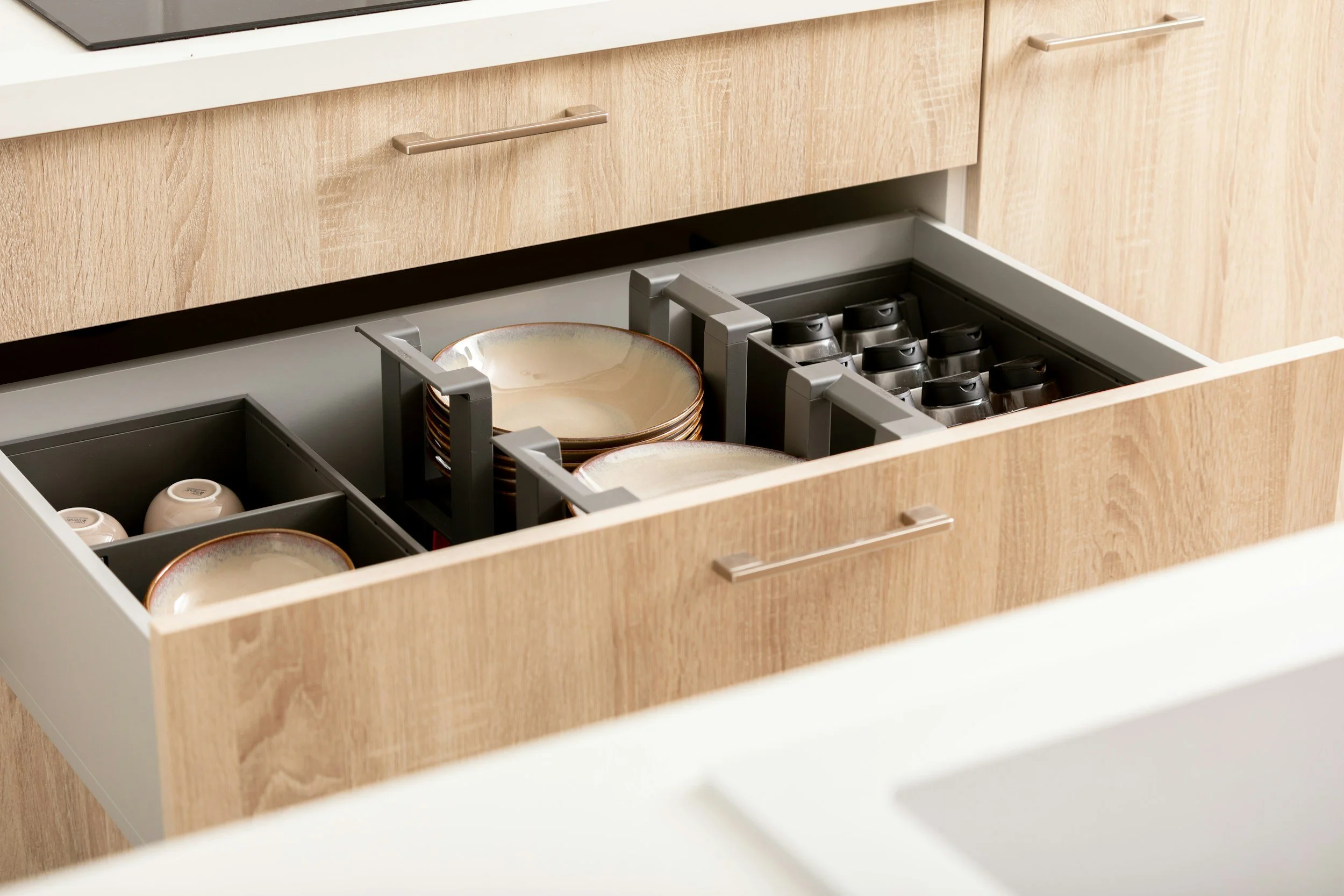
Smart home organization is a structured approach to arranging belongings, spaces, and routines so that daily tasks require minimal effort and generate minimal waste.
It is not about aesthetics or perfection.
It is about aligning storage, layout, and habits with how your household actually functions.
A smart system reduces decisions rather than adding rules.
When placement supports behavior, routines become automatic.
That automation lowers stress, shortens task time, and reduces unnecessary energy use across lighting, appliances, and climate control.
What Are the Main Types of Smart Home Organization Systems?
Smart home organization systems are frameworks that reduce wasted motion, wasted attention, and wasted energy by grouping items around real use patterns.
The most effective systems are simple, flexible, and designed to survive busy days.
They focus on behavior first and storage second.
Zone-Based Organization
Zone-based organization arranges items by activity rather than by category.
A coffee zone, a drop zone, or a cleaning zone places everything needed for a task within a single reach pattern.
This reduces searching, unnecessary room-to-room movement, and unnecessary lighting.
Energy savings come from fewer interruptions.
Tasks finish faster, lights turn off sooner, and appliances are less likely to be left running during distractions.
Energy-Aware Storage Layouts
Energy-aware storage layouts respect airflow, heat transfer, and appliance performance.
Vents, radiators, and equipment clearances are treated as non-negotiable zones.
When airflow is unobstructed, heating and cooling systems deliver comfort with less runtime.
This approach also prevents heat buildup around appliances and electronics, improving efficiency and extending equipment lifespan.
Routine-Driven Organization
A routine-driven organization builds storage around repeatable habits.
Clear labels, consistent placement, and simple reset routines prevent clutter from reappearing.
The system remains usable even when time or energy is low.
Lower friction means fewer forgotten devices, fewer repeated tasks, and less stress-driven energy use.
What Are the Main Benefits of Smart Home Organization?
Smart home organization lowers energy waste, simplifies routines, and reduces daily stress, and these benefits reinforce each other over time.
When your home supports your habits, tasks require fewer corrections and less mental effort.
That translates directly into reduced energy use.
There are 6 primary benefits, ordered from most common to more situational:
Reduce utility usage by shortening lighting, appliance, and HVAC run time during daily tasks.
Lower mental load by eliminating visual noise and repeated decision-making.
Speed up routines by reducing unnecessary movement between rooms.
Improve indoor comfort by keeping airflow and heat distribution unobstructed.
Extend appliance lifespan by preventing overuse and overheating.
Simplify cleaning and maintenance, making long-term efficiency easier to sustain.
What Are the Limitations of Smart Home Organization?
Smart home organization has limitations, including setup time, household buy-in, and maintenance requirements.
If a system is too complex, it fails under stress.
The goal is resilience, not perfection.
There are 4 common limitations:
Require upfront effort to declutter and redesign layouts before benefits appear.
Create friction if other household members do not understand or adopt the system.
Drift over time if routines are not built into daily life.
Increase costs in niche cases involving custom storage or major renovations.
Which Areas of the Home Waste the Most Energy Due to Poor Organization?
The kitchen, home office, and storage areas near HVAC equipment waste the most energy when poorly organized.
These spaces combine frequent use with high task switching, making inefficiencies more costly.
Small disruptions repeat dozens of times per week.
High-traffic areas amplify inefficiency.
Searching for tools, reopening appliances, and reheating spaces all increase background energy use without improving outcomes.
Kitchens
Kitchen clutter increases energy use by extending cooking workflows.
Appliances stay on while items are located, fridge doors remain open longer, and lighting stays active during searches.
Disorganized pantries also contribute to food waste, increasing refrigeration load and the need for replacement purchases.
Closets and Storage Rooms
Overfilled closets and storage rooms often block vents, trap heat, and restrict access to equipment.
This reduces HVAC efficiency and makes maintenance harder.
Storage clutter also leads to duplicate purchases, increasing the overall "stuff load" in the home.
Home Offices
Home offices waste energy when cables, chargers, and devices are left in an always-on state.
Mess makes shutdown harder and standby power invisible.
Heat buildup around electronics further increases cooling demand.
How Does Smart Lighting Organization Reduce Energy Waste?
A smart lighting organization reduces energy waste by aligning lighting with tasks rather than lighting entire rooms by default.
When items live in predictable zones, you avoid turning on lights simply to search.
Task lighting replaces broad illumination in many situations.
In workshops and utility areas, efficient cleaning methods also reduce the time lights and ventilation need to run.
Some homeowners use precision tools, such as industrial laser cleaning machines, to remove rust or coatings without chemicals.
A laser cleaning system, or industrial laser cleaner, shortens cleanup cycles, reducing the time workspaces remain fully lit and ventilated.
How Can Organized Storage Improve Heating and Cooling Efficiency?
Organized storage improves heating and cooling efficiency by keeping airflow paths clear and thermostats accessible.
Blocked vents force HVAC systems to run longer to reach the same temperature.
That extra runtime is pure energy waste.
Treat vents and radiators as equipment, not storage surfaces.
Maintain clearance and avoid soft items that drift into airflow openings.
Clear access allows systems to operate as designed, improving comfort without increasing energy use.
How to Organize Your Home to Reduce Energy Waste and Stress
Organizing your home to reduce energy waste and stress involves identifying friction points, building functional zones, and maintaining simple routines.
The process prioritizes behavior over storage.
There are 5 steps.
Step 1: Identify Energy-Draining Clutter
Note where you search, where you restart tasks, or where you leave devices running.
These hotspots reveal where the organization is breaking down.
Step 2: Create Functional Zones
Assign clear purposes to spaces and place items at the point of use.
Zones reduce motion and decision-making.
Step 3: Reorganize Storage Around Appliances
Give appliances space and stage supplies nearby.
Clear airflow and easy access shorten runtime.
Step 4: Simplify Daily Routines
Build one-touch rules for putting items away.
Fewer decisions reduce stress and wasted energy.
Step 5: Maintain the System Long-Term
Use short daily resets instead of large cleanups.
Stability protects both savings and sanity.
Does Smart Home Organization Cost Money?
Smart home organization does not require spending, though optional upgrades exist.
Most gains come from rearranging what you already own and changing habits.
The highest cost is attention, not cash.
Some homeowners also consider efficiency within a broader financial context, including energy costs and property considerations.
For example, people managing land or resource interests may track expenses alongside topics such as oil and gas tax deductions tied to mineral rights, surface-use agreements, or long-term property planning.
What Are the Typical Costs of Smart Home Organization?
Most households spend between $0 and $300 on smart home organization.
Costs rise only when custom systems or professional services are added.
Five factors influence cost:
Storage hardware, such as shelving or drawer inserts.
Container quantity and size.
Labeling and categorization tools.
Professional organizing services.
Minor home upgrades that support efficiency.
Smart Home Organization vs Traditional Decluttering
Smart home organization builds systems that prevent clutter, while traditional decluttering removes items without changing habits.
Decluttering creates space.
An organization creates stability.
Factor
Traditional Decluttering
Smart Home Organization
Goal
Reduce items
Reduce friction
Energy impact
Limited
Ongoing
Stress relief
Short-term
Long-term
Maintenance
High drift
Built-in routines
Who Benefits the Most From Smart Home Organization?
Busy households, remote workers, caregivers, and cost-conscious homeowners benefit the most from smart home organization.
When time pressure rises, friction becomes expensive.
Five groups see the most substantial gains:
Working professionals managing tight schedules.
Families balancing multiple routines.
Remote workers need focus and control.
Older adults prioritize ease and safety.
Homeowners tracking long-term costs and energy economics.
Conclusion
Smart organization at home is an efficiency upgrade disguised as a lifestyle improvement.
By reducing friction, you lower energy waste and ease daily stress.
Clear zones, open airflow, and routine-driven storage make comfort easier to achieve without overworking systems.
Start with one problem area and build from there.
Small changes compound into a home that feels calmer, costs less to operate, and supports you rather than drains you.

