

A resource for those seeking information on organizing and transforming spaces.

Product Review - HangerJack
Organizing products typically over promise and are often are simply too good to be true. Keeping that in mind we also dislike anything that hangs on doors or sticks out.

Organizing products typically over promise and are often simply too good to be true. Keeping that in mind we also dislike anything that hangs on doors or sticks out.
However, HangerJack’s Gator rack is a welcome solution for awkward items. We see a lot of challenges in the laundry room, especially in the drying area. Since hanging items aren’t cleaned all the time the normal solution is usually temporary, the drying rack. Yet, the drying rack still needs to live somewhere when not in use and it is not a great shape for storage. The Gator mounts to the wall and extends only when needed. Holding up to 50 pounds the arm goes out 24 inches. They mention areas of use including garages and decks, but I feel the Gator offers an easy solution in the laundry room. We see a lot of small spaces like NYC apartments or condos without laundry rooms and anything that creates space quickly is a welcomed improvement especially if it is easy to use. At the end of the day if a product isn’t easy to use you won’t. As an aside, while I was writing this I just figured out while it is called the Gator.

Interview - Bethany Armstrong
Often people aren’t sure exactly what a Professional Organizer does sometimes they even confuse us with interior designers. Bethany Armstrong of Hue Designs helped us shed some light on the differences.
Often people aren’t sure exactly what a Professional Organizer does sometimes they even confuse us with interior designers. Bethany Armstrong of Hue Designs helped us shed some light on the differences.

Most people may think they know what an interior designer does, what exactly do they do? Interior design has a wide scope that goes far beyond paint colors and throw pillows! It actually is rooted in a mood, feel, and emotion of a space. Combine that with technical aspects that are extremely important like balance, scale, flow and function, interior design is an art form that takes skill and patience. Without one of these aspects falling into the perfect harmony, a room will feel off. Even worse, it won’t be functioning properly. It’s a discipline that involves listening to a client’s wants and needs then interpreting those artistically for the result that will accomplish those important goals within a budget. Last but not least, interior design involves working with various trades and sourcing materials in the best interest of the clients while providing excellent management of the overall project, time constraints, budget requirements, and installation issues. And yes, sometimes there can be a bit of marriage counseling involved when there are different design aesthetics that need to come together for a happy mix that the family can enjoy!
For you, what does it mean to be an interior designer? For me, to be a designer is a humbling and important role. People invite me into their homes and lives to help them solve design dilemmas that will ultimately improve their environment. This isn’t something I take lightly. It’s an obligation to keep the client’s best interests at the forefront so the best quality products are installed by highly qualified tradespeople. There’s a tremendous trust that comes with being an interior designer because clients are looking to you for advice, education, guidance, and knowledge. I find that it’s extremely important to be upfront with my clients and manage expectations throughout the entire process. It’s inevitable there will be hiccups along the way in a renovation project but I always communicate options that are available. I also work with an amazing team of experts and professionals in various areas.
What project or projects have you worked on that was the most fun? That’s a tough one! Every project is fun because I get the opportunity to work with great people bringing beauty into their lives in ways they weren’t expecting. Yes, everyone can buy furniture but my value comes from kicking it up a notch! Every project should be unique and truly tailored to the client. Fun for me is hearing, “wow I didn’t know I was going to like that!” It’s important to let your designer expose you to new ideas you might not have been open to previously. It just might surprise you what transforms when you come out of your comfort zone a bit!
If clients ever have a vision that may not make sense in the real world, how do you steer them back on track? I’m a huge believer in being upfront and honest even if it’s not the news that’s easy to give. My promise to my clients is that I will always keep your best interest at heart so if I tell them something isn’t going to work it’s for a reason that I will explain. I will give options and provide information for decisions. There are times where I will take a version of the client’s vision to adapt it into a workable solution whenever possible. That’s a challenge I enjoy!
Is it hard to keep up with changing styles or are some looks timeless? With social media, it’s definitely easier to see more of what’s happening in design worldwide but it can be overwhelming. I find you can never go wrong with a strong foundation rooted in good design and layer that with styles that might be trendy. Those layers are accents that can easily be transitioned out when tastes change but the overall design concept remains. It’s hard to resist what’s trending at times but if it’s the only aspect that’s holding up the design, it will look out of date quite fast. My design style is one that is inspired by the client’s needs and then layered for added interest.
Check out the Hue Designs Instagram feed.
Is it Hot in Here?
Clients often ask us, when we begin our ascent to the attic if it is okay to put things up there. Typically, most items fair fine in the attic, but there are a few categories that should not be put in a hot attic.
Things that should not be stored in a hot attic
Clients often ask us, when we begin our ascent to the attic if it is okay to put things up there. Typically, most items fair fine in the attic, but there are a few categories that should not be put in a hot attic.
Pictures
One thing we see a lot with clients is film and photos. Heat and humidity can ruin the film and also can make pictures stick together. They don't need to be in the deep freeze, but somewhere climate controlled with no moisture. VHS & Cassette tapes don’t fair well over time either consider having them digitally converted.

Meltable
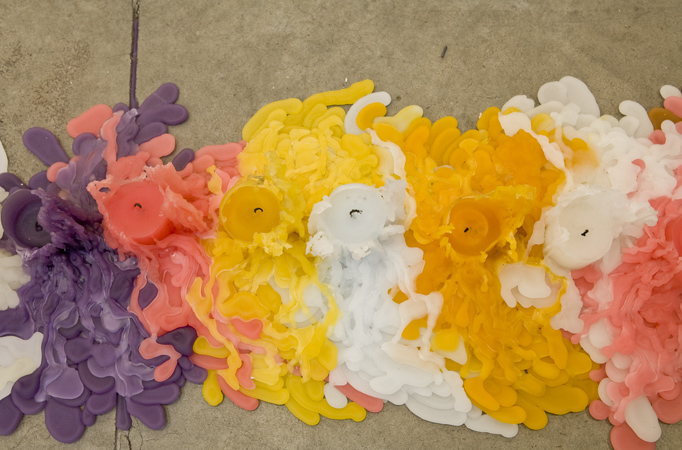
Candles and certain makeups like lipstick can melt for obvious reasons and should be stored in a cool area of the home. Additionally, some people feel that perfume and cologne last longer when kept cool or even in the fridge.
Stickies
Office supplies like envelopes and stamps will seal themselves shut in warm temperatures and best stored in cool place. Also, heat makes the fluid in batteries deplete and they should be kept cool, again some people even put them in the fridge.
Forget the Heat
Mice and water can also be issues in an attic. Storing items in cardboard boxes can lead to trouble. Plastic bins are not waterproof but should survive a burst pipe or leak. Remember the bigger the bin the bigger the headache since someone needs to carry it up and down. Try a medium bin that can easily be carried up and down by one person.

Book Review - The Things You Can See Only When You Slow Down
Book Review - The Things You Can See Only When You Slow Down
Now more than ever
As I write this it is my son’s eighth birthday and while we are celebrating I can’t help but think time is flying. In that regard, slowing down is something we can all strive to achieve in this modern 24-hour world. Haemin Sunim new book is extremely popular in his native South Korea and has now made its way to the States. The full title is The Things You Can See Only When You Slow Down: How to Be Calm and Mindful in a Fast-Paced World and ask us “Is it the world that’s busy, or is it my mind?”

Haemin Sunim is prominent Buddhist meditation teacher who was born in Korea, but educated in America and deals with a subject most people only talk about but never seem to achieve, a balance in their lives. Additionally, the book features amazing nature illustrations by Youngcheol Lee to remind us to even slow down when we are reading the book. The central narrative deals with actually seeing what the author calls ‘lovely moments’ including the smile of a child.
Another of the book’s themes urges us to form meaningful connections with people. This is a topic that we try and re-enforce with our clients. It is better to connect with people than it is with stuff. While the book deals with ancient teachings it never feels like fortune cookie wisdom rather a turning of Buddhist philosophy into relatable concepts.

